Beverages, Canning, condiment, Recipes

Vanilla-infused Cranberry-Rhubarb Butter and Syrup: Update

I wanted to make this “happy accident” again to give as Christmas gifts, so here is an updated version of the recipes, which does not include cranberry sauce! Since cranberries and rhubarb are not in season simultaneously, one or the other of them (or both) will most likely be frozen when you make this preserve. I froze cranberries last year at Thanksgiving-time to use in this recipe, and I also always freeze rhubarb for pies throughout the summer. However, I still had rhubarb in the garden last week, so I was able to use fresh stalks this go-round for this recipe. But frozen rhubarb works perfectly well as I discovered last year.

Ingredients:

9 cups cranberries (mine were frozen)

9 cups sliced rhubarb (fresh or frozen)

4 cups water

4 cups sugar + ½ cup sugar, kept separate

2 vanilla beans

OLYMPUS DIGITAL CAMERA

OLYMPUS DIGITAL CAMERA

Slit the vanilla beans and scrape the tiny black seeds into the pot. If your beans are fresh, throw the pods in too, just remove them before straining.* Place the all the ingredients except the ½ cup sugar in a large pot and bring to a boil. Reduce heat to medium-low and simmer until cranberry skins have burst and rhubarb is soft.

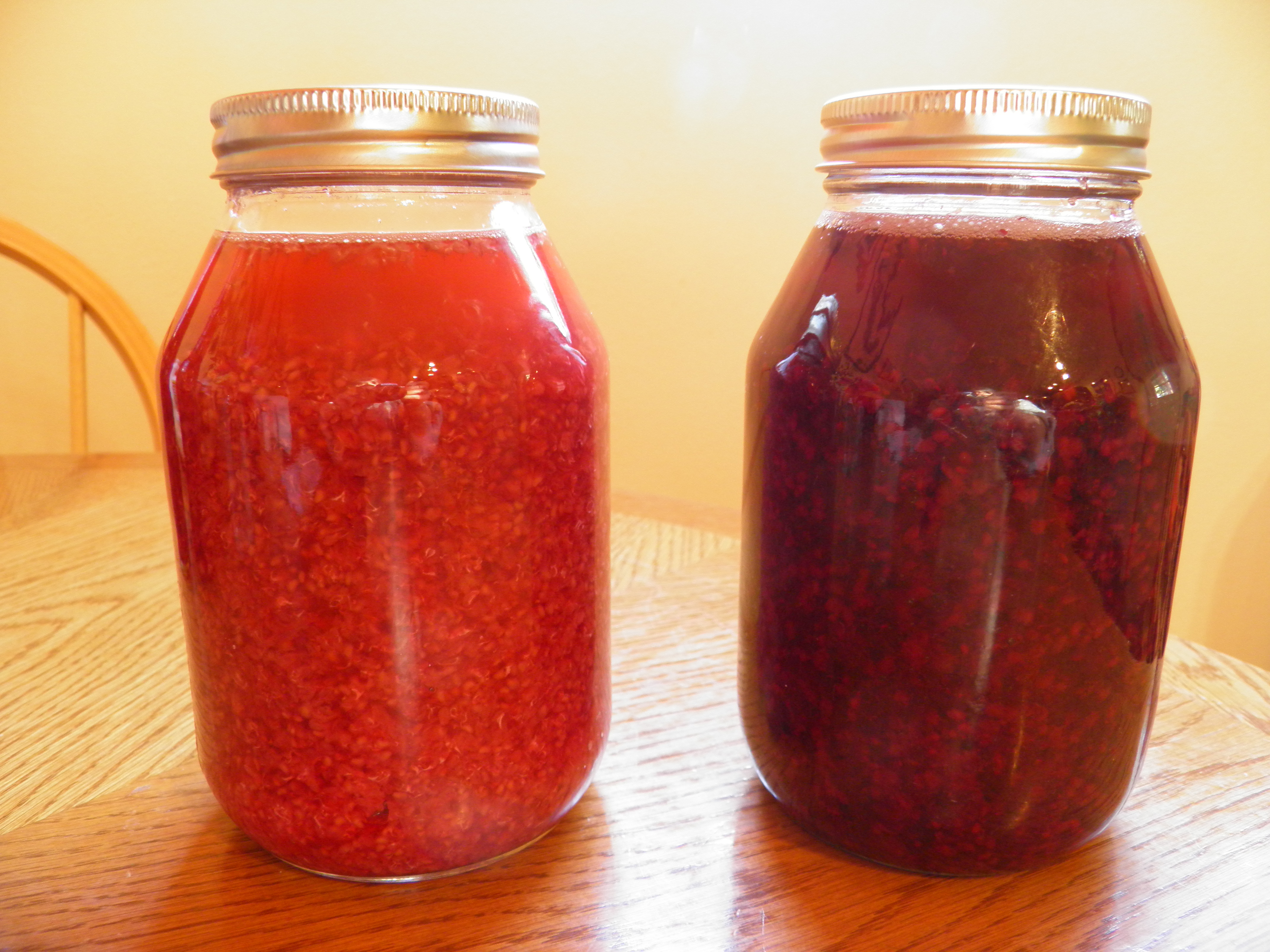
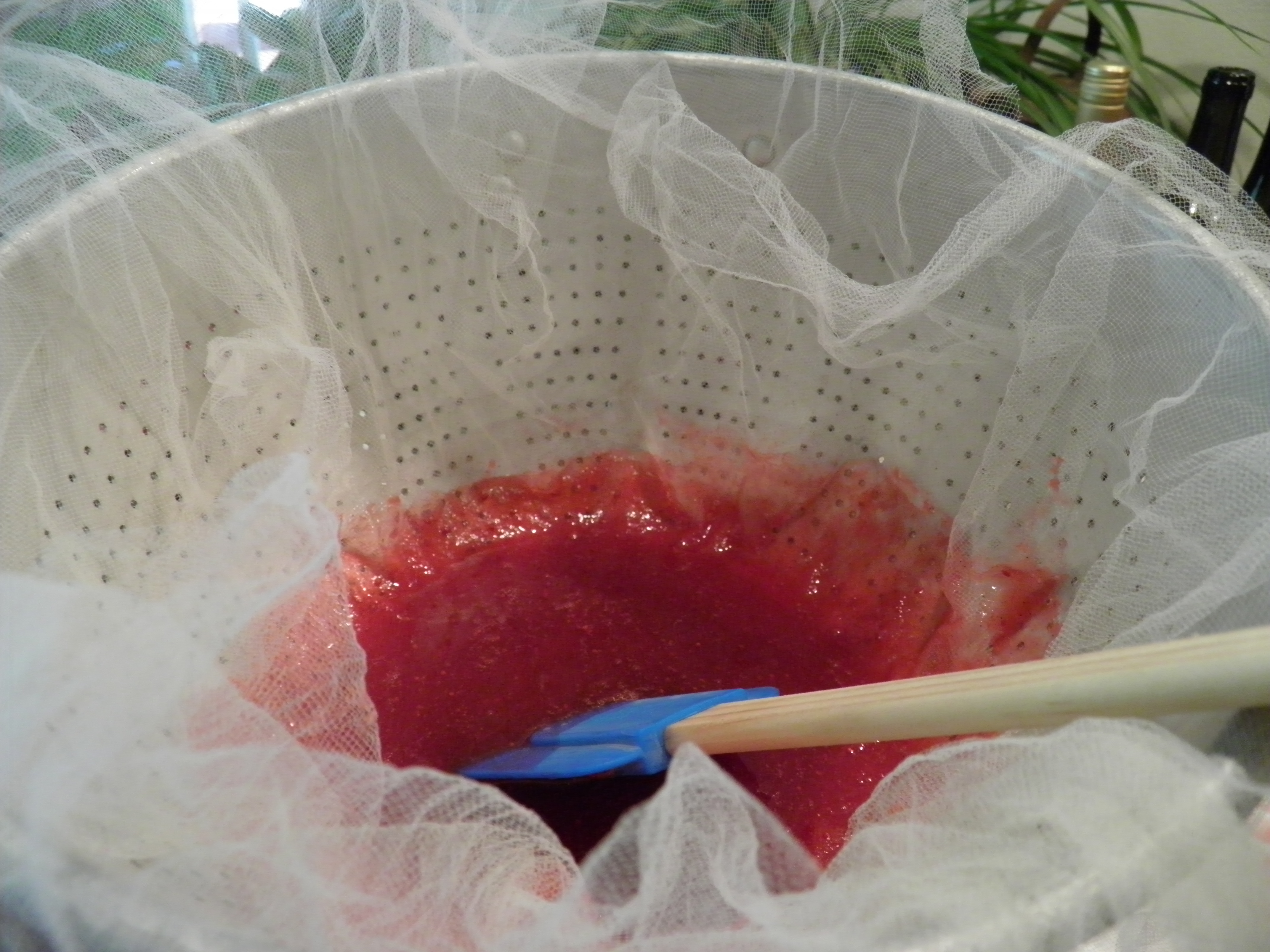
Line a colander or strainer with cheesecloth (personally, I prefer nylon tulle—it has smaller holes and is easier to deal with after you’re done—just rinse it out, wash it, and use it again!). Pour cranberry-rhubarb mixture into the strainer and just leave it for an hour or so. You can stir gently, but avoid forcing solids through the cheesecloth or tulle.
OLYMPUS DIGITAL CAMERA

OLYMPUS DIGITAL CAMERA

After the dripping has stopped, pour off the syrup you’ve gathered. (If any tiny cranberry seeds have found their way through, you might want to strain through another cloth, but it isn’t necessary.) Pour the fruit syrup into a clean pan and heat until boiling, lowering to simmer for 10 minutes. You should have about 4 cups, or 2 pint jars worth. This can be poured into sterilized, hot jars, capped, and canned in the water bather canner for 15 minutes, adjusting processing time for your altitude. This syrup is delicious in cocktails or non-alcoholic spritzers. You get the tartness of cranberry and rhubarb, the sweetness of sugar, and the floral scent and flavor of the vanilla beans. It is good stuff!

OLYMPUS DIGITAL CAMERA

OLYMPUS DIGITAL CAMERA

If you want to use the syrup for pancakes, boil it down a little longer until it is thicker and reduced to the consistency you prefer for pancakes or waffles. If it isn’t sweet enough for you, you can add agave nectar or non-high-fructose corn syrup to the mixture (about a cup per 4 cups of fruit syrup), which will also thicken it more. Bring back to a boil, and can the syrup as directed above.

Now, for the cranberry-rhubarb butter. A word about fruit butters might be in order here. A fruit butter, such as pear butter or apple butter, is a smooth, thick, rich concoction you can spread on toast, or a bagel, or anything else you choose (a cracker with a slice of tart cheese, or a schmear of cream cheese, perhaps). Generally, the fruit is cooked and strained or pureed and cooked down some more until it is concentrated flavor. Oh, my, I do love fruit butters! I make pear butter when I can get pears, and I make apple butter every year from my garden apples. This cranberry-rhubarb butter is just as thick and delicious, but you don’t have to cook it down for very long the way you do pear or apple butter. I am guessing that the abundance of natural pectin in both fruits, and the fact that you’ve strained off some of the juice, have something to do with this.

Now, you could just skip the next step, the second straining, and can this mixture as jam. It would need to be cooked down a little more, until it is thick and glossy, and then it could go right in the sterile jars and be processed for 10 minutes in the water bath canner like any other jam. However, rhubarb can be fibrous, and cranberry skins can be tough even with long cooking, so running the mixture through a strainer is a good idea. And what you end up with is so smooth and delicious, it really is worth the trouble.

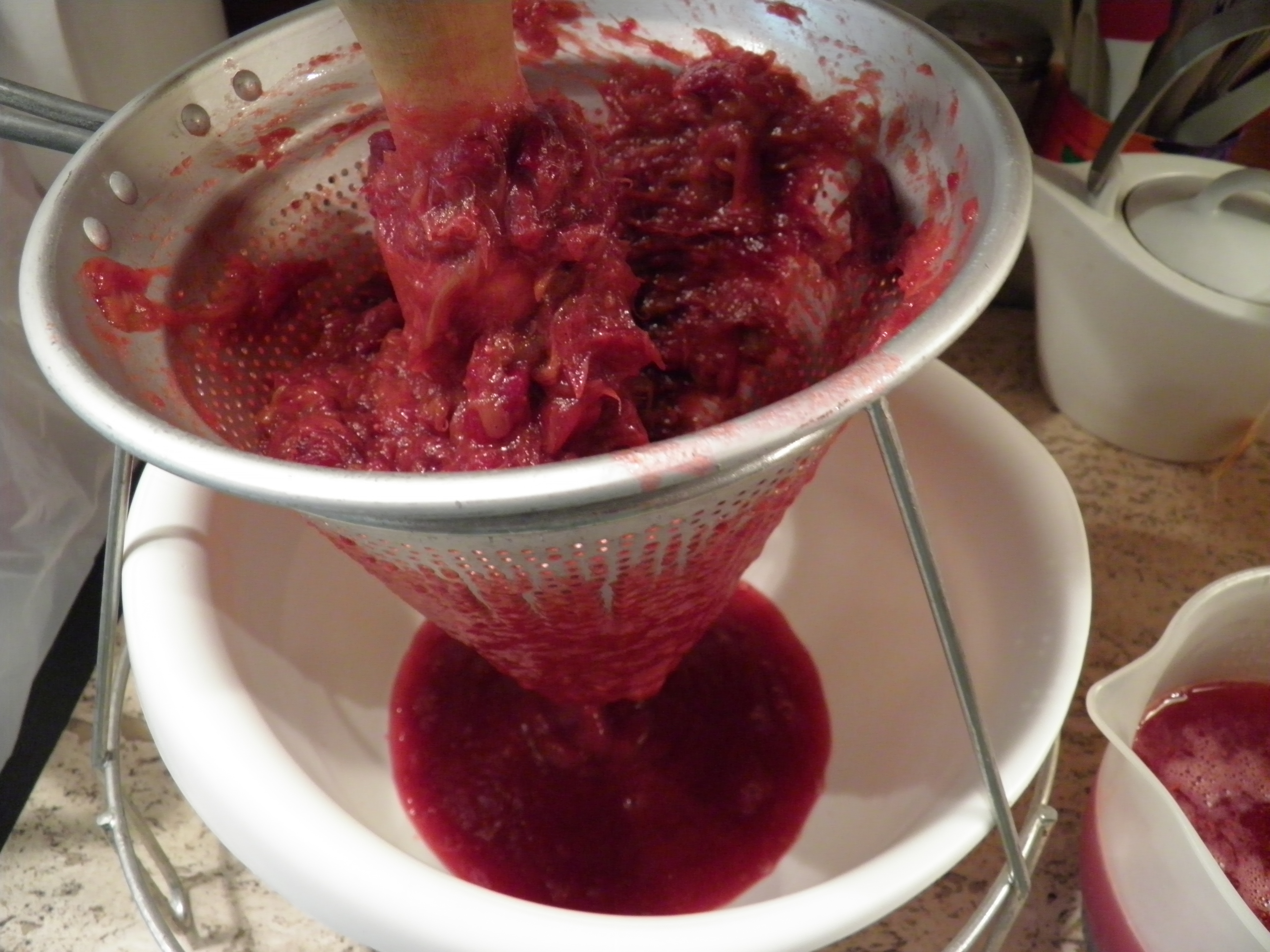
So, for cranberry-rhubarb butter, run the mixture through a chinois (also known as a China cap colander) or a Squeezo strainer, or whatever sort of straining device you have. I use a chinois, which I call a cone colander when I’m not being all fancy-like. This gets out all the rhubarb fibers and tough cranberry skins. (I saved this roughage though to eat like cranberry sauce with roast chicken. I don’t really mind the occasional tough skin or rhubarb string.) What you will end up with in the pan or bowl after straining is thick and smooth pulp.
OLYMPUS DIGITAL CAMERA

OLYMPUS DIGITAL CAMERA

Put that strained pulp (I got about 5 cups) back in a large pot, add the reserved ½ cup sugar if the mixture is too tart for you (or more, if you prefer a sweeter taste; ½ cup was perfect for me) and heat to boiling. This stuff is really thick, so as soon as it starts to blurp, turn the heat down, and do stir continuously during the heating up process and until the butter reaches a lower heat; otherwise, it will stick and scorch. Cook the butter on a low heat at a constant simmer until it is very glossy. This should only take about 10 or 15 minutes, stirring frequently. The glossiness means that all the sugars have amalgamated, and the pectins have been concentrated, and you will have a nice, thick, rich spread when it comes out of the jar.

OLYMPUS DIGITAL CAMERA

OLYMPUS DIGITAL CAMERA

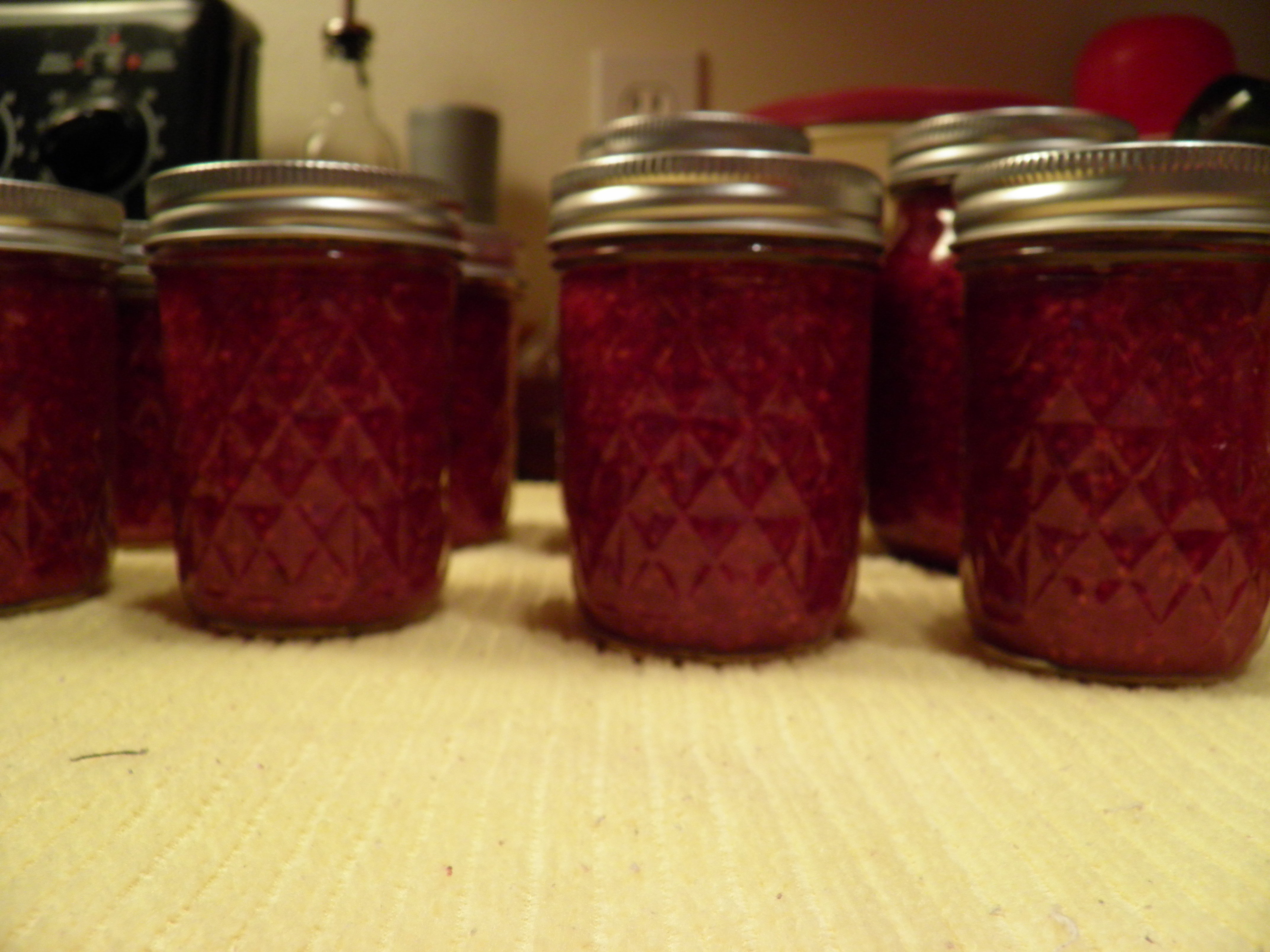
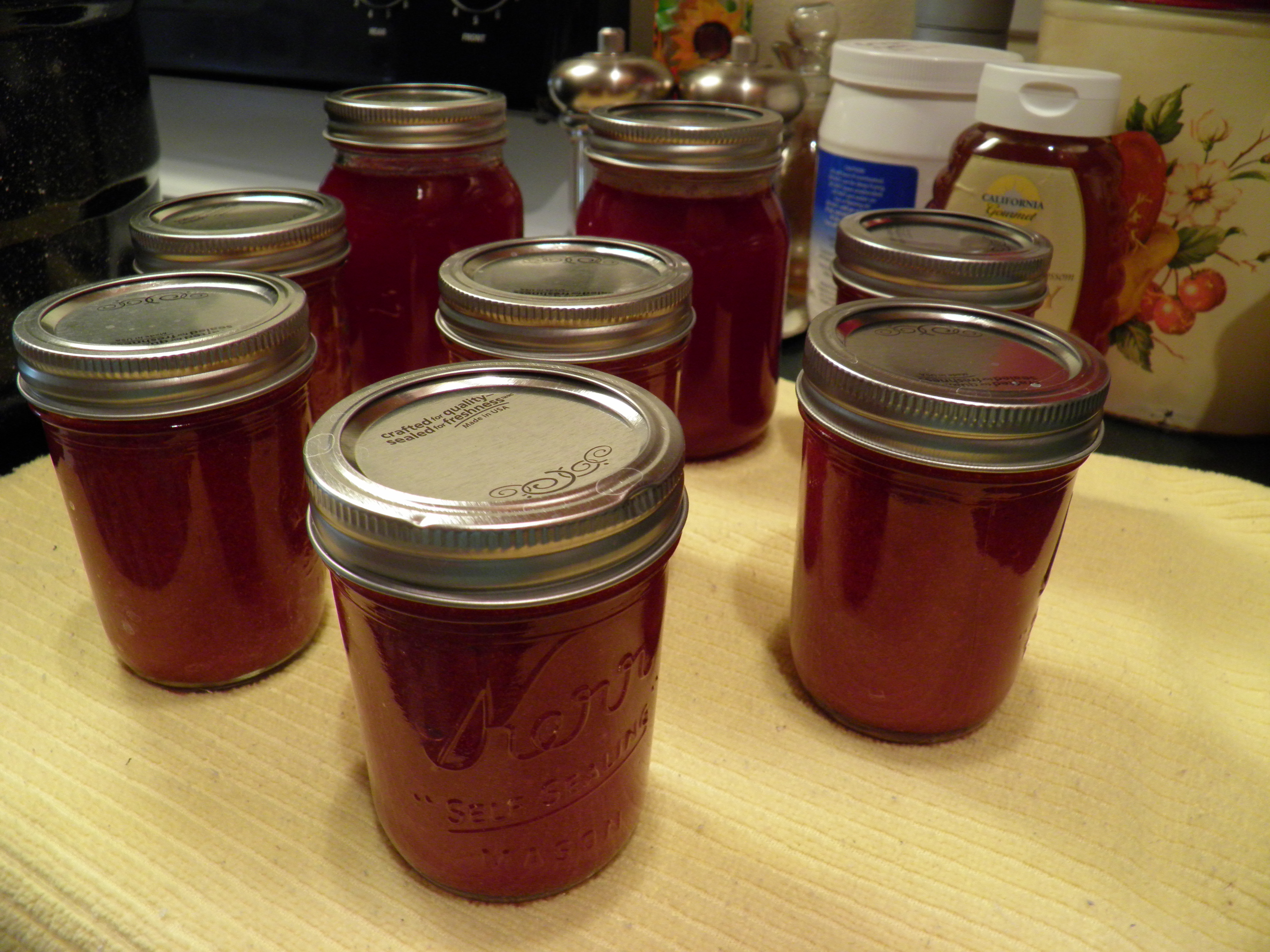
Spoon your cranberry-rhubarb butter into sterilized, hot jars, leaving a ½ headspace, cap, and process in boiling water bath for 15 minutes, adjusting processing time for your altitude.

I got 5 half-pint jars of cranberry-rhubarb butter, most of which I will give for Christmas gifts, but at least one jar will be served with Thanksgiving dinner, because it is perfect for that meal.
OLYMPUS DIGITAL CAMERA

OLYMPUS DIGITAL CAMERA

Recipe Notes:

*My vanilla beans weren’t fresh, and I learned something. If the beans smell a bit alcoholic, that’s the pod. Scrape the inside of the bean and use that, but discard the pods. The inside is still perfectly fine. My beans were a year old, but had been kept tightly wrapped in a Ziploc plastic bag and in a jar in the fridge. Obviously, you don’t want to use anything that’s moldy or weeping liquid.

With these amounts of fruit, etc., my yield was 2 pints of cranberry-rhubarb syrup, 5 half-pints of cranberry-rhubarb butter (with a small dish leftover to enjoy NOW!), and a pint-sized tub of roughage to eat like cranberry sauce with roast chicken (pic below).

OLYMPUS DIGITAL CAMERA

OLYMPUS DIGITAL CAMERA

I hope you’ll freeze some rhubarb and/or cranberries this year to try this recipe. It really is amazingly good. Happy jamming!
Standard
Garden and Greenhouse, Gluten-free, Recipes, Side dishes

Zucchini Latkes

Subtitle:  The One That Got Away

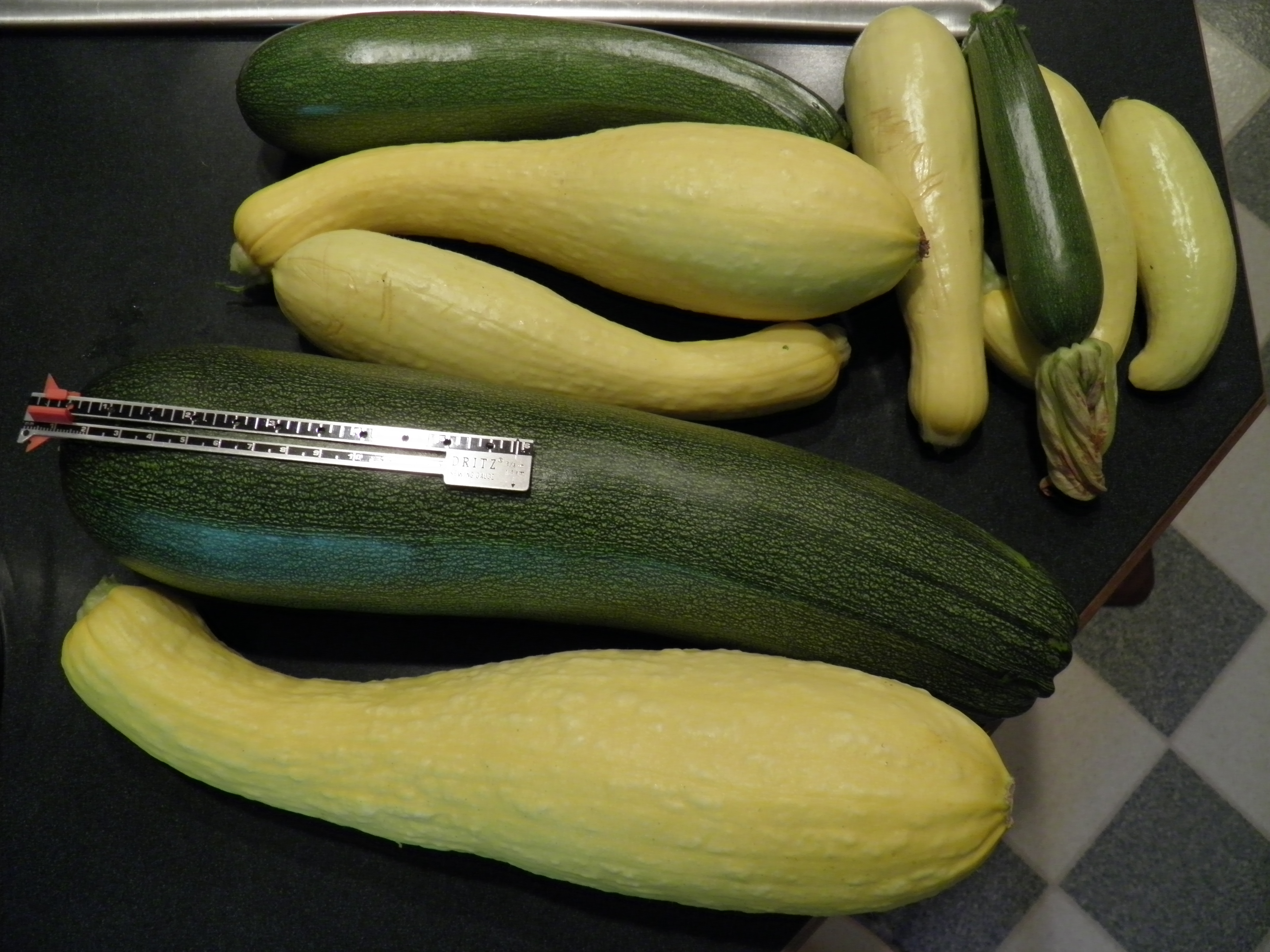
It’s that time of year when everybody who has a garden has a zucchini that’s too big for its britches. I call squashes like this “the ones that got away (from me)”.  What do you do with them?

OLYMPUS DIGITAL CAMERA

OLYMPUS DIGITAL CAMERA

Some people make relish. I don’t care for it, myself. Too sweet. (If anyone has a sour, dilled zucchini relish recipe, please pass it along!) Some people make pickles. I haven’t tried that because I’ve tried making pickles with Armenian cucumbers, and they were mushy. I can only imagine what zucchini pickles would be like. Yuck. Some people, including me, shred the monster squashes and freeze the shreds for zucchini breads and soups. And I use the shreds for another dish, my favorite way to eat zucchini: zucchini latkes. These are paleo, gluten-free, low carb. What’s not to like?

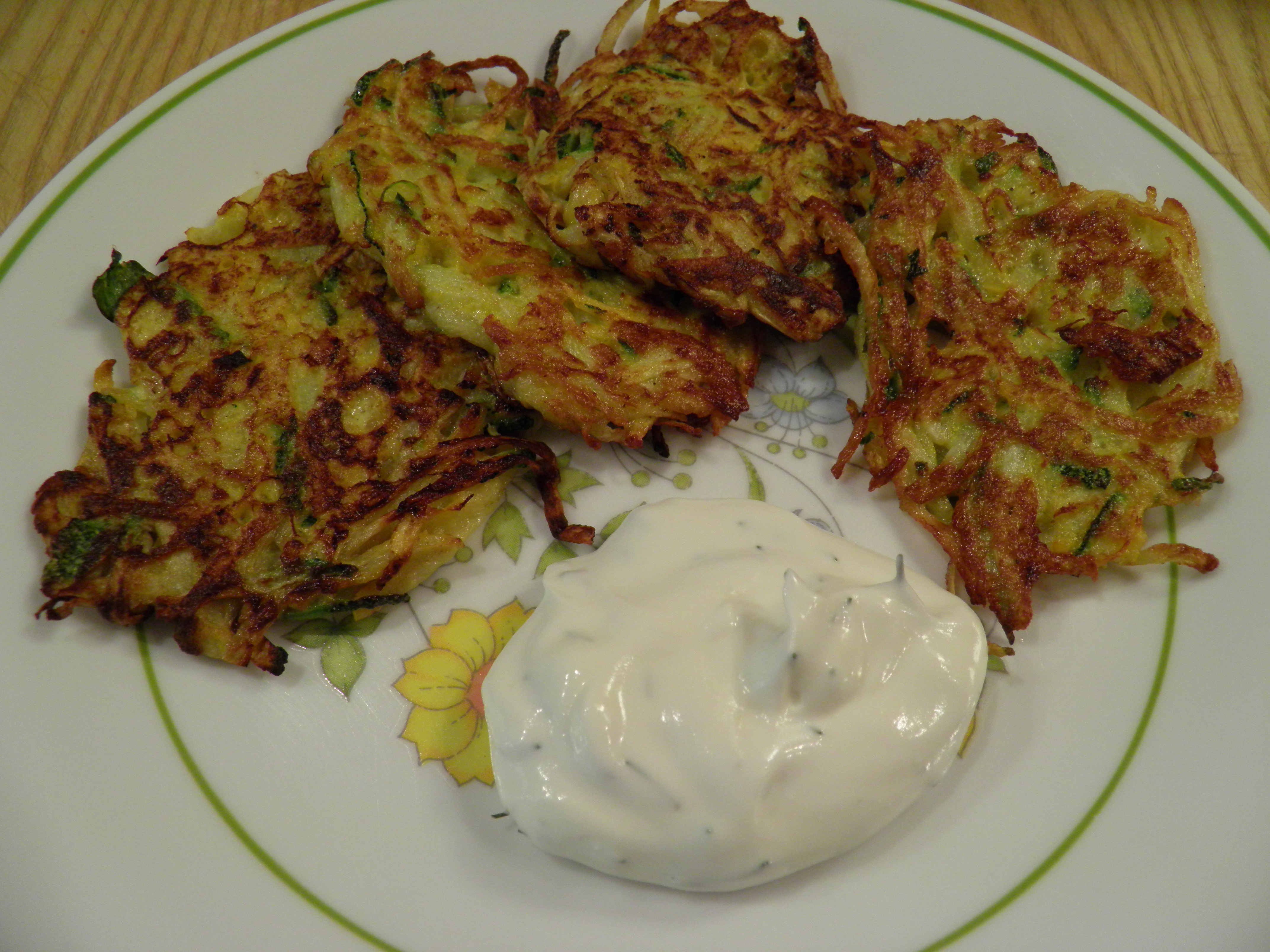
Now, there’s been a recipe floating around Facebook for Zucchini Fritters.  They look a lot like these, and the recipe is similar, except for one thing.  There is no flour in these.  And because there is no flour, they are not doughy.  They are nicely browned on the outside and tender on the inside, but with no doughy texture.  And I have to give credit where credit is due:  I would never have come up with these if my friend, DeAnna Beachley, had not taught me to make potato latkes exactly the same way.  And I thought, if it works for potatoes, why wouldn’t it work for zucchini?  It does.


OLYMPUS DIGITAL CAMERA

OLYMPUS DIGITAL CAMERA

And try them with the dill sauce. Yum.


Zucchini Latkes

About 3 cups shredded/grated zucchini

¼ cup shredded/grated onion

1 egg, beaten

Salt and pepper

Olive oil or other oil of your choice for frying


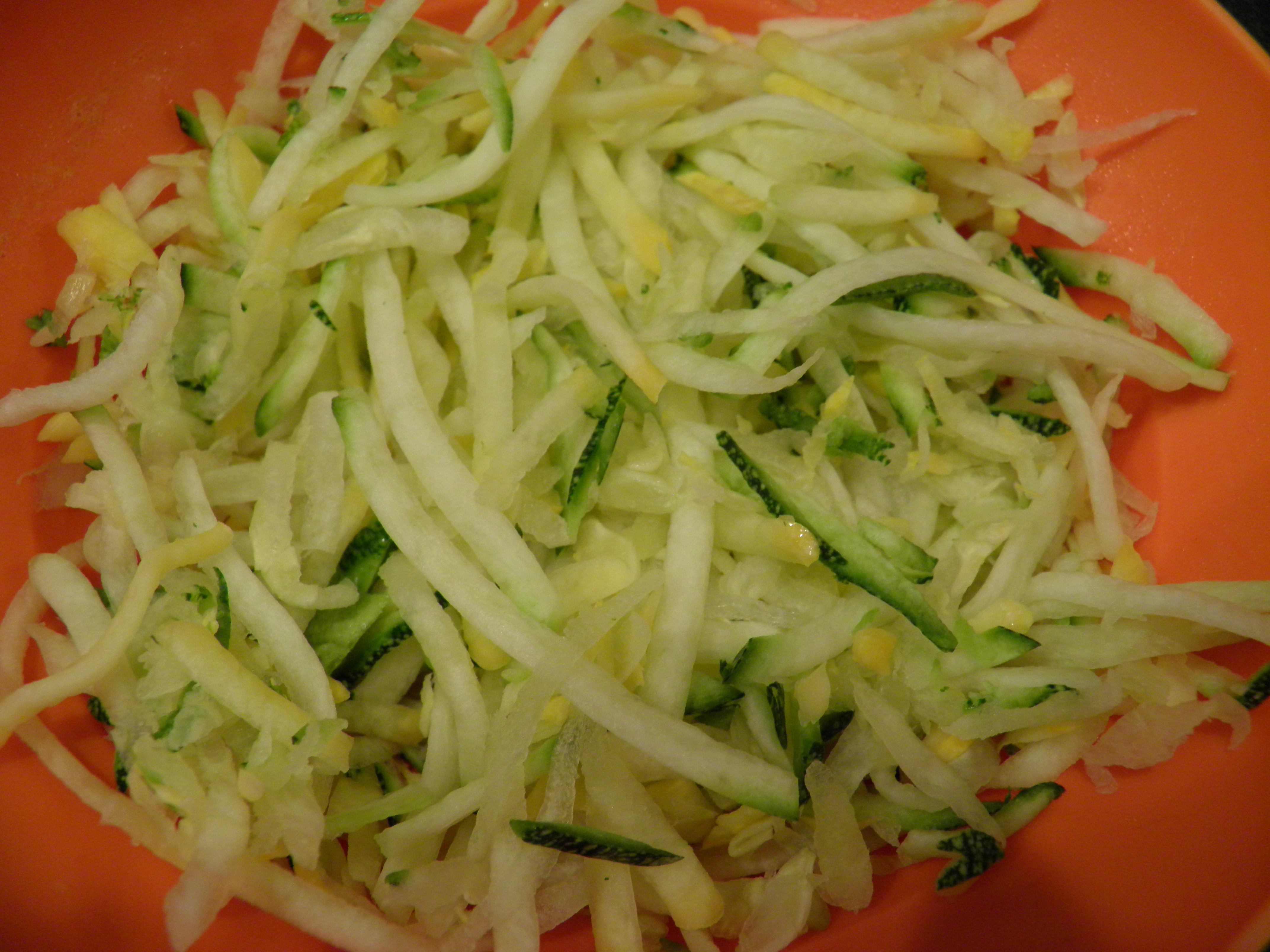
After grating or shredding the zucchini and onion (either by hand or in the food processor), put it in a strainer for a little while to drain. Then dump the contents of the strainer into several paper towels or a clean tea towel you don’t mind staining green, and squeeze it like you mean it. Squeeze as much water as possible out of the zucchini and onion.


OLYMPUS DIGITAL CAMERA

OLYMPUS DIGITAL CAMERA

Dump the squeezed zucchini and onion into a bowl, fluff it with a fork, and add as much egg as you need to make the mixture hold together. Don’t add too much egg, or the latke will not hold together when you fry it.  In the photo below, I have about a cup of zucchini and yellow squash shreds, and into that I mixed one of my little chicken eggs (very small), and it was just perfect.  For 3 cups of shreds, one large egg should be just right, but mix it in a little at a time until all the shreds are moistened in the egg, but no egg is pooling in the bottom of the bowl.

OLYMPUS DIGITAL CAMERA

OLYMPUS DIGITAL CAMERA

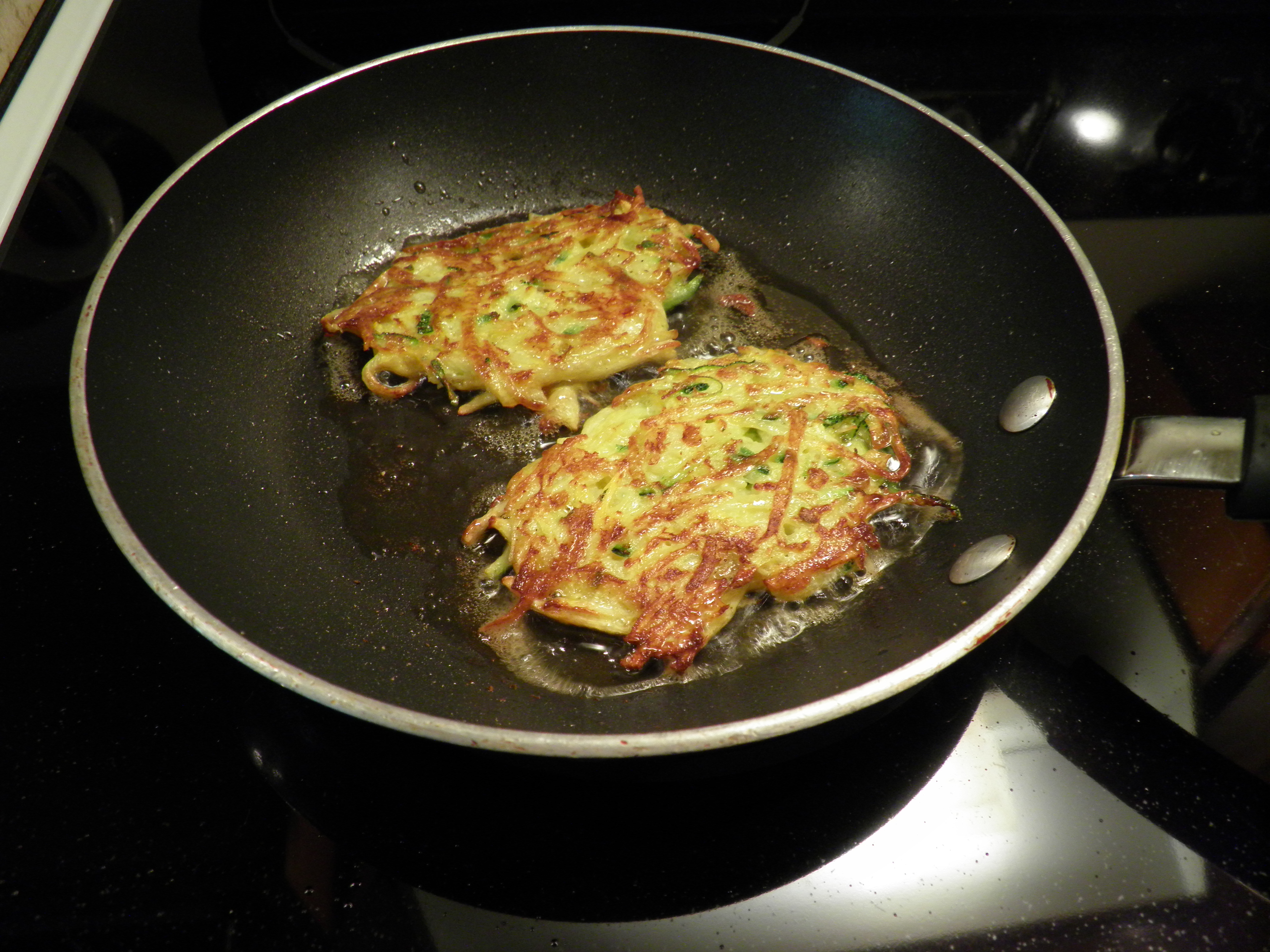
Drop by spoonfuls into hot oil. Flatten with back of spoon. Fry until golden brown and latke is holding together, then flip. I find using both a pancake turner and a silicone spatula makes turning the latkes easier.

OLYMPUS DIGITAL CAMERA

OLYMPUS DIGITAL CAMERA

OLYMPUS DIGITAL CAMERA

OLYMPUS DIGITAL CAMERA

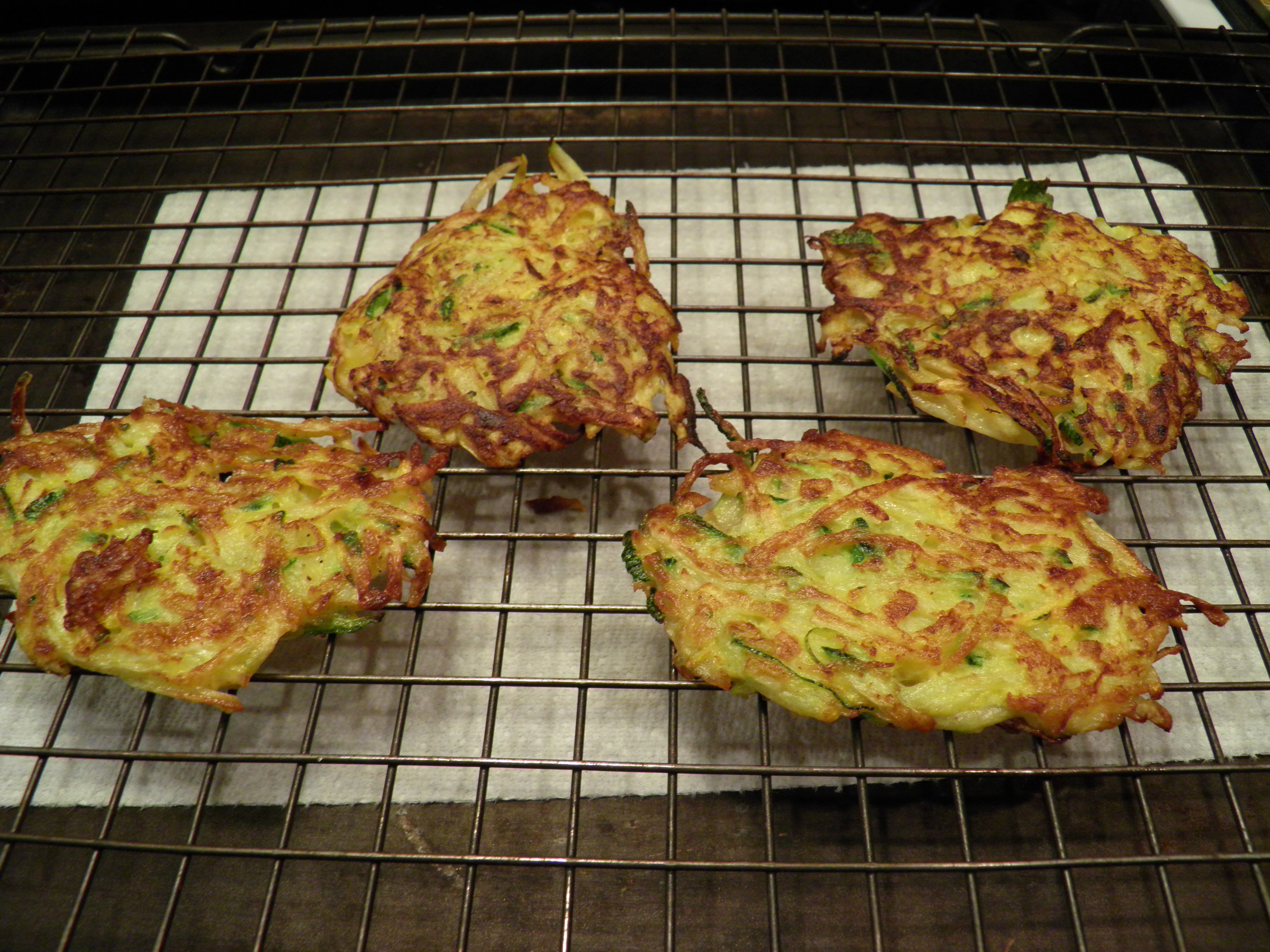
After the second side is brown, remove from hot oil and place on rack; sprinkle with salt and pepper. (If you put your rack over a cookie sheet in a warm oven, your latkes will stay crisper and warm.)

OLYMPUS DIGITAL CAMERA

OLYMPUS DIGITAL CAMERA

Do not salt the latkes before frying or as they are frying. Salt causes zucchini to release more moisture. You can add the pepper whenever you like, but always salt them right after they come out of the frying pan.  These lovely little patties are scrumptious served with the dill sauce below, made with either plain Greek yogurt or sour cream.

Yogurt or Sour Cream Dill Sauce

OLYMPUS DIGITAL CAMERA

OLYMPUS DIGITAL CAMERA

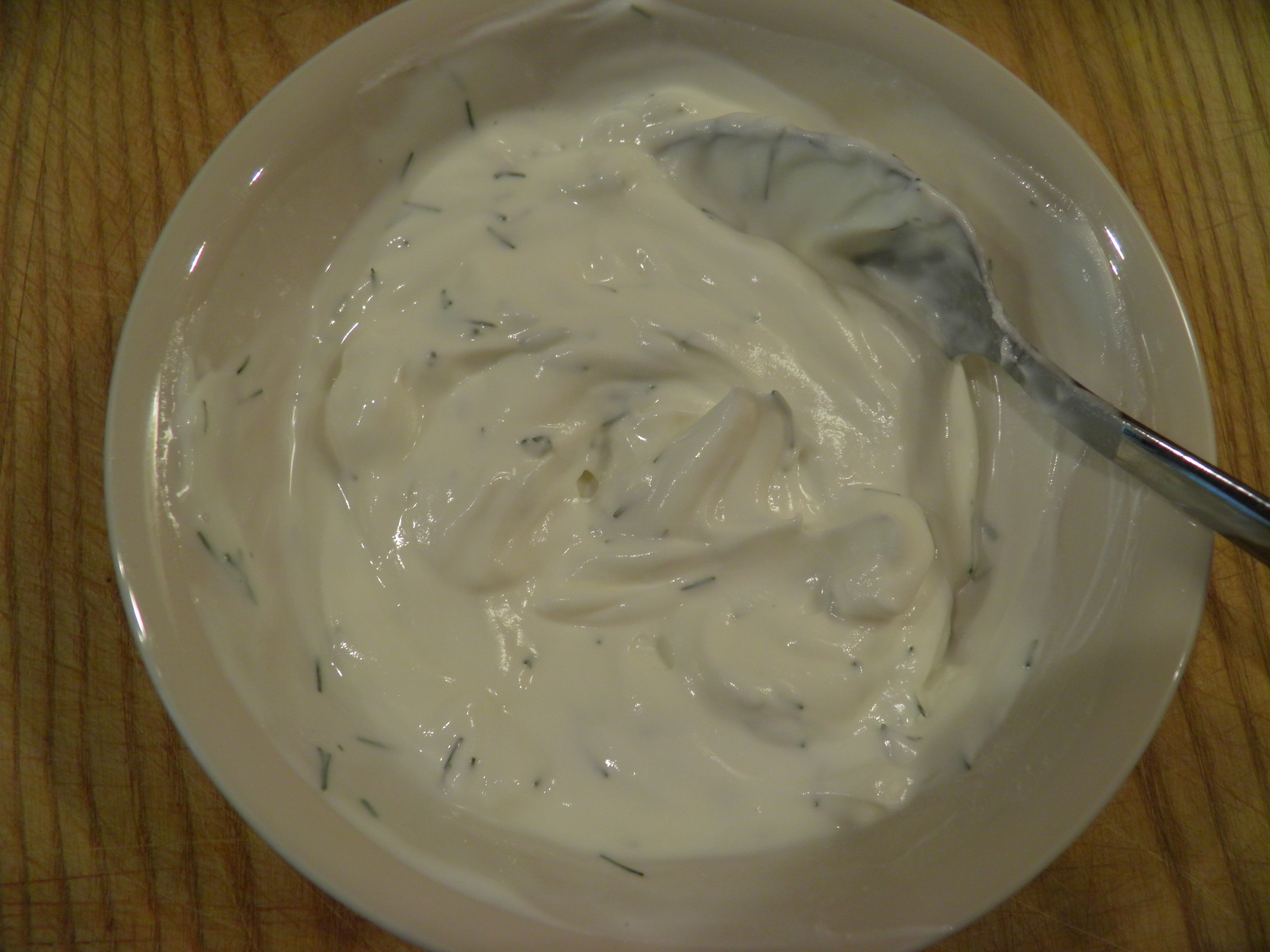
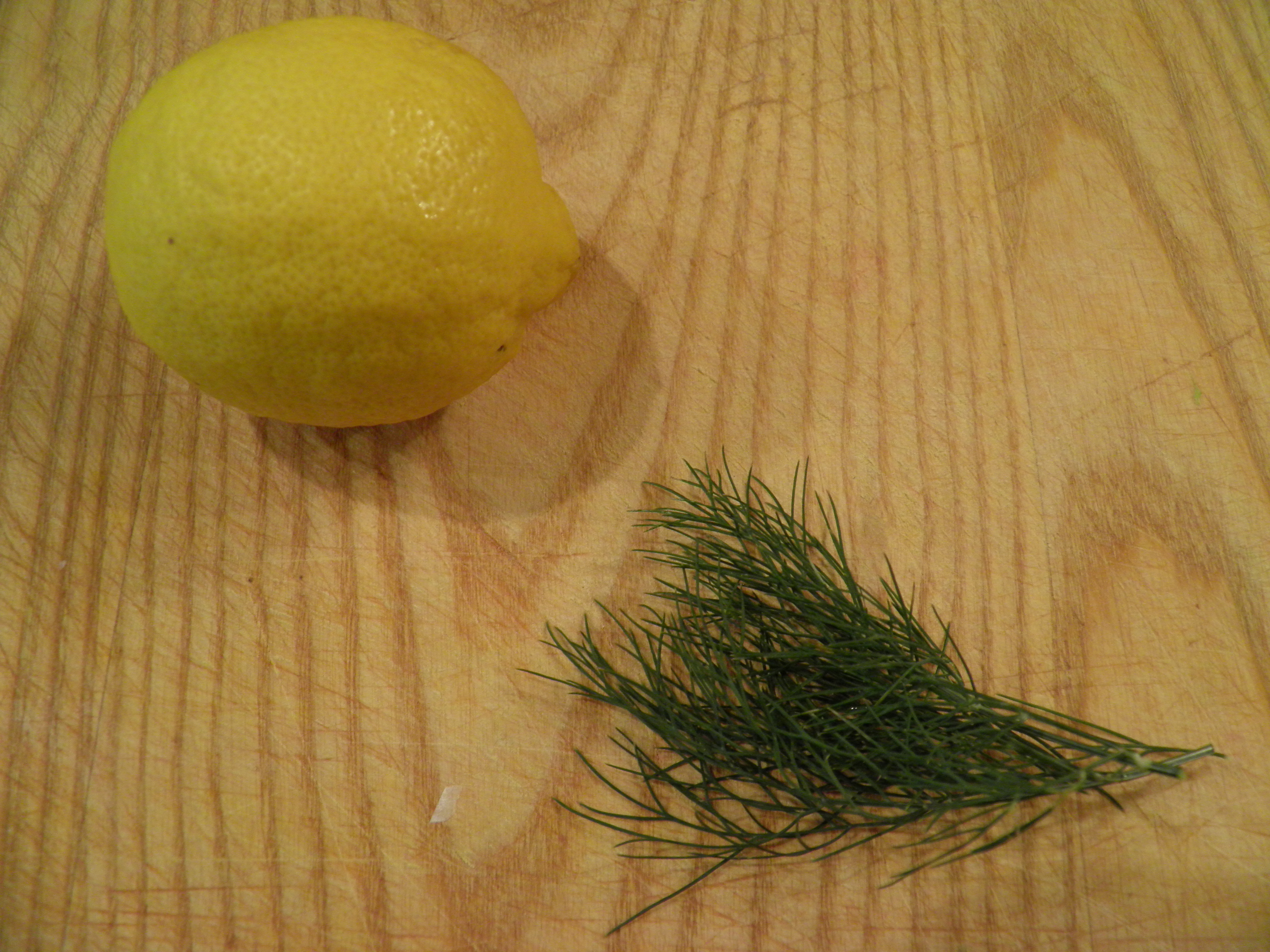
Mix 1 teaspoon fresh chopped dill weed or 1 teaspoon dried dill weed into ½ cup dairy sour cream or plain Greek yogurt. (You can make your own yogurt and sour cream.) A little minced red onion, up to a tablespoon, is good too. I also like to grate a little lemon peel into the sauce sometimes, and if you use commercial sour cream, some fresh squeezed lemon juice will loosen it to sauce consistency.

OLYMPUS DIGITAL CAMERA

OLYMPUS DIGITAL CAMERA

If you have monster zucchini in your garden, consider freezing some for zucchini latkes this winter. To use frozen zucchini, simply thaw, drain, squeeze, and proceed as above.

Standard
Beverages, Canning, condiment, Desserts, Recipes

Berry Recipes

OLYMPUS DIGITAL CAMERA

It is berry season for all those berries that grow on canes.  I have raspberries, boysenberries, blackberries, and Loganberries in the garden, and they bear in that order.  The raspberries are almost finished (until fall, when another variety will start to bear), the boysenberries also are nearly done, and the blackberries are just getting started.  Loganberries will start ripening in mid-to-late August.

OLYMPUS DIGITAL CAMERA

I’ve posted berry recipes before, but I’m gathering the links together for you, so you can more easily find what you might be looking for.  In some cases, you might have to scroll down (or read down) to find the recipe at the end of a post.

Blackberry Cordial and Syrup

OLYMPUS DIGITAL CAMERA

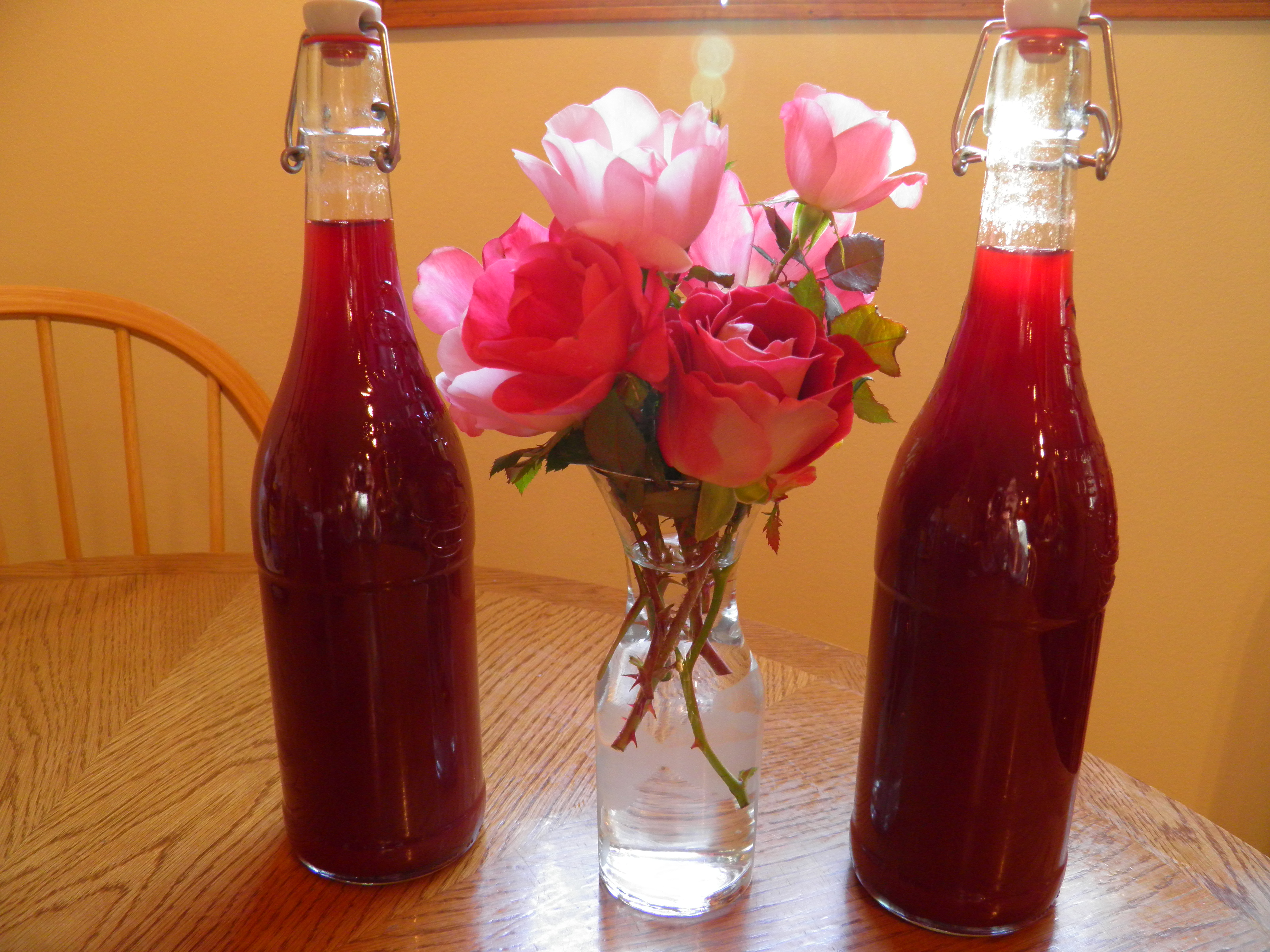
I just made a batch of blackberry cordial and a batch of mixed berry cordial (Logan berries, raspberries, boysenberries, and blackberries), and the mixed berry cordial is delicious.  This recipe will work with any berry juice.

Raspberry Cordial, Jam, Vinegar

OLYMPUS DIGITAL CAMERAOLYMPUS DIGITAL CAMERA

OLYMPUS DIGITAL CAMERA

And a reason to make blackberry jam or jelly, Blackberry and Wine Poached Pears

OLYMPUS DIGITAL CAMERA

And a recipe to use your berry-infused vinegar in, Berry Vinaigrette Salad Dressing

OLYMPUS DIGITAL CAMERA

And finally, since I just made a different version of blackberry syrup, I’m going to post the recipe here, with a few notes.

Blackberry Syrup

4 cups of blackberry juice

1 cup of sugar

1 cup of agave nectar/syrup

Simmer the blackberry juice and sugar together for 8 minutes, then add the agave nectar and boil for 2 more minutes.  Keep at a low simmer while ladling into hot, sterilized jars (pints, quarts, or half-pints) and add flats and rings.  Process in boiling water bath for 15 minutes.

OLYMPUS DIGITAL CAMERA

OLYMPUS DIGITAL CAMERA

Note:  My old syrup recipe, in the first link above, called for light corn syrup, a cup.  This recipe makes delicious pancake syrup (or it can be used in cocktails or spritzers), but with the concerns about corn syrup today, I went looking for a new recipe.  I found the one above that uses agave nectar, one cup, and it’s really good.  However, when I compared calorie and sugars numbers between corn syrup and agave, I was somewhat surprised.  Light corn syrup contains 5 grams of sugars per tablespoon and 15 grams of carbohydrates.  Agave nectar contains 16 grams of sugars and 16 grams of carbohydrates per tablespoon.  Of course, corn syrup is problematic for other reasons, but if you’re just counting calories, it’s a bit of surprise that the syrup made with corn syrup has fewer calories than the one made with agave nectar.

The choice is yours:  both recipes make an excellent syrup for pancakes, cocktails and spritzers, or to drizzle over ice cream sundaes or mix up in a milk shake, or stir into some thick Greek yogurt . . . . What would you put it on?

Standard
Garden and Greenhouse

A Re-purposed Tool

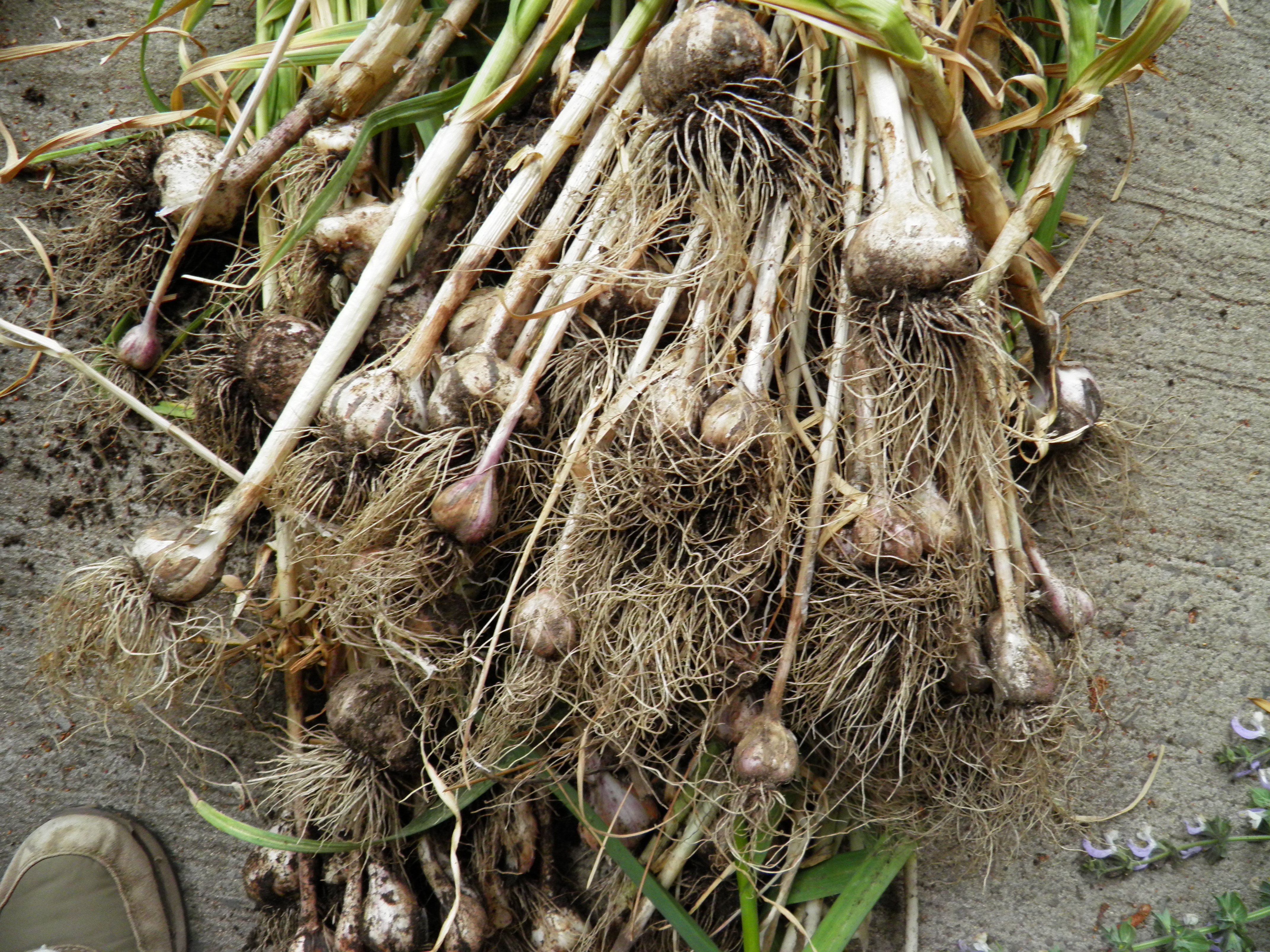
When I started this blog a couple of years ago, one of my first posts (maybe the second?) was about my favorite tools. One of those favorite tools was my old wire lawn chair. I found a new use for my chair/tool today. It’s a garlic dryer!

OLYMPUS DIGITAL CAMERA

OLYMPUS DIGITAL CAMERA

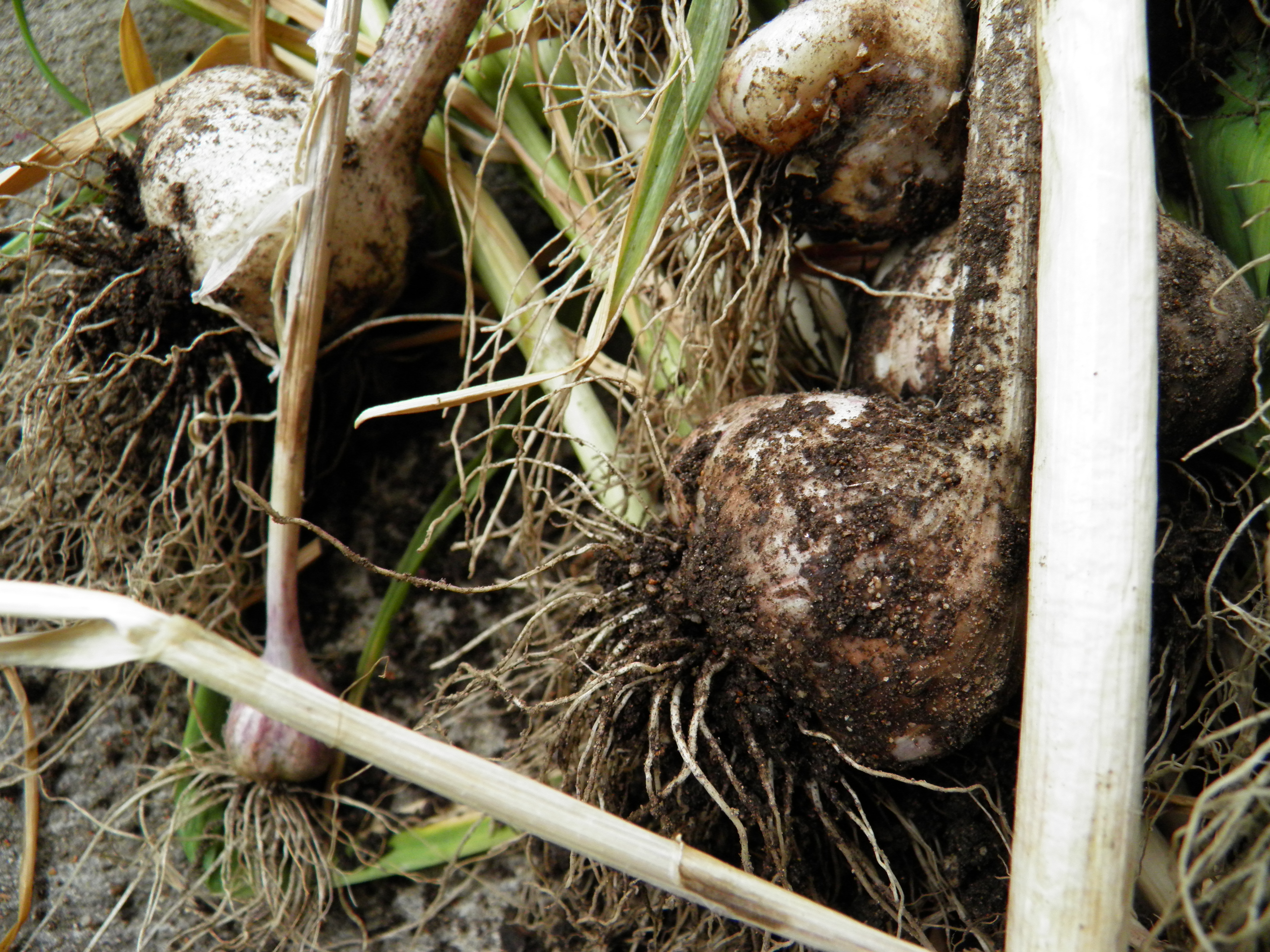
Some of this garlic is too small and will be replanted. (Some has already been replanted).

OLYMPUS DIGITAL CAMERA

OLYMPUS DIGITAL CAMERA

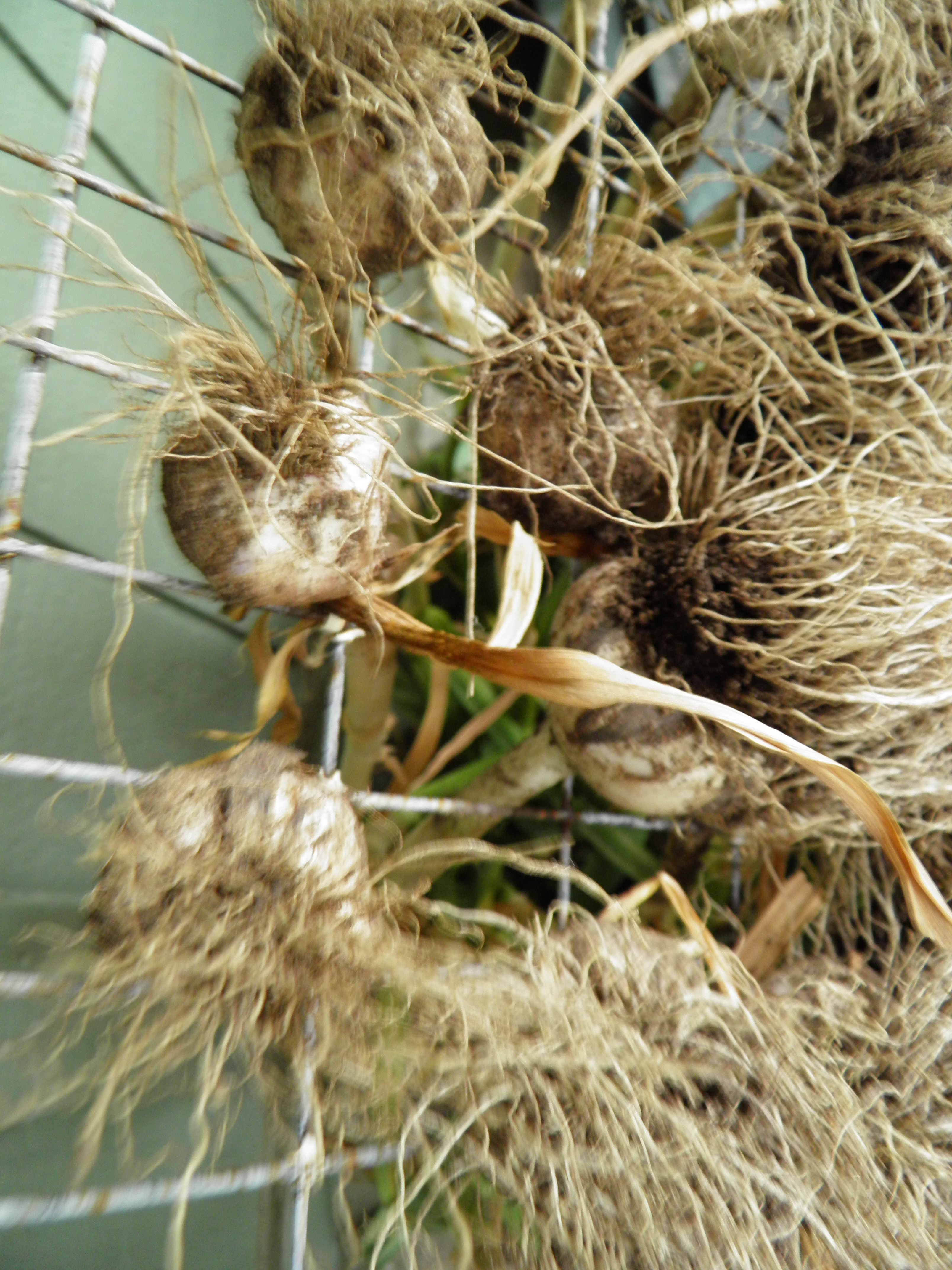
It was all started from seed, some two years ago and some three years ago. I did get some nice bulbs though, and the big ones all went through the larger rectangles on the chair’s back. The smaller ones went through the spaces on the seat. The chair is in the shadiest place on the property, the patio behind the big oak tree in the front of the house. The sun will never reach it there.

OLYMPUS DIGITAL CAMERA

OLYMPUS DIGITAL CAMERA

It’s important to keep curing garlic out of the sun, as I discovered on my return from Crescent City last week. I had put the chair with the first batch of dug garlic in the shade of the apple tree, but one bulb had fallen through the grid, unobserved. I found it when I got back home. It had fallen where it was exposed to the sun and it looked almost as if it had been frozen. Sunlight adversely affects curing garlic, so it’s important to keep it out of the sun as it is drying.

I have a bit more garlic to gather, so it’s good that I have room on the chair to slot it in!

OLYMPUS DIGITAL CAMERA

OLYMPUS DIGITAL CAMERA

When this garlic has dried a day or so, I’ll brush the dirt off the roots and let it continue to cure for several weeks. And then, I’m going to attempt braids for the first time. This is the first time I’ve had enough garlic to even try braids. And I don’t think I’m going to be buying any $3/lb garlic this winter, so yippee!

OLYMPUS DIGITAL CAMERA

OLYMPUS DIGITAL CAMERA

Standard
Products

Back to the Bar

No, it’s not what you might think! I have been promising to write this soap post for some time. What with one surgery or ailment after another, this piece has taken a backseat far longer than I intended. But I really want to share with you, my friends, what a difference going back to bar soap, particularly homemade bar soap, has made in my skin.

Last fall, I took a little trip all on my ownsome, over into Nevada and then up into Oregon, before coming down to Crescent City, California and then home. During that trip, I noticed that my hands, which were so dry and chapped and cracked from gardening, canning, and processing fruit, began to improve. At first, I thought maybe it was getting away from the hard water we have here at home. Our well water tastes great, but it’s full of minerals, and I always thought that was why my hands were so dry here. But the water through Nevada and much of eastern Oregon was just as hard, and my hands were less dry, less cracked and chapped. I began to realize that the reason my skin was improving had nothing to do with the water. It was the soap.

Yes, those little bars of cheap motel soap were helping my hands rehydrate and heal. It was something of a revelation. For years, I’d been using antibacterial liquid soap on my hands and liquid body wash in the shower. I started using antibacterial soaps when they first came out, when my kids were little and colds were constant. Antibacterial soaps have their place, don’t get me wrong. If somebody in my house has a cold, I want that person to be washing his or her hands with antibacterial soap. After certain actions in the bathroom, I want to use, and I want others to use, antibacterial soap. I’m sure you get my drift—enough said on that score.

But there are many times throughout the day when I wash my hands and don’t need antibacterial action. I just need to remove something sticky or greasy from my hands while cooking, or some good clean dirt from the garden before I make a sandwich. This is where I’ve discovered just how much of a difference bar soap can make. Even a cheap bar soap like you find in a motel room.

Why? Because of the fat content in the soap. Bar soaps are always made with some kind of fat. Commercially produced soaps usually use vegetable fats. That’s why the soap doesn’t dry out your hands as much—it’s not stripping your skin of your own natural oils, and it’s actually adding a little fat (which turns out to be a barrier against bacteria). But when I discovered handmade, homemade soaps, the bar was raised to a whole new level.

Let me tell you about a soap-maker extraordinaire named Shannon Luzum, of Stacked Stone Farm. Shannon makes a soap called Gardener’s Hands that is exceptionally good for people like me, who have our hands in the dirt all the time. (Yes, I wear gloves, and still my hands get filthy. I don’t mind—I’m getting my beneficial soil microbes.) But there’s a point where that dirt needs to come off, and Shannon’s handmade, homemade, luxuriously fatty soap with ground walnut shells in it does the job. And after my hands are clean, they don’t feel dry. They actually feel moisturized. It’s truly amazing stuff, and I will never be without Gardener’s Hands soap from Stacked Stone Farm as long as Shannon continues to make it.

Shannon also gave me a little inside dope about soap.  “Liquid soaps contain alcohol, which dries the skin,” she says.  (I can attest to that.) She continues: “They also add preservatives due to the water content of the mixture. Homemade soap contains natural glycerin that is produced as part of the saponification process. The glycerin is awesome for skin. Commercial soap makers remove the glycerin and sell it to the public in lotion. Thus they sell two products.”  This is why homemade soap is so much better for your skin than commercially-produced soaps–it still contains the glycerin.  And I have to say, I have needed far less lotion (some days, none at all) on my hands and feet than I did before I switched back to bar soap.

I’m getting ready to try some of Shannon’s goat milk and lavender soap. It hasn’t arrived yet, but I’m thinking it will be good for my dry arms and legs. I have been using a commercially produced, French-milled soap made with vegetable oils on my dry legs and feet with a scrubbing sleeve, and I’ve seen great improvement in my skin. I know Shannon’s soap is going to work even better because the fats are higher quality, the glycerin is still in the soap, and it will nourish my skin even more.

Shannon also makes some salves and other products. I really like her Sore Muscle Rub, which is gently warming and soothing on my arthritic hands and inflamed shoulder, but I am in love with her Boo-Boo Salve.

Let me tell you about Boo-Boo Salve. It is darn near a miracle of healing. I bought it for my husband’s sore, split fingers, but he put it on his dresser and was forgetting to use it at night.  I moved it onto the bathroom counter where he’d remember to use it after he brushed his teeth when getting ready for bed, and where I could use it too.

One night, I came in from the garden with several mosquito bites. Now, I’m the person who gets huge, swollen bumps that itch for days and turn into sores when a mosquito gets me. I noticed on the label of the Boo-Boo Salve that it was good for bug bites, so I put a dab on each bite. None of them ever itched after that! And in the morning, they were nearly invisible. By the end of the next day, after a reapplication, I didn’t know I’d ever been bitten! Whoopee! I started putting the salve on minor scrapes and scratches I’d collected in the garden, and healing was faster than with any antibiotic salve I’ve ever used, like Neosporin or Polysporin. So when my grandkids were visiting, and both got scratched or scraped on something, I applied the Boo-Boo Salve, assuring them that it wouldn’t sting (always their fear when they get a boo-boo—that the medicine will hurt worse than the injury). They were pretty happy when it turned out I was telling the truth.

Then my son came over to get some plants from me, and we walked around back where the mosquitoes like to hang out, even in the day, and he got back in his truck with three bites on his arm.

“Hang on a minute,” I said, and ran back in the house for the Boo-Boo Salve. “The kids told me about this,” he said. I put a little dab on each bite, and he went home. The next day, he called me. “My bites never itched and are already dried up. Can you put some of that salve on Bryce’s arm when he comes over today?” he said. “He’s got some monster bites that are really bugging him.”

I doctored Bryce with Boo-Boo Salve and his bites went away. He’s such a believer in Boo-Boo Salve that when we went on vacation together recently, he showed up at the travel trailer door with a story about a spill from his bike and a request for some Boo-Boo Salve on his boo-boos. I’ve ordered a jar for my son and his family, because with a kid like Bryce, they’re gonna need it. My brother’s nickname for Bryce is “Crash.”

While we were on vacation, I used some sunscreen on my chest that plugged up some pores and caused a big pimple. Yeah, I know, totally gross at my age. But guess what? Boo-Boo Salve worked on that pimple too. And when I was sitting at the picnic table one evening at dinner, I felt a sharp sting on my lower calf. Later, I found a red spot there that got increasingly infected. It never itched, but it did make a nasty pustule, so I’m thinking it was probably a spider bite. I had to drain the pustule and put peroxide on it, and then some Boo-Boo Salve. That little miracle in a jar had that bite healing within a day. Spider bites can be very nasty, so I am so glad I had the salve with me on vacation.

Just this week, after weeding my tomatoes for 6 ½ hours, stupidly without sunscreen, I had a bad sunburn on my right shoulder. I put some aloe vera gel on it, but that didn’t help much. Boo-Boo Salve made it feel much better. (I’m wondering if Shannon ought to rename this product: “Miracle in a Jar.”) I highly recommend Shannon’s Boo-Boo Salve as well as her soaps. Check out the offerings at Stacked Stone Farm. You will surely find something useful.

I know a few other soapmakers who are making wonderful homemade soaps for sale. Boni Hester creates works of art in soap that would grace any guest bath. I hope to have some shortly for mine.  You can see her wonderful work on her Facebook page at https://m.facebook.com/profile.php?id=1433011163595425&_rdr.  I’m unable to find another link for Boni’s work, but if you Facebook (and who doesn’t), you should be able to find her.  You’ll be amazed at what she can create in soap!

Another soaper, Donna Joan Batten, makes soaps from her goats’ milk. Her production at Gotcha Goat’s Milk Soap is temporarily shut down while she moves operations, but check out her website at http://www.gotchagoatmilksoap.net  and consider placing an order when she’s back up and running again. I’m eager to try some of Donna’s soaps, too.

Patti Franklin Mintz at Hummingbird Hill Handmade Soaps also makes gorgeous and fun soaps.  See her soap  at http://hummingbirdhillhandmadesoaps.com.

Each soaper is unique in her products, so I’m ordering different kinds to try.  I’m just in love with homemade, handmade soap!  (And I have to add, I’m not writing this blog because any of these soapers are paying me to rave about their soap.  I don’t endorse any products for payment in money or kind.  If I like something, I want to tell you about it!  If an advertisement appears on my blog, it’s because Word Press puts it there.  That’s the price of free hosting.)

If you have the chance to buy handmade, homemade soap, don’t pass it up. You’ll be amazed at the benefits homemade bar soap will bring to your skin. Go back to the bar!

Standard
Garden and Greenhouse, Travel

Crescent City’s Farmers’ Market

I’ve been in Crescent City, California, for several days. We come here to fish, see family and friends, and enjoy the special atmosphere of the Pacific coast. I grew up just south of here, in the little town of Klamath, and I went to high school in Crescent City. It’s always wonderful to come back home to the coast.

This town sits back from one of the most beautiful natural harbors I’ve ever seen, with a brand-new small boat basin that was completely rebuilt after the 2011 tsunami.   The old Battery Point Lighthouse is visible from where I sit writing, on the dry strip of grass behind where our travel trailer is parked at the Bayside RV park. Behind me are some derelict boats and the old docks that were pulled from the wrecked boat basin, and behind them, a marine fabrication and repair shop. It’s noisy and stinky, but that’s part of the experience of staying so close to the harbor.


OLYMPUS DIGITAL CAMERA

OLYMPUS DIGITAL CAMERA

OLYMPUS DIGITAL CAMERA

OLYMPUS DIGITAL CAMERA

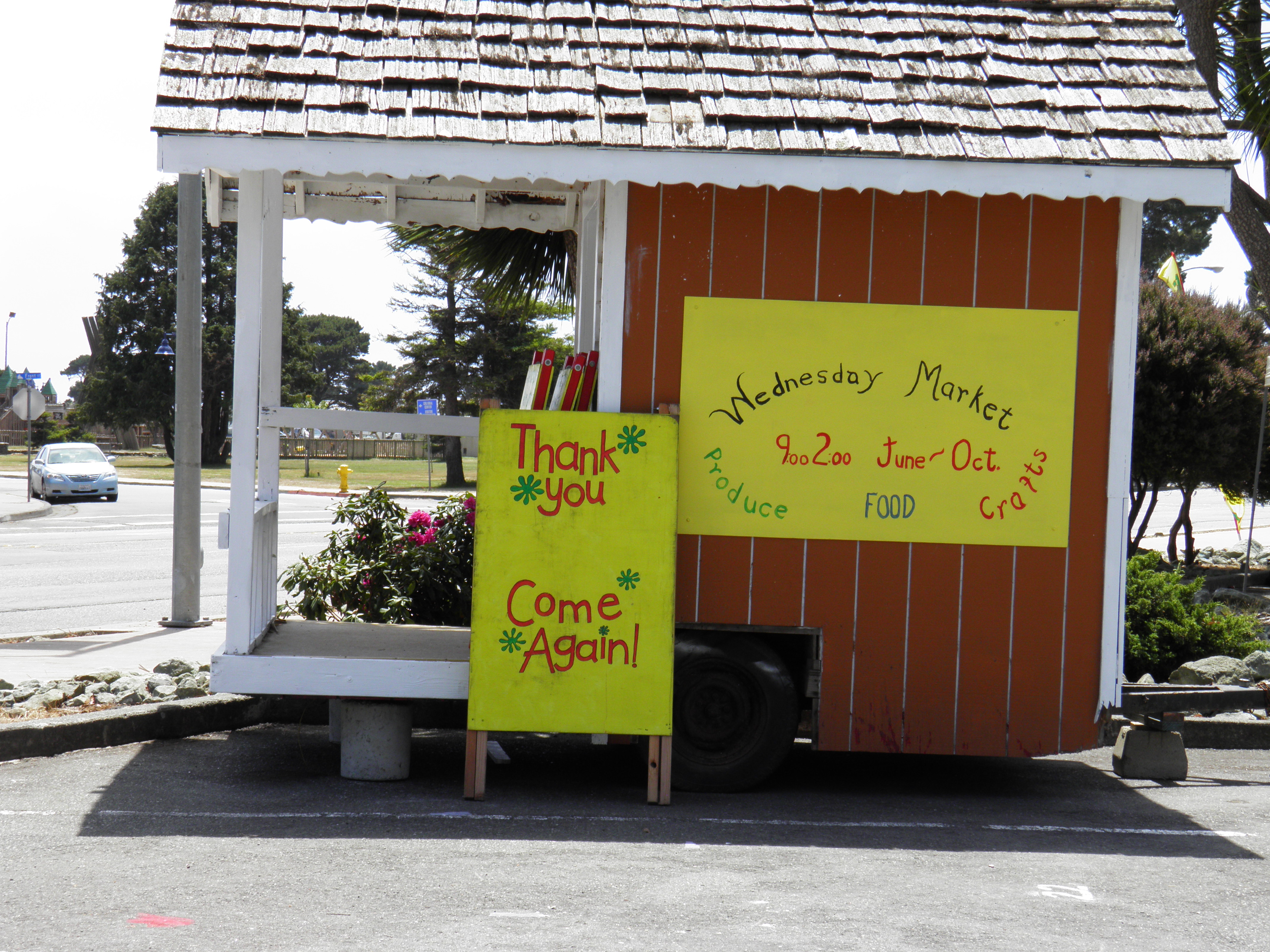
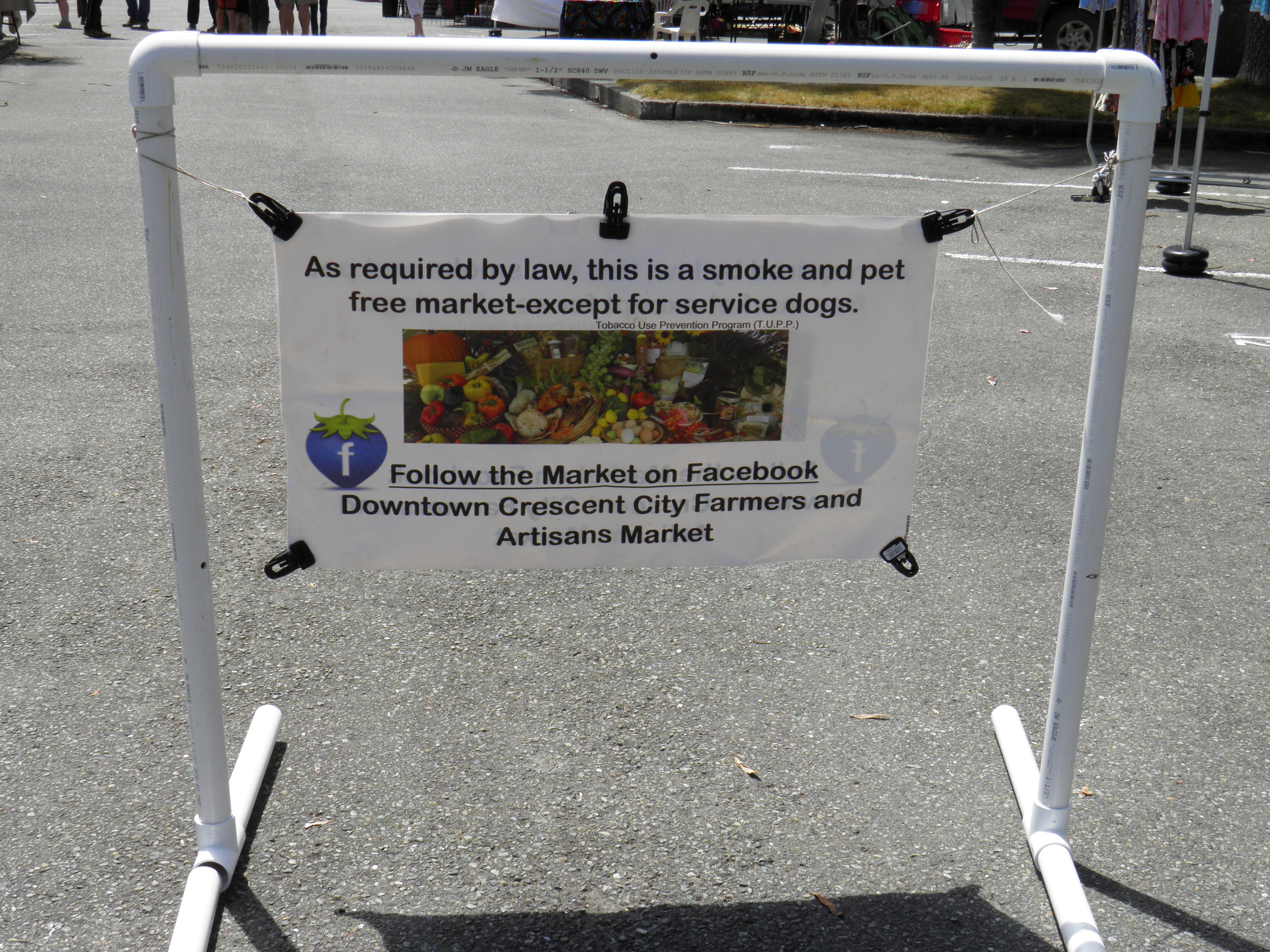
Crescent City has had a thriving farmers’ market for some years now, but I’ve never managed to be here when the market is being held. On Wednesday, as I was returning from a visit with an old friend, I noticed the Downtown Crescent City Farmers and Artisans Market sign in front of the Price Mall parking lot, where the market is set up, right along Front Street. (There’s also a farmers’ market at the fairgrounds on Saturdays.)


OLYMPUS DIGITAL CAMERA

OLYMPUS DIGITAL CAMERA

OLYMPUS DIGITAL CAMERA

OLYMPUS DIGITAL CAMERA

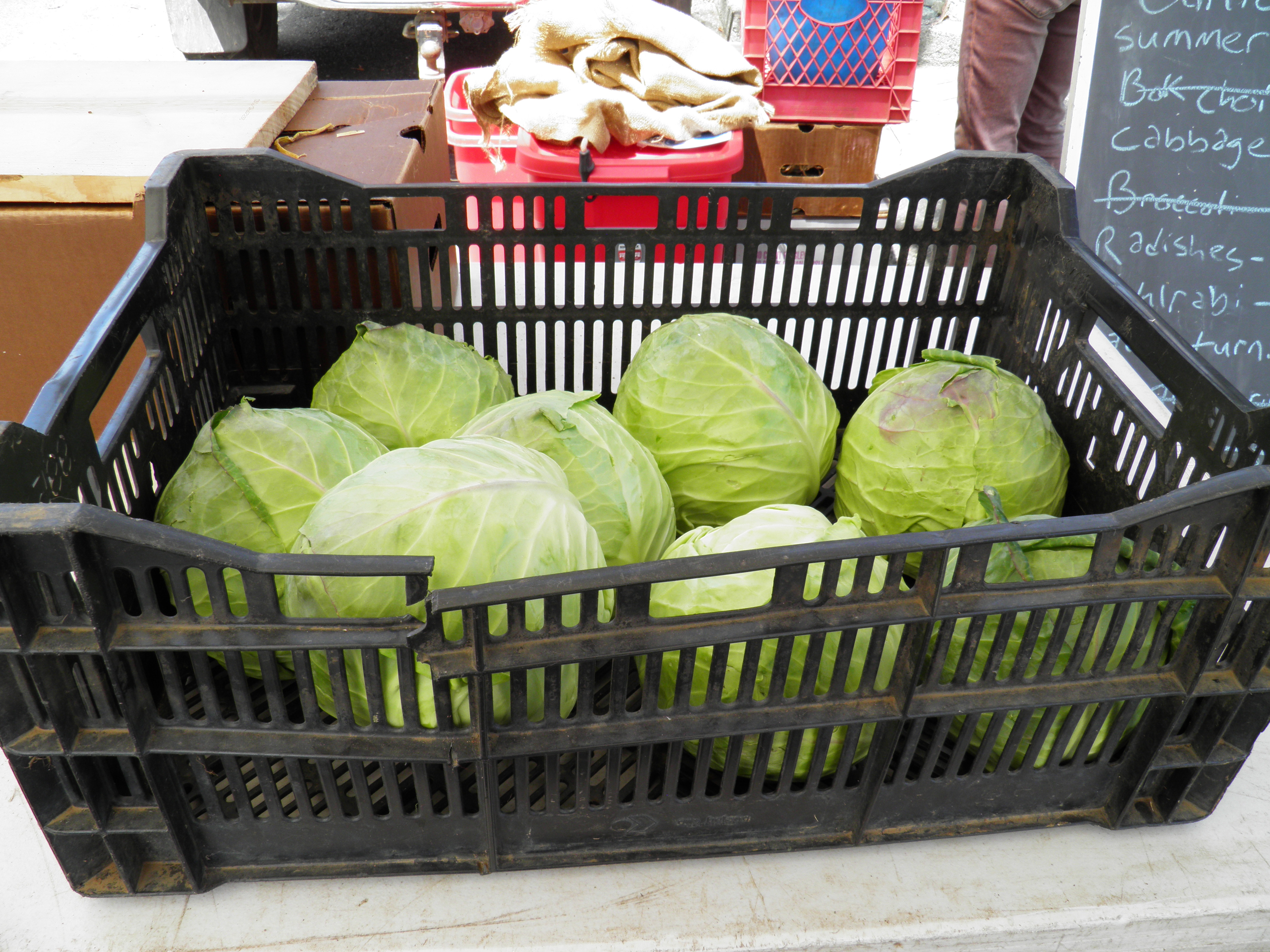
I arrived just as the market was closing at 2 p.m., but I still managed to speak with Hallie from Ocean Air Farms and get a few snapshots of some lovely produce she had leftover and the signboard that advertised what the farm was offering that day. Hallie told me that the farm sells to the farmers’ markets in Crescent City and Brookings and to the local whole/health foods store in Crescent City. I have to say, that cabbage looked wonderful, and if I’d had room in the little fridge in the travel trailer, I’d have bought one.


OLYMPUS DIGITAL CAMERA

OLYMPUS DIGITAL CAMERA

OLYMPUS DIGITAL CAMERA

OLYMPUS DIGITAL CAMERA

The farm is located in Fort Dick, which is inland just enough to get a little more warmth than is usual right in Crescent City, plus a little more relief from the coastal fog and winds, and is in an ideal growing area for all kinds of vegetables.

OLYMPUS DIGITAL CAMERA

OLYMPUS DIGITAL CAMERA

For my garden on the other side of the Sierra Nevada Mountains, it’s early in the season yet, but Ocean Air Farms is already harvesting and selling over a dozen different vegetables. The prices looked pretty good to me for fresh, organic produce, although I have to admit, I’m not a frequenter of farmers’ markets because I grow nearly everything I want in my own garden, so I’m not the best judge of a good price at a farmers’ market.


OLYMPUS DIGITAL CAMERA

OLYMPUS DIGITAL CAMERA

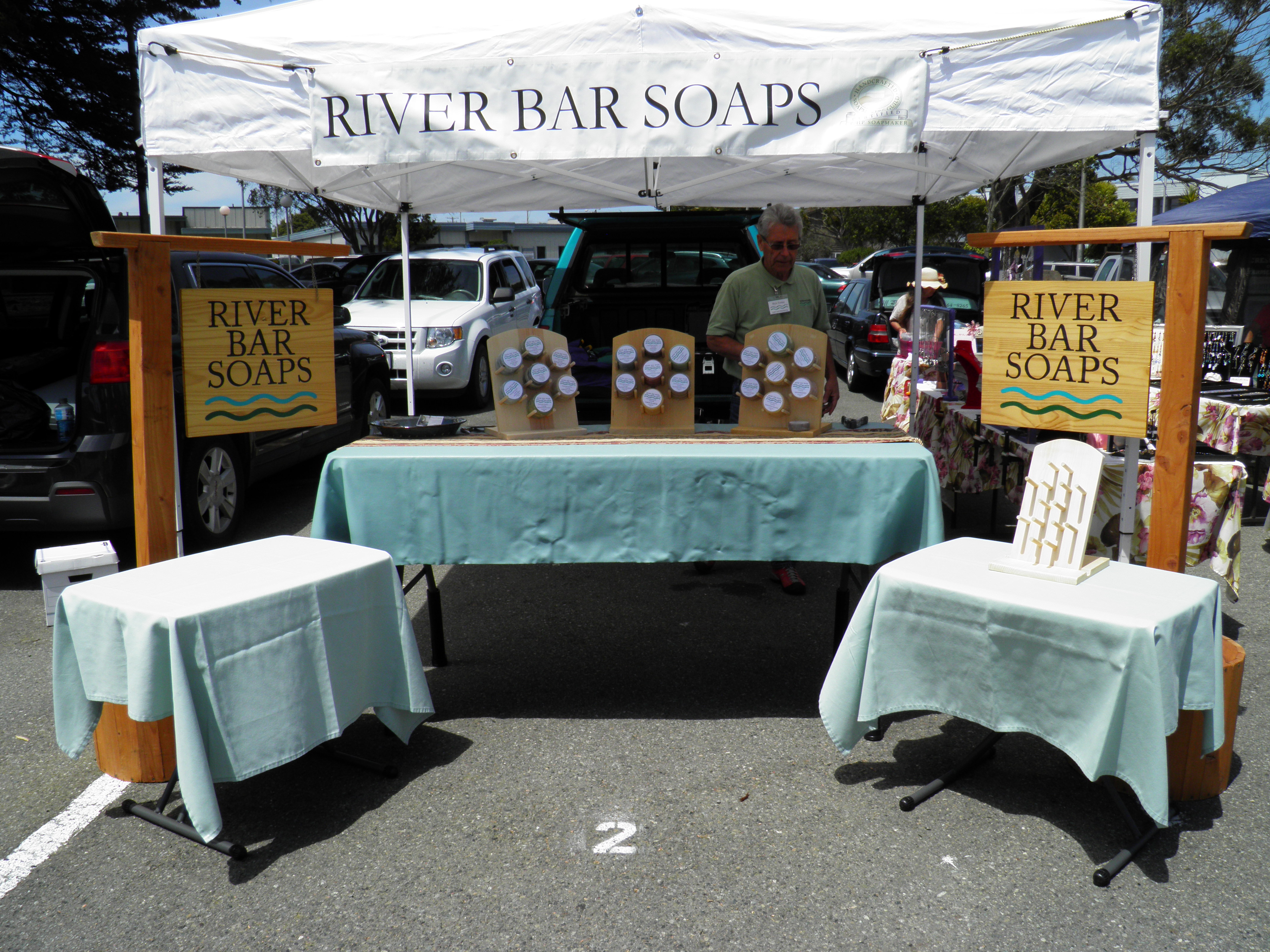
Just down the row from the Ocean Air Farms’ booth, I spoke with Rick Finley from River Bar Soaps. His family-owned company makes and sells a lovely variety of glycerin soaps with luscious-sounding scents. I’m a recent convert to homemade soap (and I’ll be posting more about that soon), so Rick and I talked about how much better handmade bar soaps make your skin feel than the liquid hand and body washes that have become so popular in the last 30 years. (I can’t wait to tell you about my experience with handmade soaps, but another time). If you’re a local and shopping at the farmers’ market, you might want to take a look at the River Bar Soaps booth. There’s also a website at www.riverbarsoaps.com for non-locals.

OLYMPUS DIGITAL CAMERA

OLYMPUS DIGITAL CAMERA


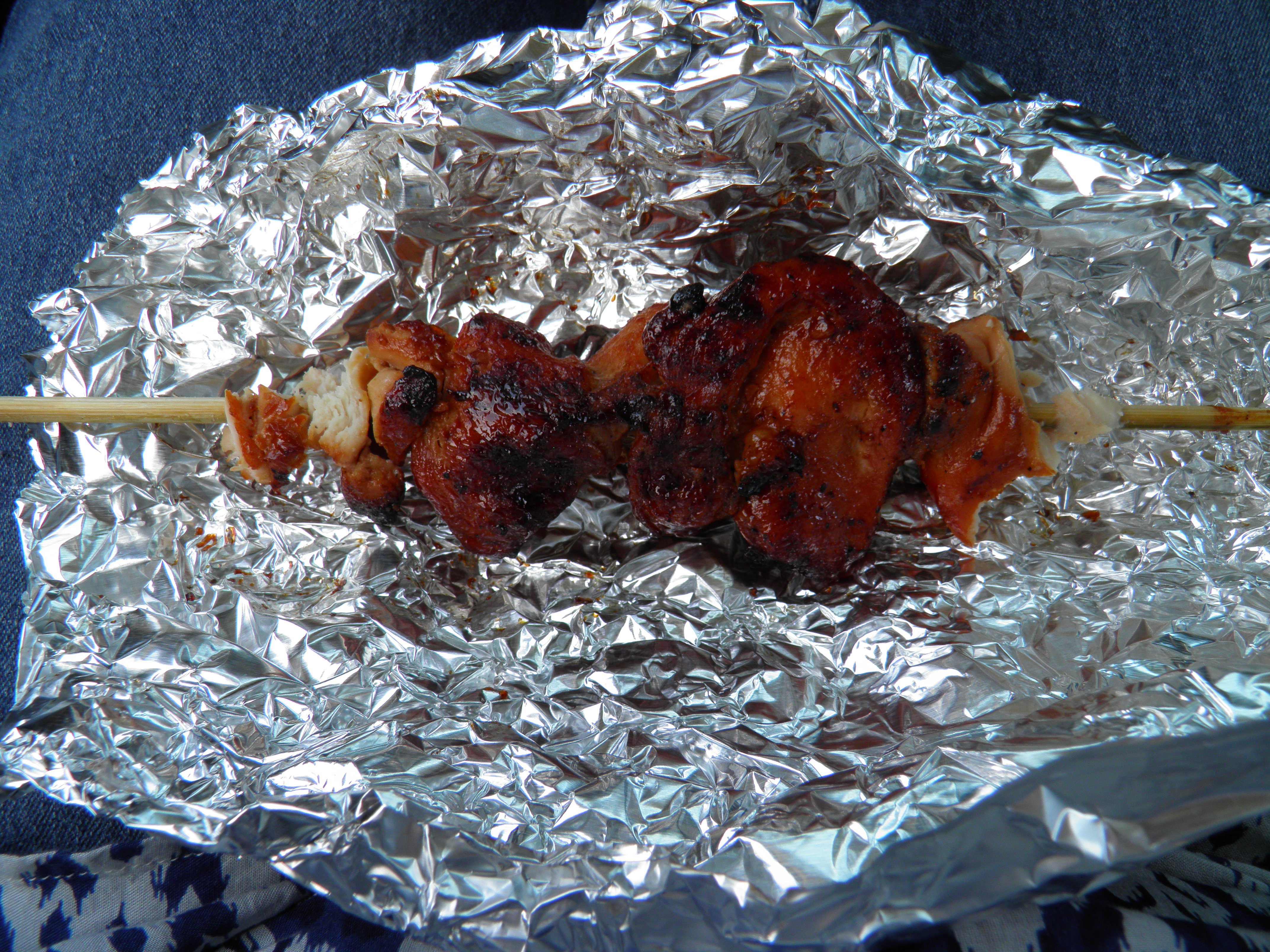
Most of the vendors were packing up, but I did manage to get a barbecued pork stick and some “Gatorade” (full of fruit and what my sister later told me was probably lychee) at the Filipino BBQ place, and boy, was that pork wonderful! I liked the drink too, but it was a little sweet for me. (I drank half of it, and then dumped some lime juice and some sparkling water in it when I got back to the trailer.) I strolled through the jewelry vendors’ booths as they were packing up, thinking how much sister would enjoy looking at the jewelry and wishing she were with me, and then I took my lunch down to the B street pier and ate while watching a brown pelican coasting in the bay. I found a great place for Dennis and me to launch the little kayaks so we can paddle around the protected harbor.

OLYMPUS DIGITAL CAMERA

OLYMPUS DIGITAL CAMERA

OLYMPUS DIGITAL CAMERA

OLYMPUS DIGITAL CAMERA

OLYMPUS DIGITAL CAMERA

OLYMPUS DIGITAL CAMERA

Wednesday was one of those wonderful days in Crescent City where the fog burns off early, and the sun comes out and mostly stays out, and the wind doesn’t get too strong. We had fresh fish for dinner and family to share it with. Feast time!

Standard
Main dishes, Recipes

Dried Mushrooms

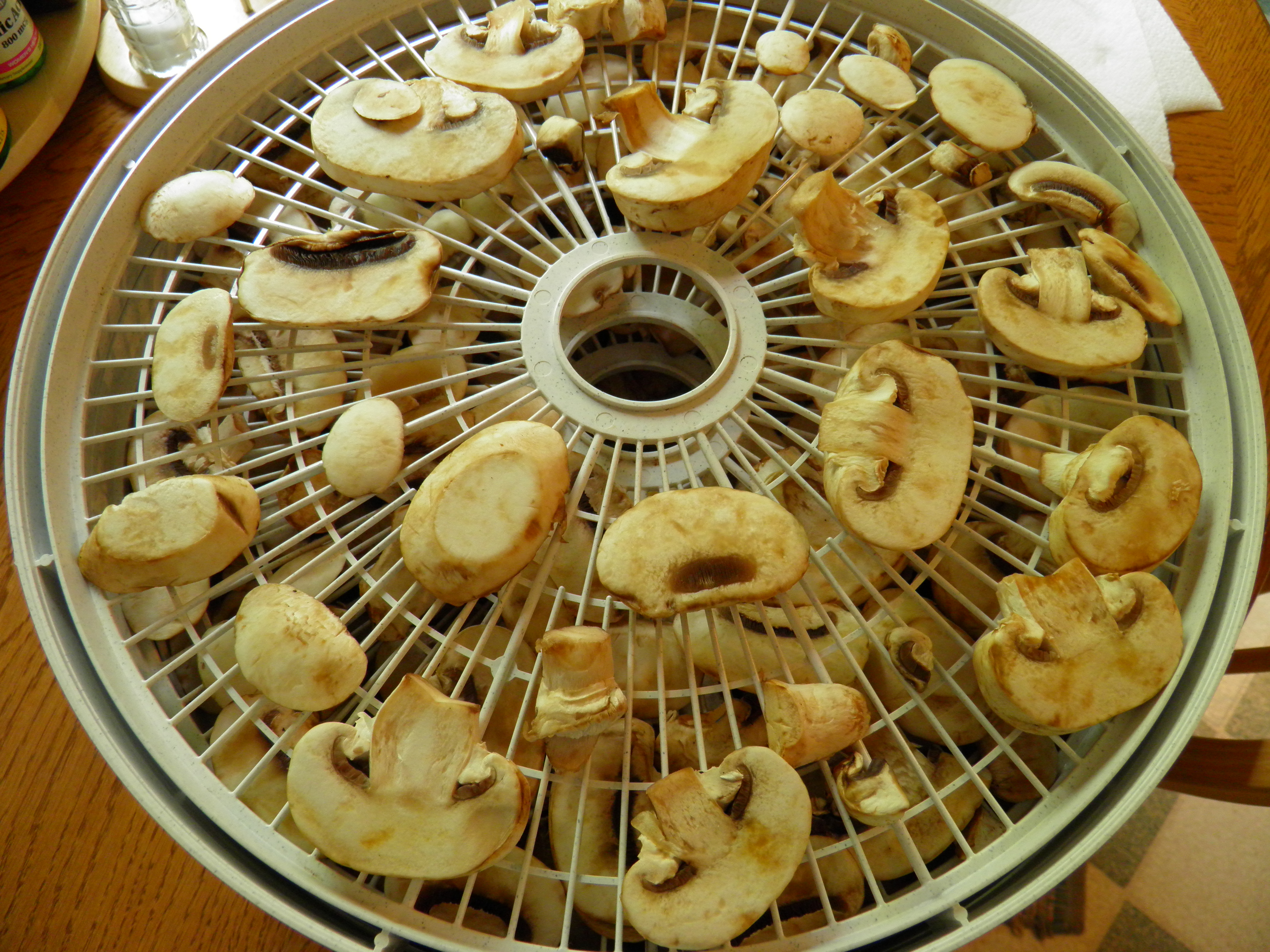
I can be lazy. I admit it. I wait for sliced mushrooms to go on sale, and then I buy lots of them, rinse the residual compost (or whatever—I don’t want to think about it) off them, drain them, and shake them onto the dehydrator trays. Easy peasy.

OLYMPUS DIGITAL CAMERA

OLYMPUS DIGITAL CAMERA

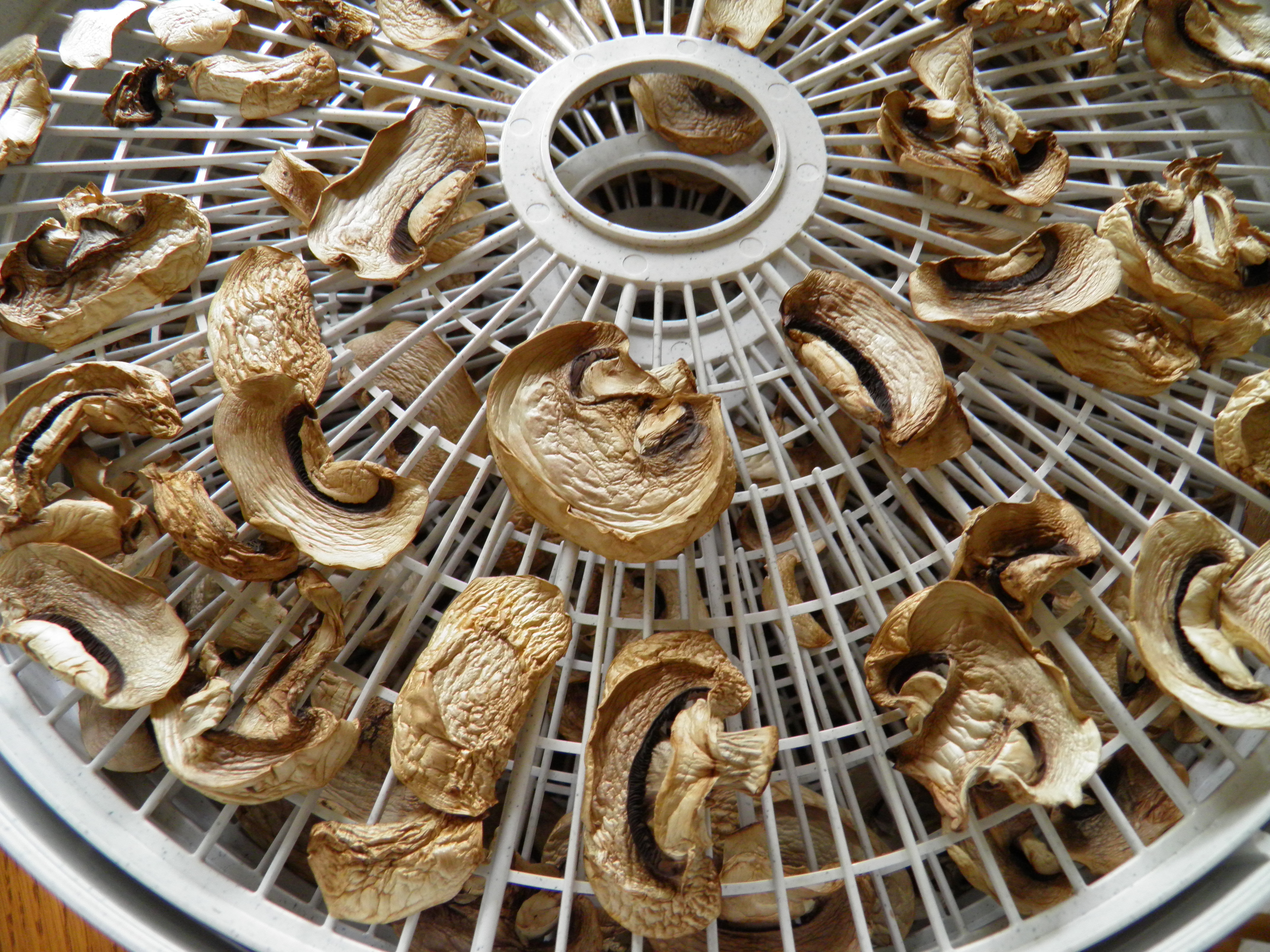
It only takes about 20 hrs. to dry them. I put some in yesterday afternoon, and by this morning, they were done.  I don’t have to slice them, and I’ll always have mushrooms on hand for my gluten-free Eggplant Lasagna.  And if you haven’t tried that dish, you should when fresh eggplant is available again.  (I just planted the ones I started from seed in March into the greenhouse planting beds!)

OLYMPUS DIGITAL CAMERA

You can make the lasagna without mushrooms, but they do add a texture and earthiness that I think enhances the flavor of the whole dish. Dried mushrooms are also great in soups or stews or dishes like Creamy Polenta with Mushroom (and Meat) Fricassee.  (Don’t be afraid to try various meats in this dish.  Beef stew meat will work perfectly well, as will any red meat.  I just happened to use bear meat.) This is a hearty dish for fall and winter that will reward you for taking the time to dry mushrooms when they’re on sale.

OLYMPUS DIGITAL CAMERA

You can substitute dried mushrooms in any cooked dish that calls for fresh mushrooms.  I always rehydrate the mushrooms for about 5 minutes in a bowl with enough warm water to cover them, then add both mushrooms and liquid to the dish.

The beauty part about drying mushrooms? The dehydration process intensifies the flavor of white button mushrooms. You know how the chefs on the food channels always say something like: don’t buy white button mushrooms because they have no flavor? (Yeah, they always want you to buy the expensive mushrooms, don’t they?) Well, dried white mushrooms have lots of earthy, mushroom flavor. And while they’re drying, your kitchen (or wherever you park your dehydrator) smells like you’re making the most incredible mushroom sauce.

Dried mushrooms last practically forever. Well, for two years, at least. Look at the label on the jar on the left. Those were dried almost two years ago, and they’re still perfectly good.

OLYMPUS DIGITAL CAMERA

OLYMPUS DIGITAL CAMERA

Time to fill up another jar.

OLYMPUS DIGITAL CAMERA

OLYMPUS DIGITAL CAMERA

Standard
condiment, Fermenting, Recipes, Uncategorized

Berry Vinaigrette Salad Dressing for Spring Greens

I love those fresh greens from my garden and greenhouse:  spinach, lettuce, kale.  I’m picking them now, a little late because I didn’t have my usual volunteers (I’m blaming the drought for that) and because my surgeries kept me from getting into the garden and greenhouse as early as I usually am in spring.

OLYMPUS DIGITAL CAMERA

But now it’s time for fresh salad, and to go with those lovely, fresh spring greens, you need a special salad dressing.  I have one.

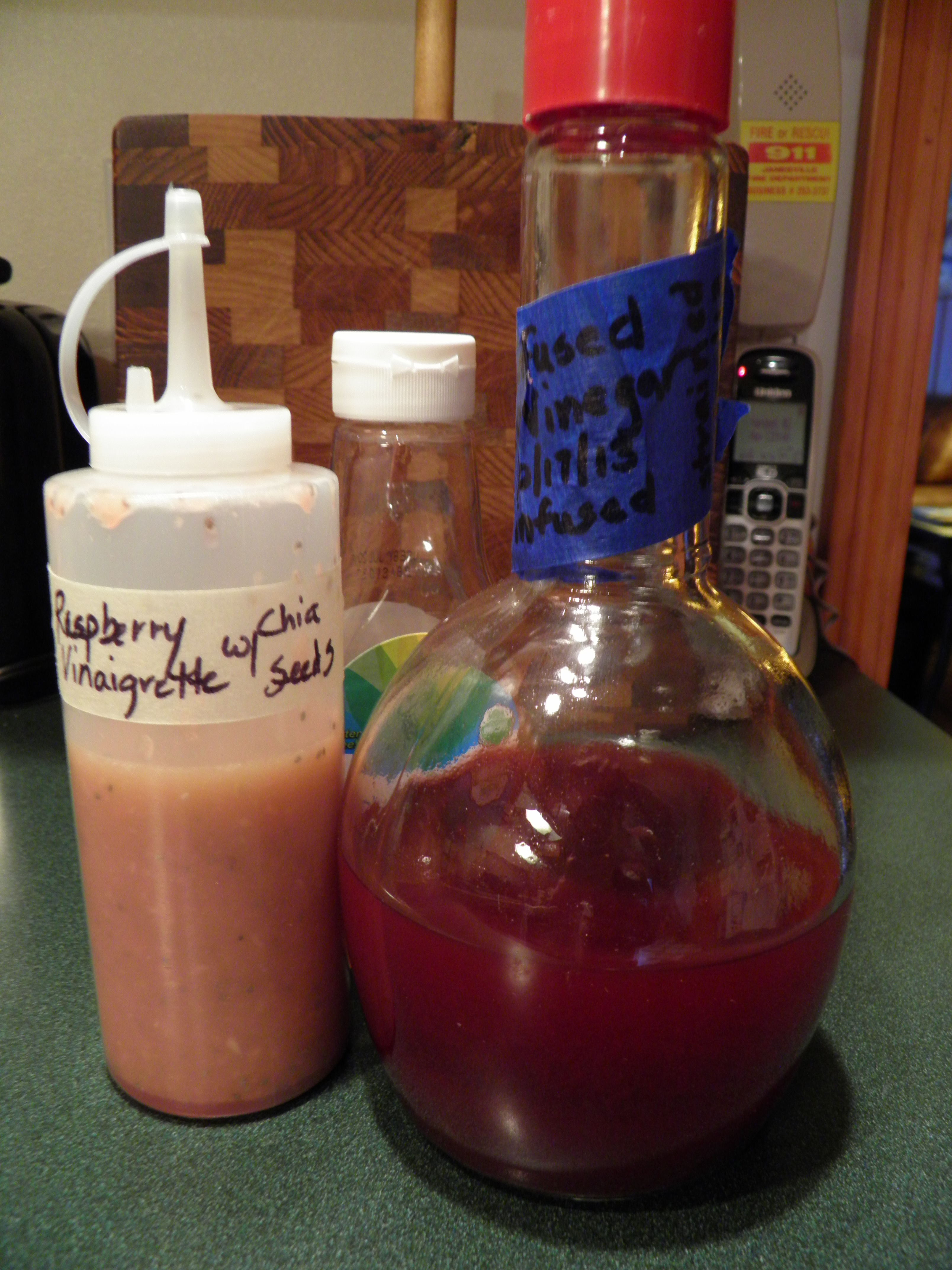
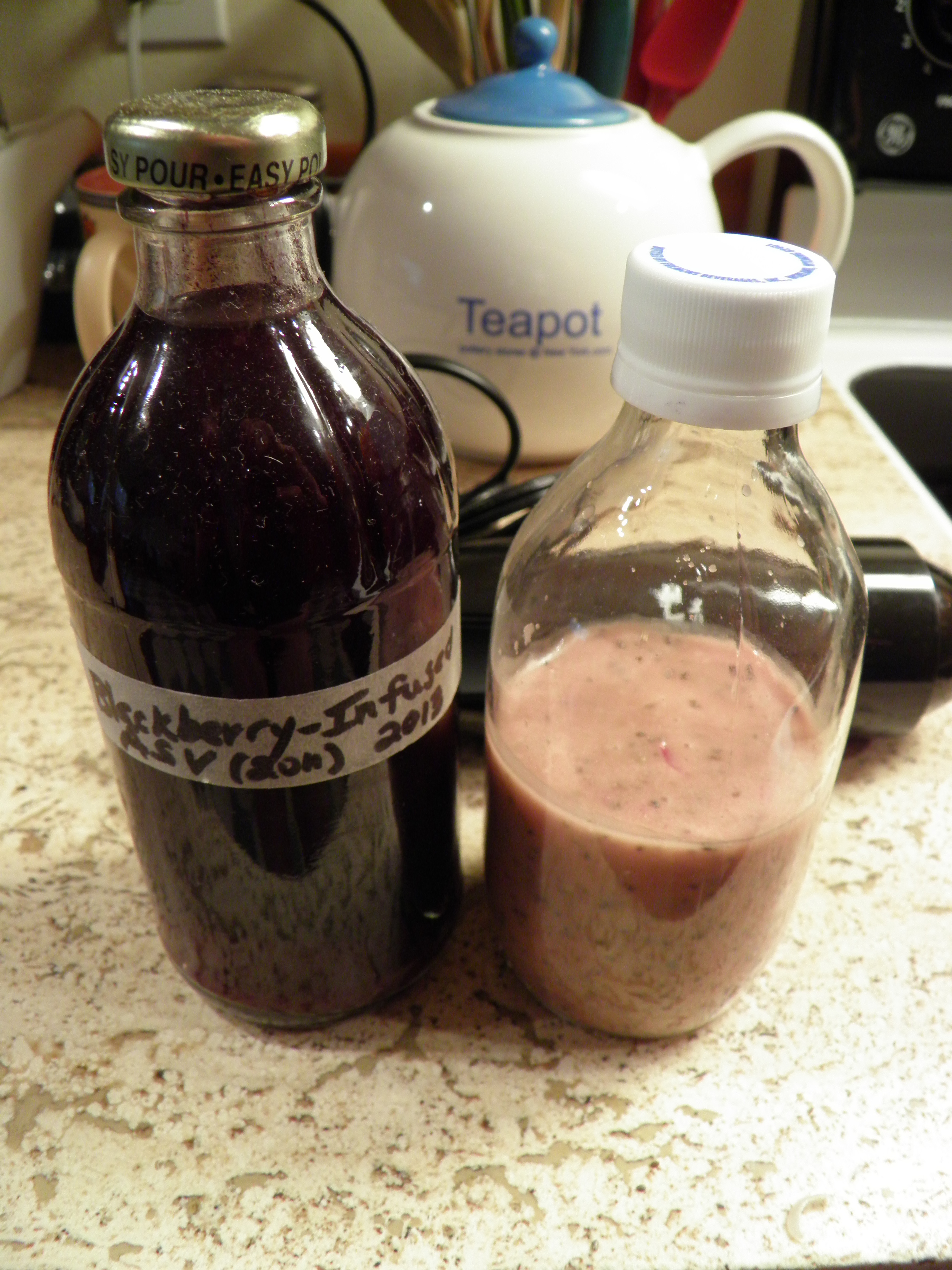
Some years ago (2013 to be exact), I made some raspberry- and blackberry-infused vinegars from my own homemade apple scrap vinegar and the pulp from my jam making.  I must say, those vinegars turned out beautifully, but I have not used them as much as I thought I would, so I still have some in the fridge, two years old but as delicious now as when I made them.  So to honor my fresh spring greens, I dug up my recipe for berry vinaigrette salad dressing.  Last time I wrote about this, I used my raspberry-infused vinegar, but this time, I used the blackberry-infused vinegar.  And all I can say is:  WOW!  Here is the recipe, with links to instructions for making your own infused vinegars.  I hope you will try this recipe, because I know you’ll enjoy it.

Raspberry or Blackberry Vinaigrette with Chia Seeds

(makes about ¾ cup)

OLYMPUS DIGITAL CAMERA

Ingredients:

2 tablespoons of minced onion (I like red onion in this)

¼ cup raspberry-infused vinegar or blackberry-infused vinegar

2 tablespoons of honey or agave syrup

½ teaspoon dry, powdered mustard or prepared Dijon mustard

½ cup olive oil

2 teaspoons chia seeds


Mix all ingredients in blender or food processor (if using food processor, you can mince the onions with it) or with a whisk in a bowl. The mustard will help to emulsify the dressing, but it will separate slightly, so it should be shaken well before using. If you like a sweeter dressing, add more honey or agave one teaspoon at a time until the sweetness level is right for your taste buds.

Now, if you don’t have any raspberry-infused vinegar, and don’t want to make it, for whatever reason, you can make this dressing without it. Simply substitute white wine vinegar or even rice vinegar for the raspberry-infused vinegar, and for the honey or agave, substitute raspberry jam or preserves. Again, taste your dressing to see if you’d like it sweeter. My version isn’t very sweet, as I don’t happen to care for sweet salad dressings.

Update:  When I started looking for recipes for raspberry vinaigrette salad dressings, I noticed that they all contained poppy seeds.  I have nothing against poppy seeds, but I don’t keep them in my kitchen.  However, I do have chia seeds on hand and am working on ways to incorporate them into more dishes (oatmeal and puddings, for example).  So I thought, why not?  At the time I decided to put chia seeds into this vinaigrette recipe, I didn’t know that chia seeds release a substance that thickens liquids.  This actually makes them perfect for a salad dressing, because they keep the dressing thick and emulsified.  In other words, they give the mustard, the traditional emulsifier for dressing (emulsification, put simply, is the smooth mixture of fats and liquids) a helping hand. This salad dressing won’t separate on you the way most vinaigrettes do.  And the chia seeds are high in Omega-3 fatty acids, good for your heart and other body parts, so it’s all to the good to incorporate them into as many dishes as you can.

Eat your spring greens with some delicious berry vinaigrette dressing with chia seeds.  It’s all good for you!


Standard
Garden and Greenhouse, Uncategorized

Potting Up

This post is about potting up those seeds you started that are now needing larger homes.  I use somewhat unorthodox containers for my potting up.

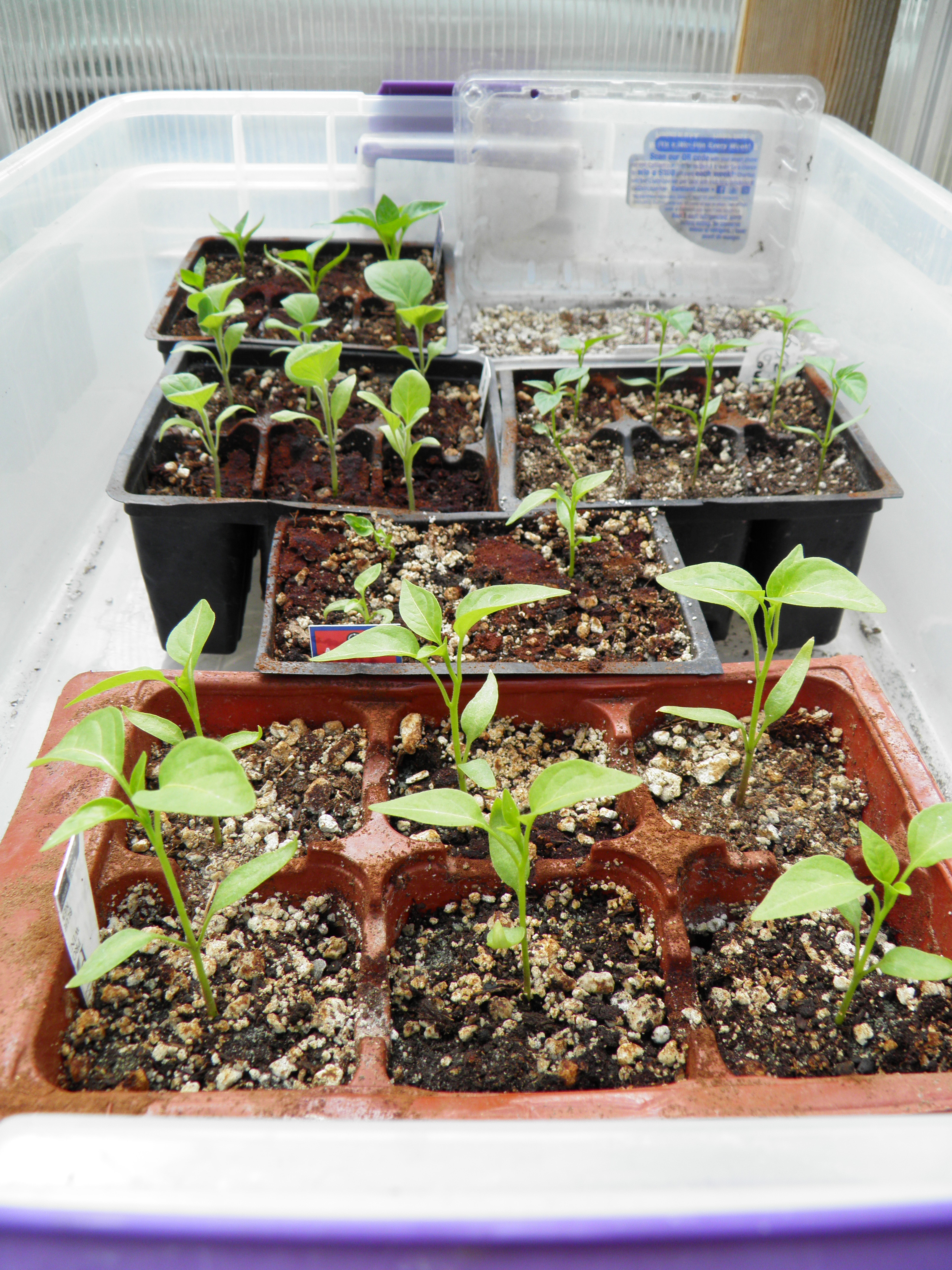
Awhile back, I wrote a post about my seed-starting procedure for peppers, eggplant, and tomatoes. The bell peppers and eggplant I started when that post was written are ready to go into the planter boxes in the greenhouse. I grow them in there because it’s the only way I can get their fruit to ripen. I just have to wait a little longer before I transplant them, until I know that I have the aphid-farming ants under control. I put out some sugar/borax mixture the other day, and haven’t seen an ant since. The ants themselves are not the problem; it’s the aphids they farm that suck the life out of the plants and prevent them from bearing as they should. I didn’t get a single eggplant last year and only a few stunted bell peppers because of the aphids.

The jalapenos and Serrano peppers will grow out in the garden, but it won’t be warm enough to set them out for at least a month, so they needed transplanting into larger containers. I also had a few tomato plants ready for transplanting.

OLYMPUS DIGITAL CAMERA

I planted 57 germinated tomato seeds, but a freak accident killed most of them. One morning, just a few days after I’d put the sprouted tomato seeds in their containers of soil, I left home for physical therapy in town, and to do some errands afterwards. It was a cool, cloudy morning, so I left the greenhouse closed up and the rope light on in the heated sand box with the lid on. The tomato six-packs were in that box. The clouds cleared off early, and the temperature climbed. I came home in the late afternoon to find the greenhouse at 120 degrees (it may have been hotter, but the thermometer was topped out at 120). There’s no telling how hot it was in the heated sand box, but it was hot enough to kill about 5 out of every 6 germinated seeds. I discovered that when after two weeks, only one or two in each container had emerged. The lesson there, always at least crack the lid on the hot box during the day. That venting might have saved my seedlings.

I do tend to go overboard with tomatoes. I always say I will scale back, and then I discover a new heirloom variety, and before I know it, I’ve planted 50 or so seeds. I really intended to not grow so many this year, but . . . the inevitable happened. So I guess the overheated greenhouse was God’s way of rescuing me from too many tomatoes. I have a few of each variety I planted except San Marzano. Even after replanting, the San Marzanos didn’t germinate. That seed must be old. Good thing I saved some fresh from last year’s crop.

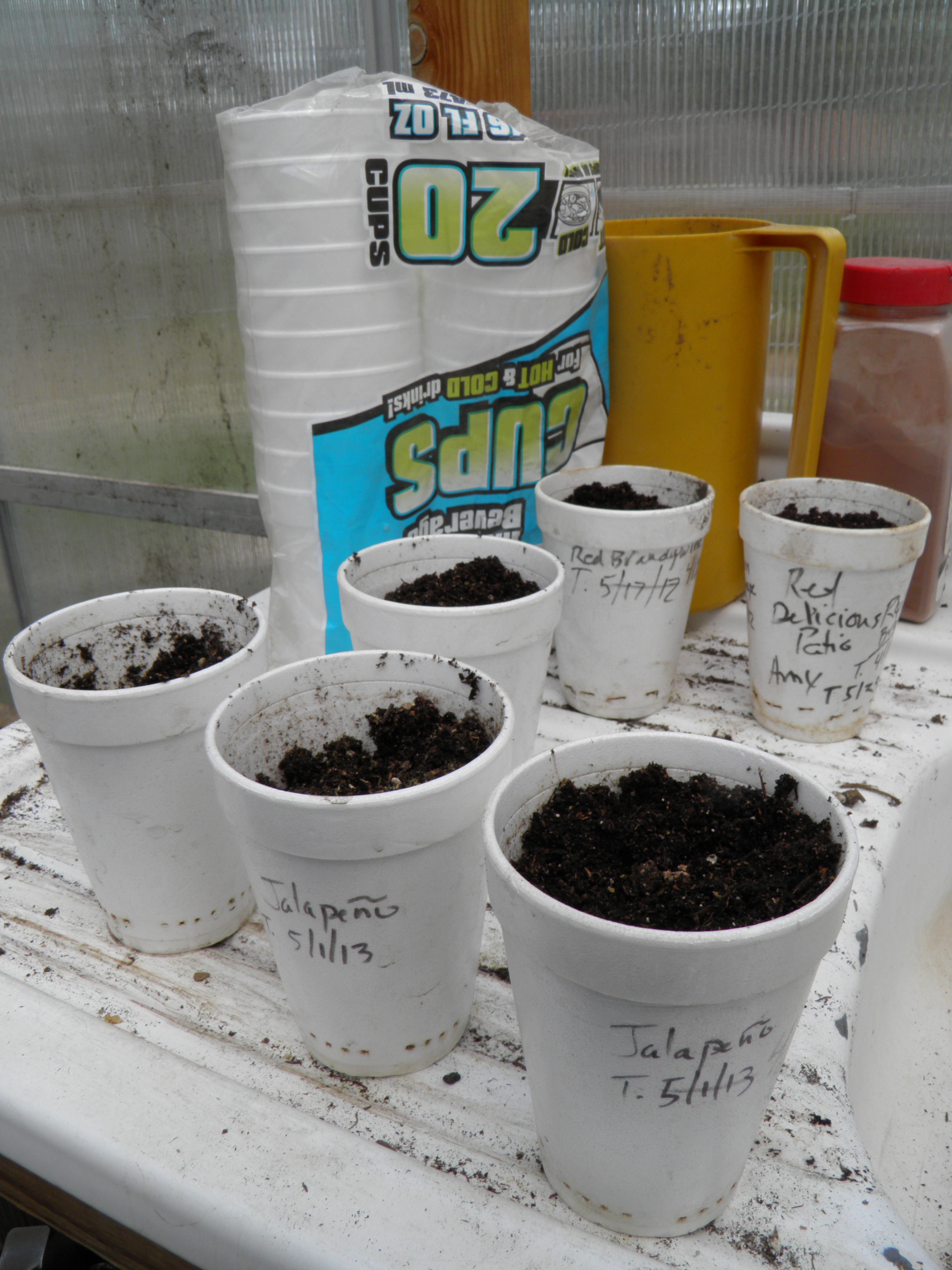
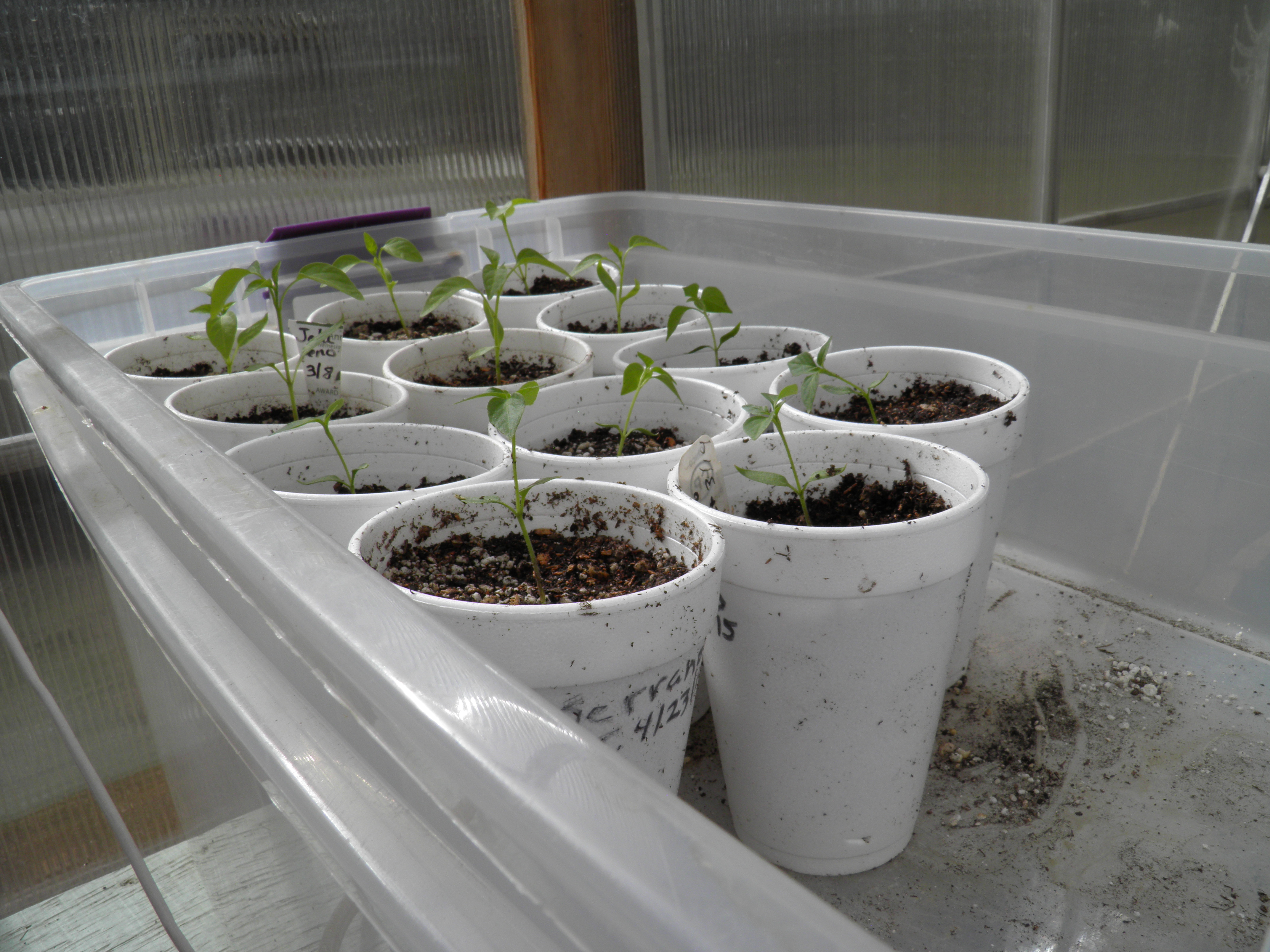
At any rate, a couple of days ago, I potted up 6 jalapenos and 6 Serrano peppers, and about a dozen tomatoes. For growing on, I use a rather unusual container. I plant my peppers and tomatoes in Styrofoam cups.

OLYMPUS DIGITAL CAMERA

Now I can just hear some of the objections. “Styrofoam isn’t green!” “What about recycling?” To the first objection, I will say this. No, Styrofoam isn’t typically thought of as a green material because it doesn’t break down. And that’s precisely why I use Styrofoam cups for pots. They are durable, can be used over and over (my answer to the second objection), and are easy to use. I began using Styrofoam cups a few years ago, and I am still using the same cups I started with. I did have to open a new package the other day because I have given away or sold some of my plants over the years and haven’t gotten the cups back.

Here’s how it works. I take a sharp knife (or the blade of a scissors or a fork) and poke several holes in the bottom of a 16 oz. cup. I also poke a few holes around the base of the cup, about a half-inch from the bottom, to ensure good drainage. I use a Sharpie to mark the cup with the plant variety and transplant date, then I fill the cup with my moist soil mix, and use my thumb to create a nice well for the tomato or pepper seedling’s rootball to fill.

OLYMPUS DIGITAL CAMERA

I use an old table fork to pry the seedling out of the six-pack cell and place it in the cup’s well. I press down firmly, and if it’s a tomato seedling, I add more soil to bring the soil level up to just below the seed leaves. Some people plant their tomato seedlings all the way up to the seed leaves in the first transplanting, but I don’t. The stem is still tender, and I want to give the seedling the chance to set its already-developed roots before it has to grow too many roots on its little stem. (When I plant the tomato in the garden, I’ll bury it down to the seed leaves.)

I do not deep-plant pepper seedlings. There’s some controversy about whether or not pepper stems grow roots like tomatoes, and whether or not it’s a good idea to deep-plant them. I don’t do it for one very simple reason. Peppers grow slowly. If you deep-plant a pepper seedling to grow roots on the stem, you are just delaying the fruiting process. I’ve never done it, and my hot peppers do very well outside in my short growing season. I’m afraid that trying to root pepper stems would seriously set back my pepper harvest.  So I just transplant to the same soil level as the plant was in its original container.

After transplanting, I water the seedling to settle the soil and the plant’s roots into the soil, and then the tomato cups go into an aluminum foil roasting pan which sits on the warmed planting beds in the greenhouse until it’s time to start hardening off the plants prior to planting out. If we get a late freeze, I plug in the radiant oil heater and set the foil pans around it to keep them from freezing. The foil pans also reflect light and warmth on dark days, and they make it easy for me to move the plants in and out of the greenhouse for hardening-off.

OLYMPUS DIGITAL CAMERA

The cups of transplanted peppers went back into the heated sand box. The rope light is now on a timer and only comes on at night. The lid stays off, and this gives the peppers enough warmth to be happy without making them wimpy. The eggplants and bell peppers went back under the light (along with a few tomatoes too small to transplant). The light is only on at night now as well (and also on a timer), until I’ve decided I’m ant-free and can plant them.

OLYMPUS DIGITAL CAMERAOLYMPUS DIGITAL CAMERA

I use 16 oz. cups because they allow me to bury my tomato seedlings to just the right depth and allow for good root development. For peppers, which will stay in the greenhouse until June, the 16 oz. cup gives this slow grower plenty of root room as well. This size gives my plants enough room to grow for the next month or six weeks before I plant them out under cover. If your plants don’t need to stay in pots as long as mine do, you could use 8 oz. cups. And as I said before, the cups can be used over and over, so for me, they’re guilt-free. When it comes time to transplant the young tomato or pepper into the garden, the root ball slides easily and freely out of that Styrofoam cup. It’s slick inside, you see, and if you need to squeeze a bit or tap on the bottom to free up the plant (I usually don’t have to), the cup can stand up to the pressure. And then when it’s time to put the cups away after the plants are in the ground, you just nest them inside each other and put them back in the bag for easy storage.

I recycle or reuse just about everything. I save plastic six-, four-, and three-packs from flowers or other plants I might buy and use them over and over again in the greenhouse as my seedlings’ first homes. I bought both my Styrofoam cups and foil roasting pans at the Dollar Store, so my main cash outlay in the greenhouse is in good, organic bagged soil. I usually get mine at the local nursery, whatever brand they have on sale, because it is not cheap. And yes, I recycle it!

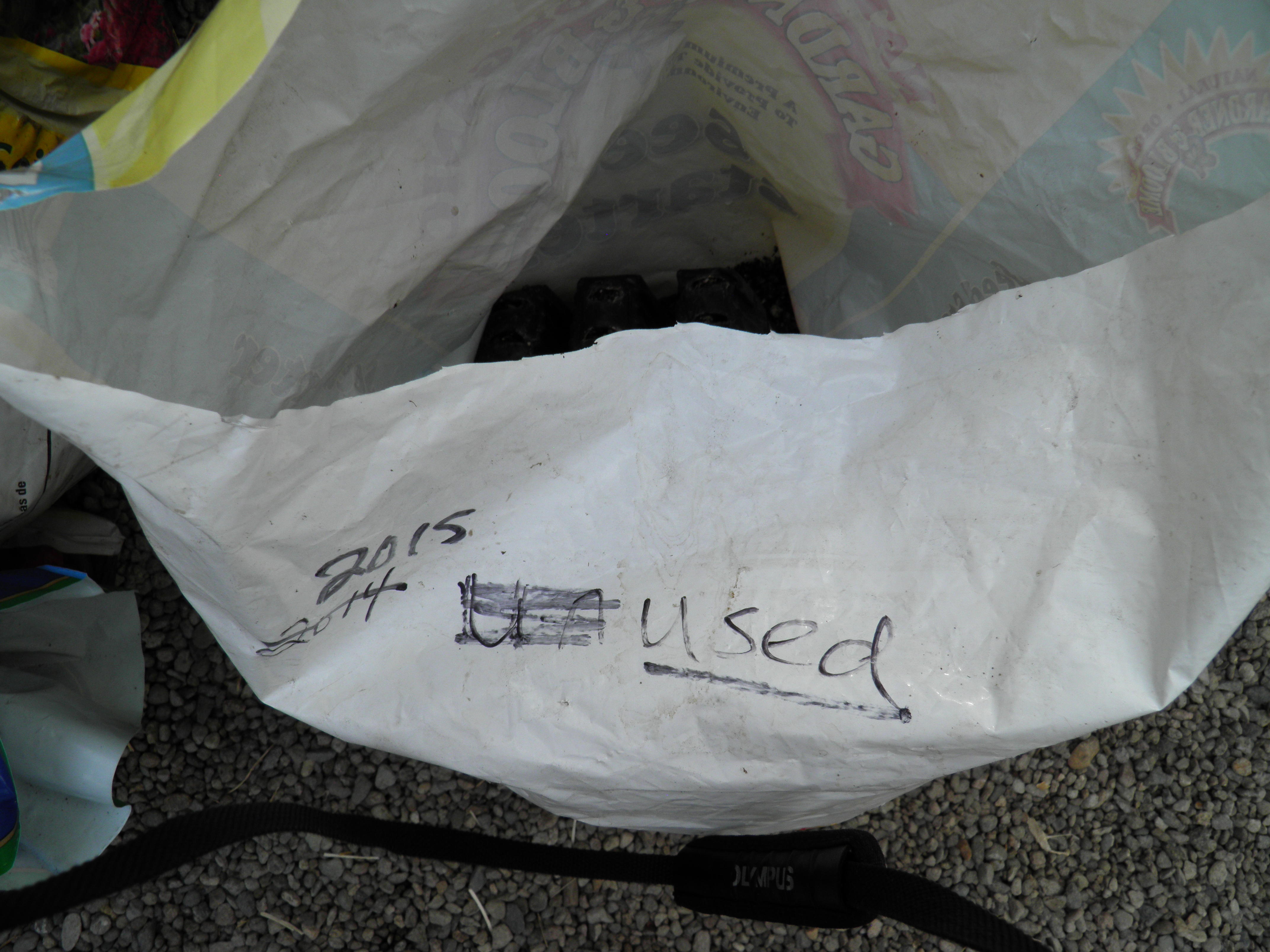
Any soil or starting medium left in the six packs is dumped into a labeled bag, and I use it the following year for starting my flower seeds. After the soil has been used for flowers, it’s dumped into the planting beds in the greenhouse or in the garden. I let the worms recharge it there.

OLYMPUS DIGITAL CAMERA

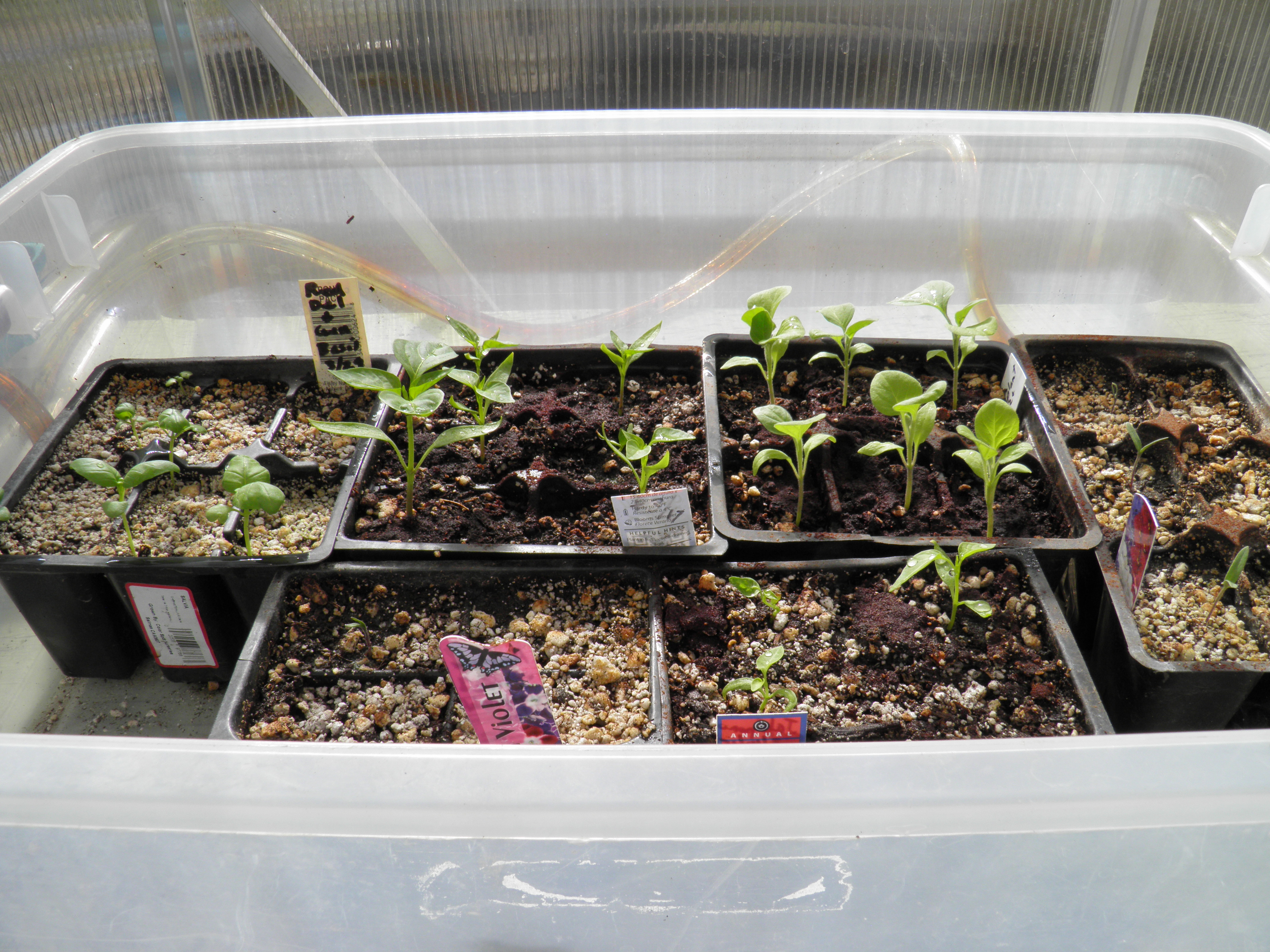
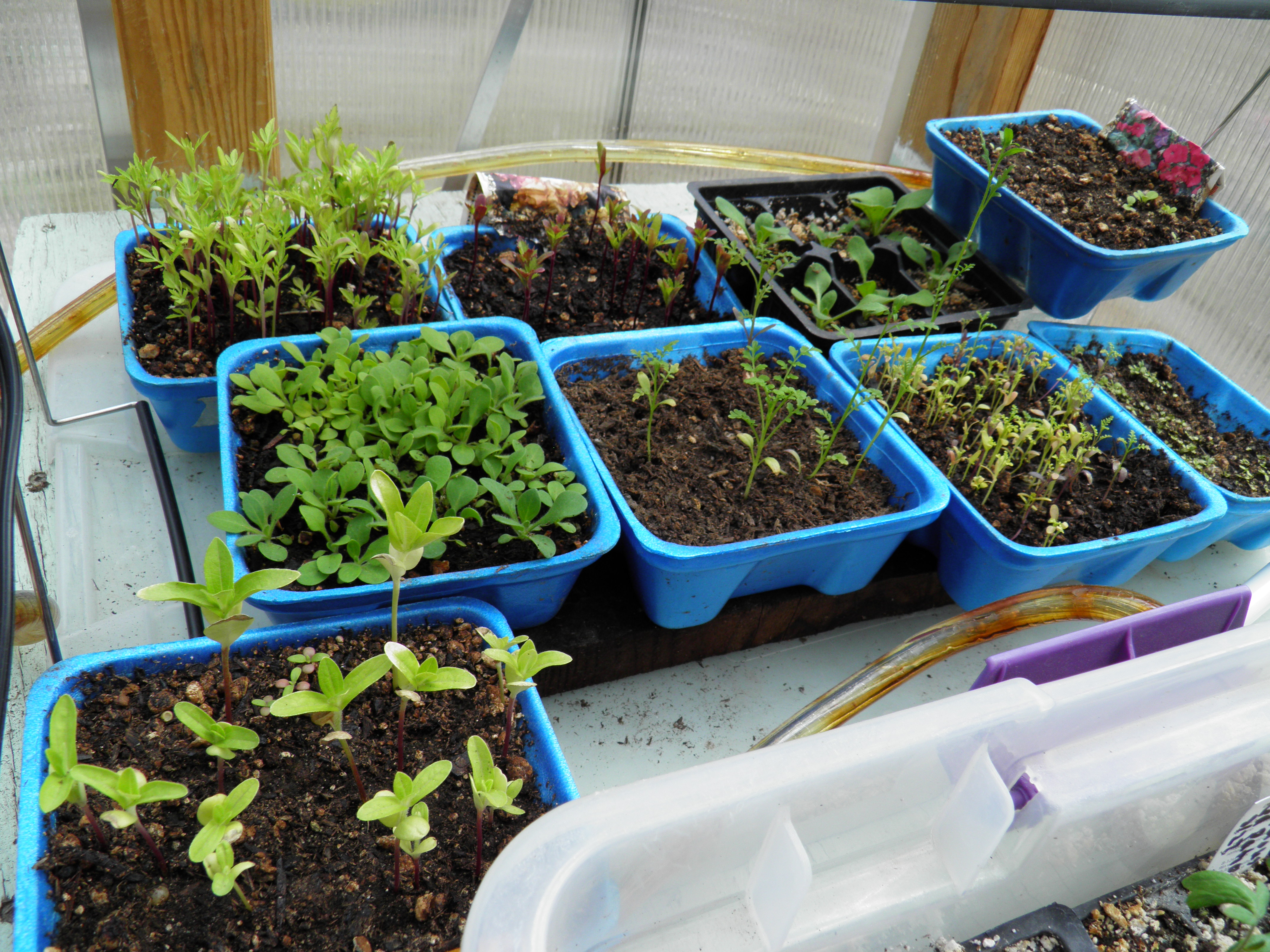
I also potted up some petunias and marigolds that I started from seed a month ago. I love petunias, but since seed companies have decided to start pelleting the seed, I do not have good luck growing them. The pelleted seed just refuses to germinate for me. Out of 50 pelleted seeds, I might get 6 or 7 plants. I do know how to grow petunia seed that hasn’t been tampered with; you just have to cover it very lightly, barely scratching it in because it is smaller than fine salt. (Back in the day, 40 years ago, I started hundreds of petunias from unpelleted seed and grew them on in flats for planting in the flower beds of the Trees of Mystery, where I was the head gardener.)

OLYMPUS DIGITAL CAMERA

Some years ago, I noticed that petunias would volunteer in my garden, so I started collecting seed from those volunteers and planting them in the greenhouse so I can have more and more and more petunias! After several generations, I now have petunias that are very hardy and smell incredible. (That’s my favorite thing about petunias—the scent.) I don’t have a lot of color variation. No reds or purples or ruffles or stripes, just plain trumpets in a pale pink, a deeper pink, a white, and a lavender, but I don’t care about the limited color selection. I care that I can grow petunias that smell heavenly, and I don’t have to mess around with that stupid pelleted seed.

I always plant lots of marigolds throughout my garden. They help to keep the tomato and cabbage worms away from those crops, and I just love their sunny colors. I get some volunteers every year, but not enough, so I gather seed each fall for the next year’s crop.

One last word about unorthodox containers. I will use just about anything as a seed-starting container in the greenhouse. The blue boxes in the picture below are Styrofoam mushroom boxes. I save them when I buy mushrooms, wash the boxes, poke holes in them for drainage just like the cups, and use them for starting flowers. I also save the plastic boxes that cherry tomatoes, or grapes, or blueberries are sometimes packaged in (there’s one in the picture above that’s about to receive some petunias), those plastic trays that hold grocery store sweet rolls (my husband buys those sometimes), and any other plastic thing that can be used like a flat, especially if it already has some kind of drainage holes in it. Then I fill the container with soil or starting medium and sow my seed like I would in a flat. When the plants are up and ready for pricking off, I may use a similar container and plant six to a mushroom or grape box.

OLYMPUS DIGITAL CAMERA

If I need larger containers, say, gallon-size, and I’ve used up all my actual pots, metal or plastic coffee cans make good temporary pots. They just need some nail holes poked into them for drainage. For the plastic coffee cans, hold the nail head with pliers and heat the tip with a lighter, then poke it through the plastic. These can be used over and over again as well.

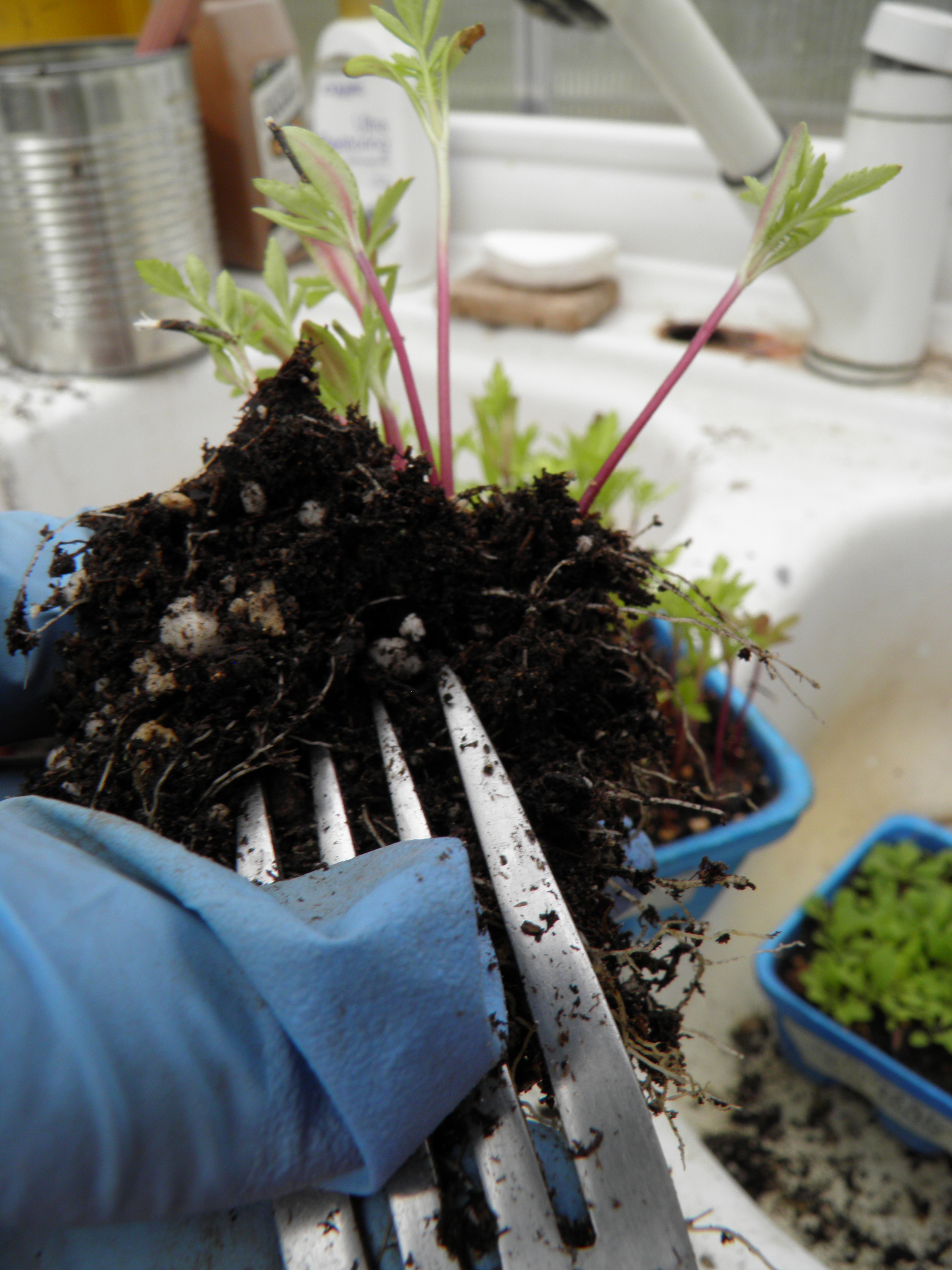
I’m going to leave you with two transplanting tips. 1) My favorite transplanting tool is a common table fork. I have several in the greenhouse. As I mentioned before, they are useful for prying a seedling out of its cell in a six-pack without damaging the root ball. They’re also useful for disentangling roots in a wad of seedlings from a “flat.” I use a fork to tease the plants and roots apart for transplanting. (They also make good weeders if they’re sturdy enough.)

OLYMPUS DIGITAL CAMERA

And 2) when you’re transplanting, always remember to handle seedlings by their leaves or roots, never by their stems. If you bruise the stem, you’ll likely lose the plant. The stem is the conduit from the roots to the leaves, the spine, if you will. Damage it, and your plant is toast. Bulky gloves are no good for transplanting, so if you have an owie on your finger (like I often do), use vinyl or nitrile gloves to protect your hands. It’s a lot easier to handle delicate seedlings with thin, surgical-type gloves. Oh, I guess that was a bonus, tip #3!


Standard
Garden and Greenhouse

It’s Time for Tomatoes!

In my last post, I detailed my seed-starting procedure, beginning with peppers. All of those pepper seeds germinated in the plastic bags on paper towels, were planted in containers of warmed, moist seed-starting mix, and placed in the heated sand box to emerge. They’ve now emerged and are under a grow light (cutting several days off the time it would take to germinate them in seed starting mix) so the sand box is free for tomato seedlings. But first, I have to sprout them.

I germinate tomato seeds the same way I do peppers, on a wet paper towel sealed inside a plastic zipper bag (click link to seed starting process ), but tomatoes usually sprout much faster. The seed coat of a tomato isn’t as hard; whereas, a pepper seed might take up to a week (or even a little longer) to sprout, tomato seeds usually sprout within three days or so in the bags, and the seed leaves usually emerge from the soil just a couple of days after planting the germinated seed.

(Note: of the ten varieties of tomato seeds I started on 2/22/15, five of them, including Red Brandywine, Cherokee Purple, Rainbow, Black Vermissage, and Roma) have sprouted some seeds within 48 hrs. of placement in the bag, and others are showing the characteristic “pointing” of the seed coat which indicates that the radicle (embryonic root) is beginning to push through the seed coat.)

The seed packet says the seedlings should emerge in 8-10 days when planted directly into soil, so you can see that germinating on paper towels in plastic bags can cut up to five days off the initial germination process. As I said in the previous post, five days might not matter to some folks with a longer growing season, but it makes a big difference to me. I have to cope with a short growing season usually started by a delayed and chancy spring, and often ending in an early, bitter fall.

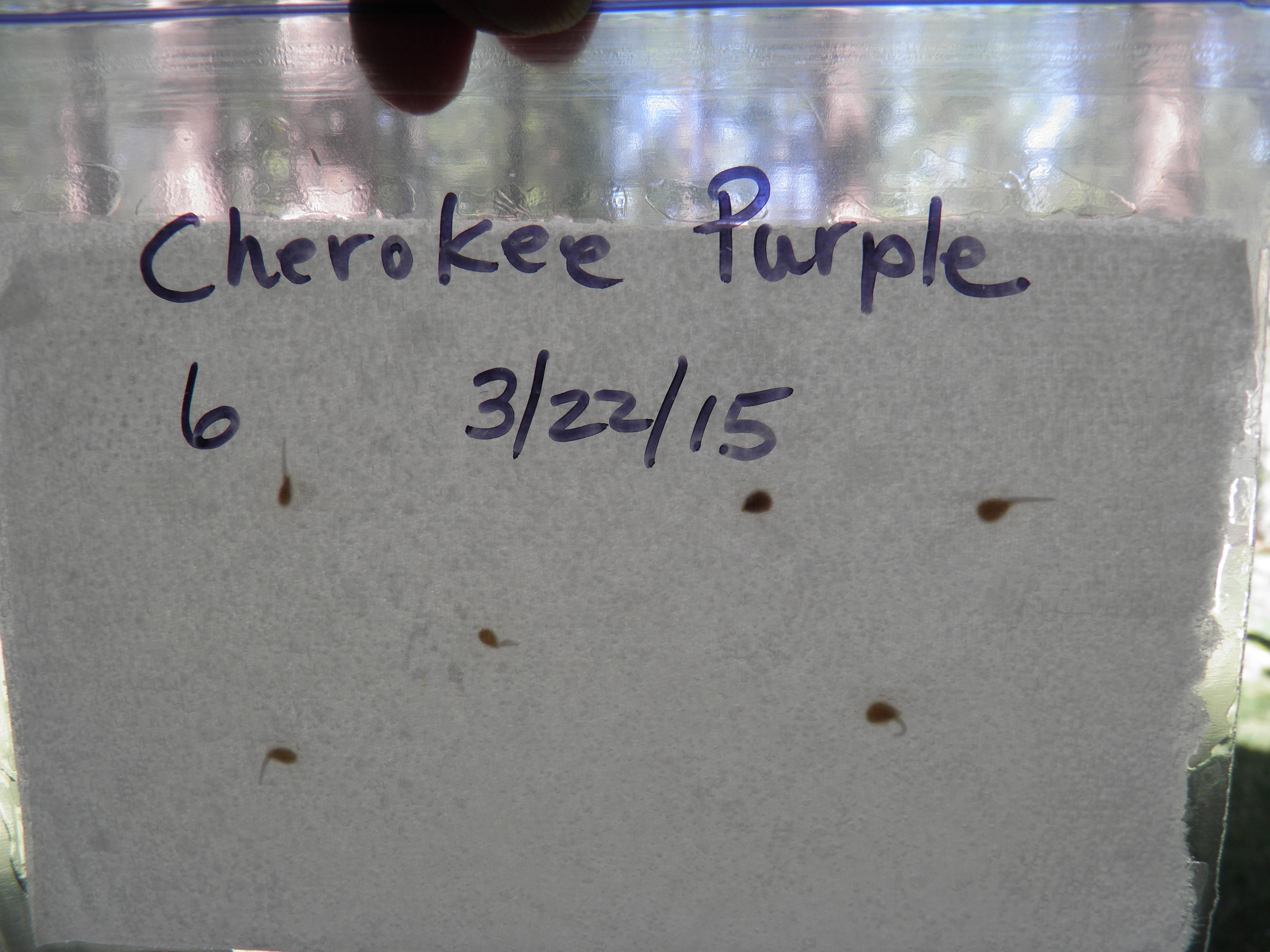
I taught myself something this year about the paper towel/plastic bag method of seed starting. I learned the paper towel sprouting method online, but the site I used (years ago—I have no idea where it was now) said to roll up the paper towels into tubes and insert all the tubes into one single plastic zipper bag. I never thought inserting all the tubes containing  different varieties into the same bag was a good idea—it’s possible to transmit diseases on some of the seeds to all of them that way, so I always used separate bags for different varieties of one plant or different species altogether. In addition, I’ve had some trouble with the tubes in past years. If you wait just one day too long to plant your seeds, the radicle will have grown into the paper towel, and then you have to be very careful not to damage it when you remove the seed for planting in the containers, and this is complicated further by the need to unroll the tube. This year, I thought, why not just fold one thickness of paper towel over the seed, put each one into its own zipper sandwich bag, and let it go at that. And I discovered that doing this makes it really easy to check for germination. You just hold the bag up to the window or a bright light, and you can see how many seeds have sprouted without even opening the bag. You can decide whether some of the seeds need to go into the soil immediately, or whether you can wait another day for the laggards.

OLYMPUS DIGITAL CAMERA

Because I already have seeds sprouting and will be planting them in soil today, yesterday (3/24/15)  I had to get the six packs filled with organic sprouting medium, moistened, and into the heat/sand box to warm up, so that the sprouted seeds don’t get shocked moving from a warm environment (the bag by the stove) into a cold one.

OLYMPUS DIGITAL CAMERA

If all my seeds sprout, I’m going to be a little short on space in the heated sand box, but I’m not expecting 100% germination out of the older seed. And if I run out of space, I will have to rig another heat box with the old rope light, which should work well enough for a few extra containers.

All this means I should have tomato seedlings by the end of the week! And that means that I will have about six weeks to grow them on before it’s time to set them out in the garden. That should be just about right. Tomatoes grow very quickly, especially in the protected environment of the greenhouse. It’s also important not to set out tomato plants that are blooming. You might think you’re getting a head start this way, but the transplanting process causes the tomato stem to root, and diverts energy from fruit production. It’s actually better, even with a short growing season, to plant tomatoes before they have developed blossoms.   For more about growing on, see my post from last spring:  “Transplant.”

I planted 30 germinated tomato seeds today.  I might have gone a little overboard, as usual. I started 67 tomato seeds from 10 different varieties,and I’ll probably be planting the rest within a day or two. I’m expecting about 60 plants, because some of my seed is getting a little old, and I don’t expect more than a 50% germination rate from a few varieties. (When the germination rate for a particular seed packet, whether homegrown or store bought, falls below 50%, I discard the seed for fresh. But I have saved seeds from my heirlooms since 2010, so I have a lot of extra seed too.) Some of these plants are for my son and daughter, and if I still have more than I need for my own garden, I’ll sell or give away the extras.

Every year, I say I won’t grow so many tomatoes, because I work myself to a frazzle preserving the fruit in the late summer and fall. But every spring, I’m just too tantalized by the prospect of ripe, sweet, homegrown tomatoes to eat fresh, or turn into charred salsa or Italian red sauce or tomato-apple chutney, to restrain myself.


Standard