Main dishes, Recipes, Uncategorized

Meatloaf, Meatballs, and Variations

As some of you know, I’m recovering from shoulder surgery and don’t have much use of my right hand and arm for the next few weeks. I’m planning to do some reblogging during that time, highlighting previous recipes appropriate for the season. But a discussion on a friend’s page last week prompted me to jot down quickly my meatloaf recipe for you. Why? Because it’s different from any other meatloaf recipe I’ve ever seen in one key ingredient, and I want to share that with you so that you can make delicious, moist, fiber-rich and lower carb meatloaf and meatballs. For the rationale behind the use of this key ingredient, I’ve included the link to a previous post about sausage-stuffed acorn squash, which uses a variation on meatloaf. Rather than beef or turkey burger, this recipe uses ground breakfast sausage, and it is a delicious, easy, and attractive main dish. This previous post explains why I use oat bran rather than bread crumbs, cracker crumbs, or oatmeal as the binder in my meatloaf and meatballs. Here is my regular meatloaf recipe. If you want to make meatballs, this mixture works beautifully in that application; directions are at the end of this post.

Moist Meat Loaf

Serves 4

1 lb. ground meat  (beef, turkey, bison, venison—all are good)

½ cup chopped onions

1 seeded, chopped jalapeno or serrano pepper or ¼ teaspoon red pepper flakes (optional)

2 cloves garlic, chopped

1 large or extra-large egg, lightly beaten

¼ cup milk

½ cup oat bran (secret ingredient!)

2 tablespoons dehydrated veggie flakes (optional)

¼ teaspoon salt (or more to your taste)

¼ teaspoon black pepper (or more to your taste)

1-3 teaspoons crushed dried oregano (I like lots of herbage)

1-3 teaspoons crushed dried parsley

Olive oil

Saute onions, peppers, and garlic in a tablespoon or two of olive oil until tender.  Set aside to cool.  In a medium sized bowl, gently mix ground meat, egg, milk, oat bran, herbs, and seasonings.  Mix in sautéed vegetables. Press gently into bottom of bowl.

If I am using a fatty meat, I like to cook my meatloaf on a rack so that the fat drains off the meat as it roasts. If you are using a ground beef with 10% or less fat content, you don’t need to use a rack. But for 80/20 or 70/30 grinds (ratio of lean meat to fat), a rack should be used. Line a 13 X 9 inch cake pan or a cookie sheet with foil for easier clean-up later and place rack over top. Spray with cooking spray or grease with vegetable shortening or oil to prevent meatloaf from sticking to rack or foil. If you are using a lean meat, you can place the meatloaf directly on the foil-lined pan. Do not ever cook a meatloaf in a loaf pan. The meat does not roast when confined in a loaf pan and both texture and flavor will be affected negatively.

Turn bowl upside down over rack or pan and unmold meatloaf. If you are using a rack, leave the meatloaf in this mound shape. If you try to form it into a loaf on the rack, you will have sticking issues when you try to serve it. The mound shape produces a variety of lengths when sliced, which works out fine for families with small children or those with smaller appetites. If you unmound the meatloaf onto a greased, foil-lined pan, you can mold it into the traditional loaf shape.

Some people like to add a sauce to the top of the meatloaf at this point, traditionally, ketchup. I prefer not to add a sauce until the top of the meatloaf has browned. I think this produces better flavor, so I add my sauce or glaze in the last 15-20 minutes of cooking. And I’ve come up with a delicious glaze that is way better than plain ketchup. See below.

Bake uncovered for 60 to 75 minutes at 375 degrees, or until meat juices run clear.

Glaze

¼ cup ketchup

¼ cup spicy brown mustard

2 tablespoons Worchestershire sauce

1 tablespoon maple syrup

Mix together.  Brush on meat in last 15-20 minutes of cooking time.

For meat balls:

Form meat mixture into 1 ½ inch balls. Place on foil-lined cookie sheet and roast at 375 degrees for 20-30 minutes, or until browned. Remove from oven and finish cooking in a pot of Italian Red Sauce. Meatballs in sauce can be served alone or tossed with cooked pasta of your choice.


Standard
Main dishes, Recipes

Green Turkey Burritos

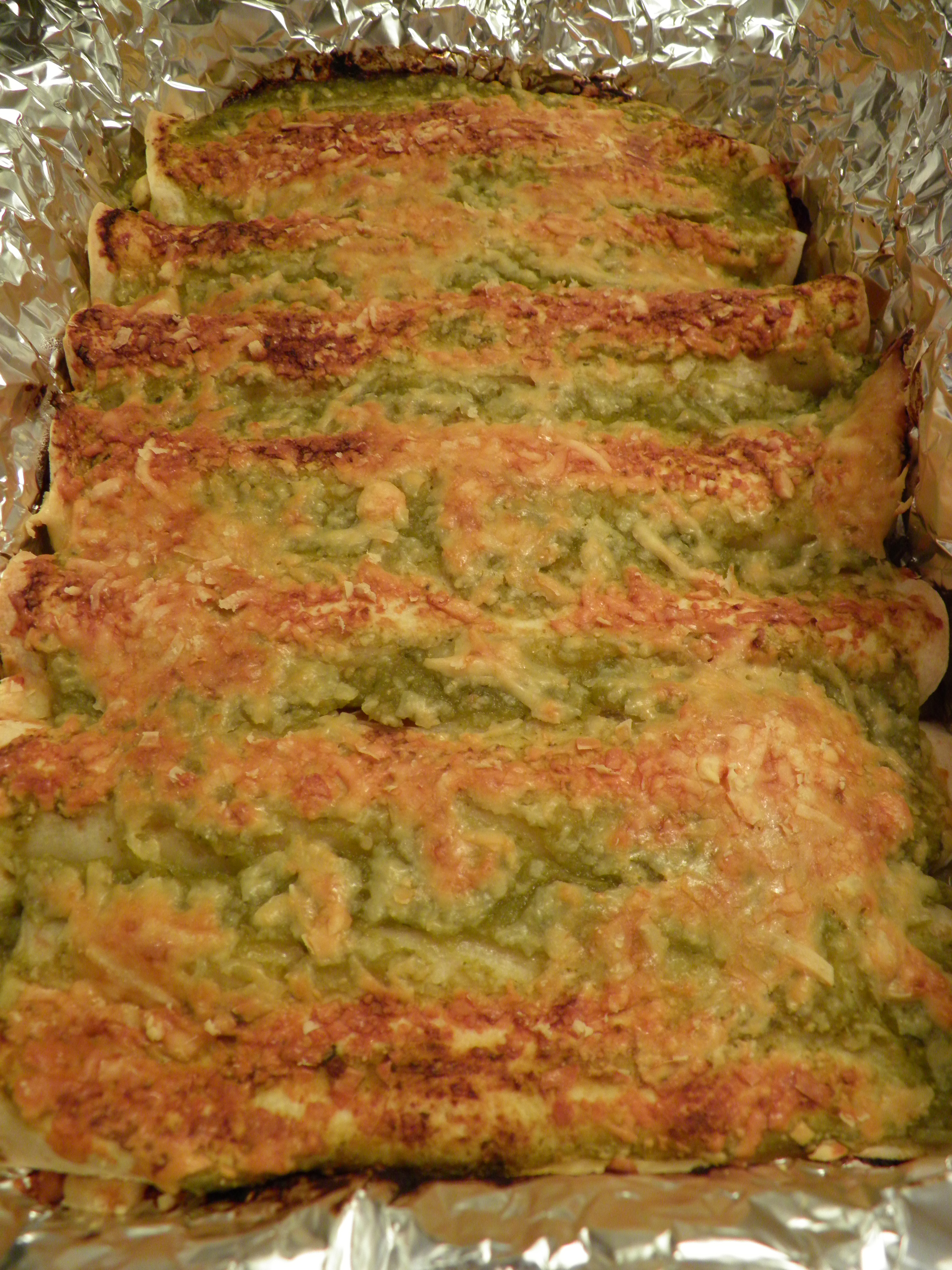
Last year, I used my leftover Thanksgiving turkey in Green Turkey Enchiladas.  (For that recipe, follow the link to my post from last Thanksgiving, and as a bonus, there’s a delicious way in this previous post to use up leftover pumpkin pie.)

OLYMPUS DIGITAL CAMERA

This year, I decided to make Green Turkey Burritos.  Burritos are easier to freeze individually, and that was important this year.  I’m putting up meals in the freezer in preparation for shoulder surgery that’s going to put me out of commission for several weeks.

I’m using up my leftover turkey breast meat in these Green Turkey Burritos.  Green turkey anything might sound a little weird but these things are oh, so good.  If you made any green tomato salsa, this is an excellent way to use it and take care of your Thanksgiving leftovers.  You can also use a store-bought salsa verde in this recipe.

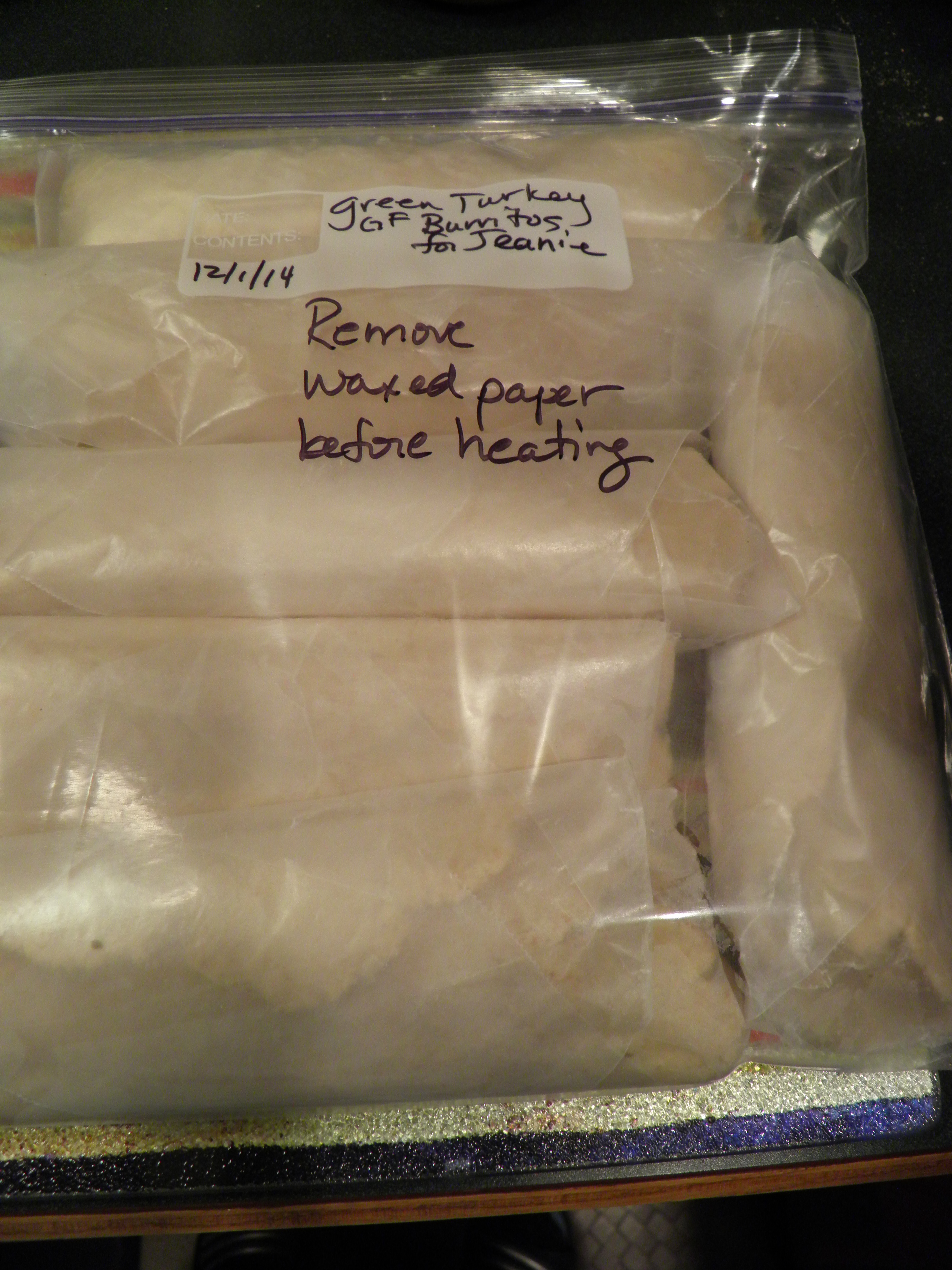
I make gluten-free tortillas for myself, and use store-bought flour tortillas for Dennis, and I make up a bag for each of us.  The burritos are wrapped in waxed paper, which doesn’t stick to the tortillas when frozen like plastic wrap sometimes does, but which must be removed before heating.  I write a note on the bag to this effect, because I don’t trust Dennis to remember if I just tell him!

OLYMPUS DIGITAL CAMERA   OLYMPUS DIGITAL CAMERA

Here’s the gluten-free tortilla recipe I use, followed by the Green Turkey filling recipe which can be used for individual burritos or a pan of enchiladas.  Follow the directions here, if you wish to make enchiladas.

Gluten Free Tortillas

(makes 6)

2 cups gluten-free all-purpose flour blend of choice (I use Bob’s Red Mill)
1 teaspoon xanthan gum
1½ teaspoons baking powder
1 teaspoon kosher salt
4 teaspoons vegetable shortening (or lard, if you have it)
½–1 cup warm water (about 100°F)

Place flour, xanthan gum, baking powder and salt in a food processor and mix well. Add 4 teaspoons shortening and pulse to combine. Pour in warm water a little at a time in a slow, steady stream, pulsing to combine until dough comes together in a ball.  I usually use about 1/2 cup of water.

With wet hands, divide dough into 6 pieces and roll into ball.  With rolling pin, roll each piece separately between two sheets of rice-flour dusted plastic wrap until about 1/8-inch thick and 8 inches wide.

Heat a large cast-iron or nonstick skillet. Peel plastic wrap off one side of tortilla, then flip the tortilla over your hand and peel off the other piece of plastic wrap. (You can reuse these for the rest of the tortillas.)  When the skillet is hot, place a raw tortilla flat in the skillet, one at a time. Cook until bubbles appear (about 30 seconds), then flip and cook another 30 seconds or until very lightly browned.  (Under-cooking a little is better than over-cooking, especially if you intend to roll them for burritos or enchiladas.)  Remove from pan and place on a plate, layering sheets of waxed paper between each tortilla. Continue until all tortillas are cooked.

For Green Turkey Burritos:

If using the gluten-free tortillas above, fill and roll while still warm and pliable.  If you wish, you may use 1 pkg. of store bought flour tortillas.  The recipe below fills 10-12 medium-sized tortillas, so I always make some burritos or enchiladas for me with the gluten-free tortillas and use the rest of the filling in flour tortillas for Dennis.

Green Turkey Burrito or Enchilada Filling

3 cups chopped turkey, light or dark meat or mixed

2 cups blended salsa verde (1 pint jar)

1 cup chopped onions

1 small can sliced black olives

2 cups shredded cheese (l like a mix of Monterey jack and pepper jack)

Mix all ingredients together.  Place a tortilla on a square of waxed paper.  Fill each tortilla with 3-4 tablespoons of meat/cheese filling.  Roll up like a burrito. (I don’t fold in the ends on the gluten-free tortillas because they just aren’t large enough or flexible enough).  Roll waxed paper around burrito, tucking in ends.  Place burritos in freezer bag and freeze.

To heat and serve, take burrito out of bag, unwrap waxed paper, and if microwaving, place on plate and heat in microwave under cover (you can use the waxed paper) for 2-3 minutes or until hot.  Sprinkle with a little more shredded cheese, if desired, and serve with sour cream, guacamole, or more salsa verde.

I prefer these heated in the oven.  Heat oven to 375, unwrap burrito, and place on heat-proof pie plate.  Sprinkle with shredded cheese and bake until burrito is hot through, and cheese is melted.  Serve with accompaniments as above.

One of these burritos alone makes a good lunch.  For dinner, serve with black beans squeezed with a lime wedge and a salad.


Standard
Desserts, Gluten-free, Recipes, Uncategorized

Thanksgiving Pies

Who’s baking pies today?  I am!  There are three old favorites, standards, I always make:  apple pie, pumpkin pie, and sour cream apple pie. I might make a new recipe (a chocolate pie) this year, and if it’s good, I’ll share it with you next week.

OLYMPUS DIGITAL CAMERA

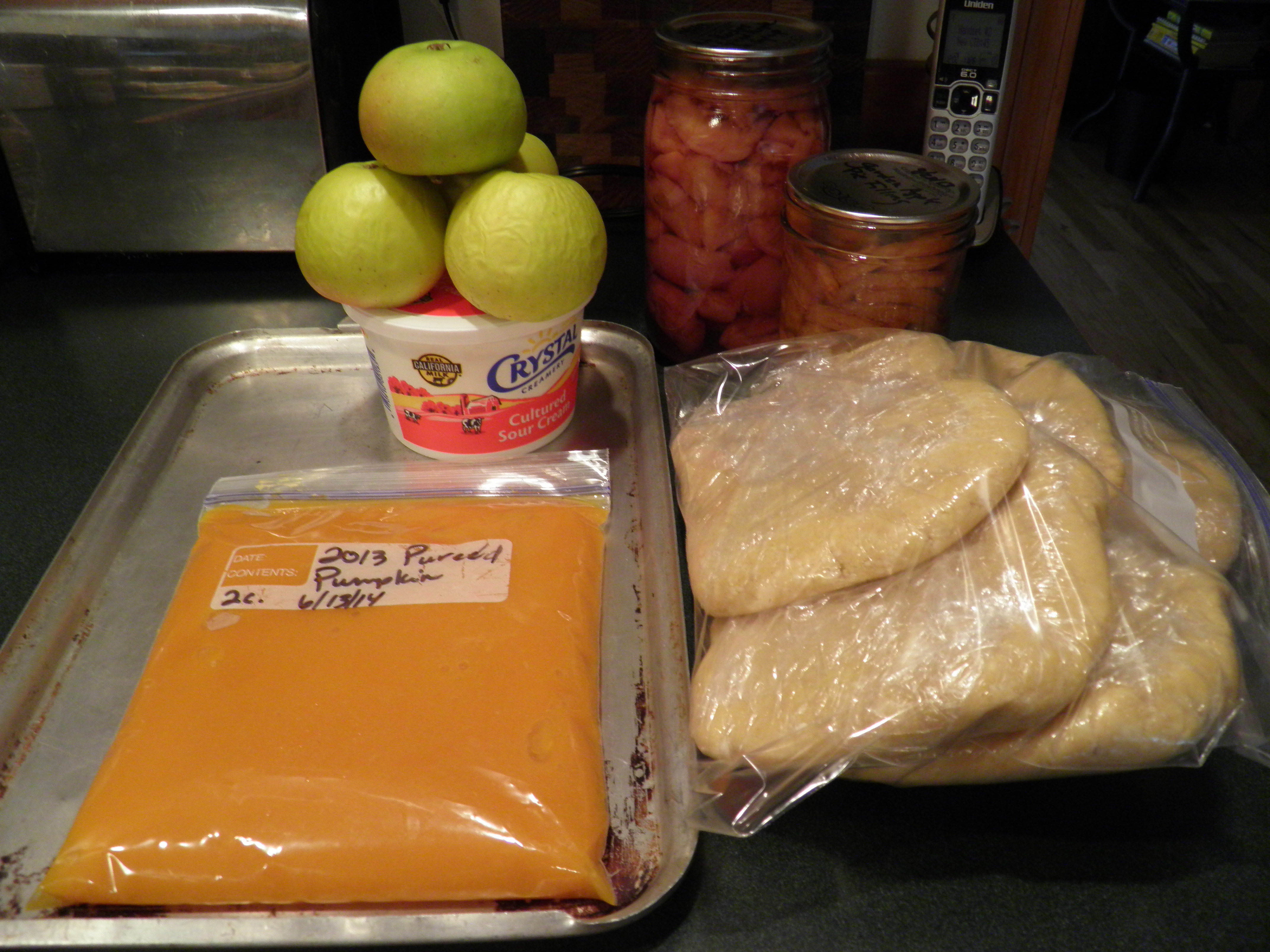
For the apple pie, I use my home-grown, home-canned apple pie filling.  For the pumpkin pies, I use my home-grown, home-frozen pumpkin puree (recipe in this post below), and I do as my sister taught me–double the spices!  What a difference that makes in flavor.  For the sour cream apple pie, (which is the pie I absolutely must make for Thanksgiving, or else I’m in big trouble) I use some pie apples from the garden that I save in the fridge just for Thanksgiving.  Sometimes, I make my own sour cream for this pie, but this year, I’m using store bought.  For pie crust, I use a gluten-free crust made with Bob’s Red Mill Gluten-free baking flour which I developed a while back that is so good, nobody but me knows it’s gluten-free!  For these recipes and more, follow the links below:

Gluten-free Pie Crust

Sour Cream Apple Pie

Apple pie filling


Pumpkin Pie Recipe

(makes 1 pie)

2 eggs

1 cup pureed pumpkin

¾ cup sugar

½ teaspoon salt

1 teaspoon ground ginger

2 teaspoons cinnamon

1/4 teaspoon ground cloves

1 can evaporated milk (or 1 cup heavy cream)

Beat all ingredients together until smooth. Pour into unbaked 9-inch pie shell and bake at 425 for 15 minutes. Reduce heat to 350 and continue baking for 45 minutes or until knife inserted in center comes out clean.

Note: You may need to bake pie made with homemade roasted pumpkin a little longer because it is not quite as dense as canned pumpkin.  Canned pumpkin made be used in this recipe.

Happy pie baking!  Happy Thanksgiving!

Standard
Canning, Recipes

Italian Red Sauce

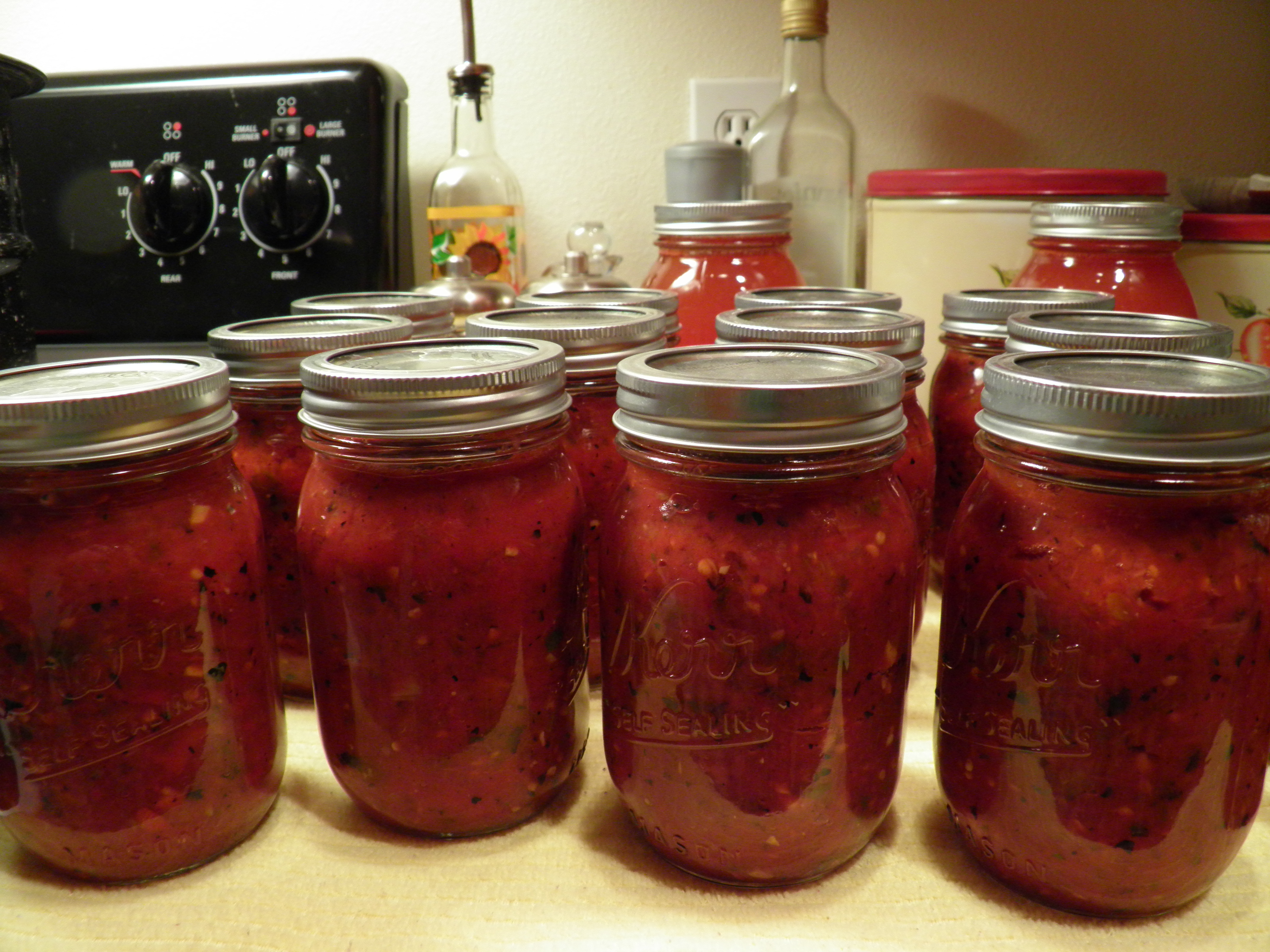
I’m working now to process the tomatoes I froze during the summer and the ones I box-ripened after the last fall picking. I’m making Italian Red Sauce. People know this sauce by different names. Italians call it marinara. It’s marketed in jars as pasta and pizza sauce. Many of us who lack Italian heritage just call it spaghetti sauce. It doesn’t matter what you call it. It matters that you make it. Here’s how, although this is more about a technique than a recipe. (Lots of parentheticals in this one.)

Marinara (or as I call it, Italian Red Sauce) is a tomato-based sauce that can indeed be used for all kinds of pasta dishes, pizzas, and dishes like Chicken Parmesan or Eggplant Parmesan. What else you put in your red sauce depends on what part of Italy you or your ancestors were from. Since no part of my heritage is Italian (mine is Irish, English, Dutch, Cherokee, and who knows what else), I am free to use whatever I like in my red sauce. And I like it all.

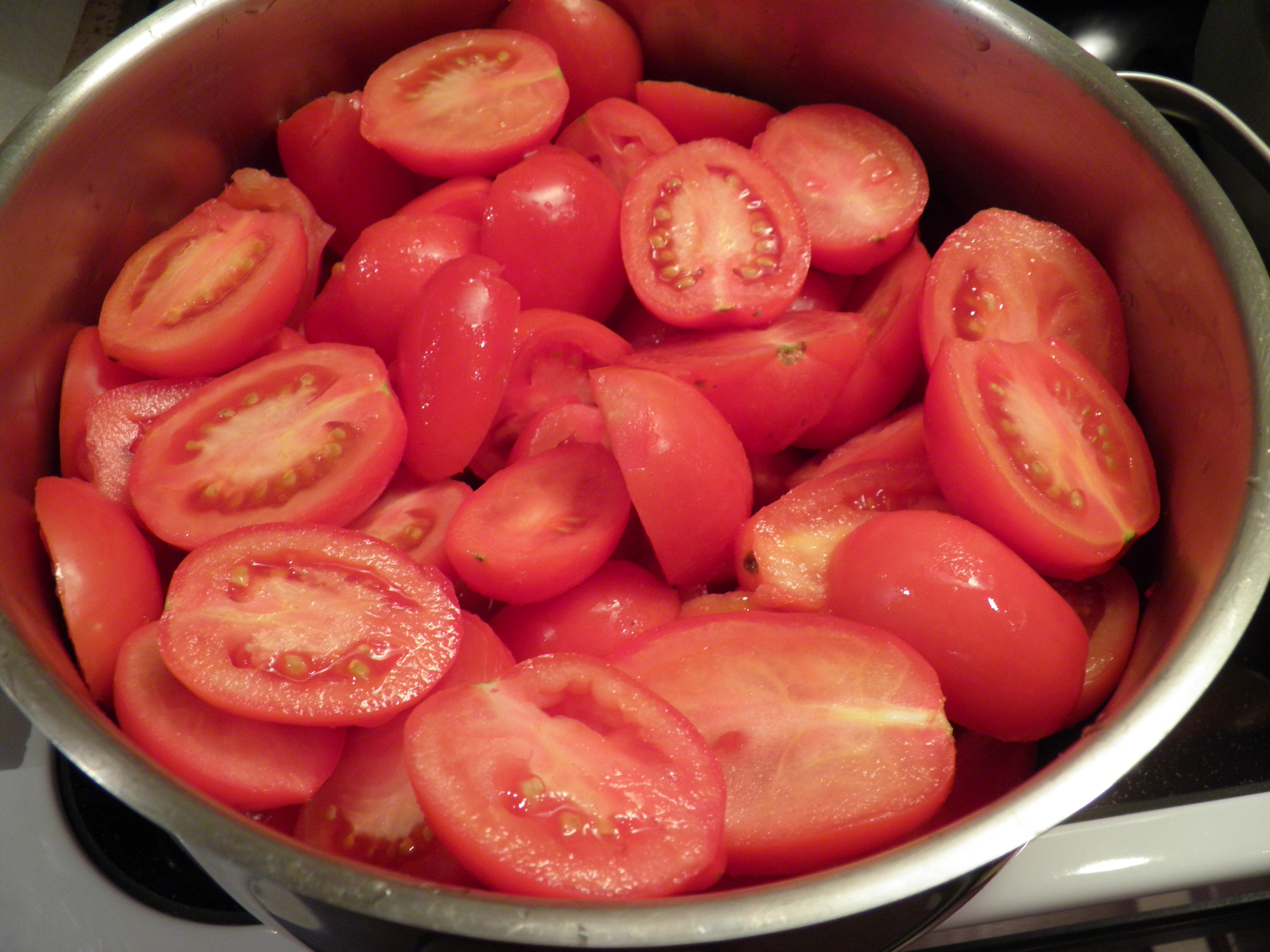
I use garlic, onions, dried basil and oregano (because I’m always making this in the winter time and don’t have any fresh herbs, except maybe parsley), dried or fresh parsley, red wine, and a little sugar if my box-ripened tomatoes seem to need it. I will sometimes make this sauce entirely of box-ripened tomatoes, or, if I’ve had a good tomato year and have frozen tomatoes as they’ve ripened on the vines, I’ll mix vine-ripened and box-ripened tomatoes. I’m adding a lot of flavor with the other ingredients, so even if I use only box-ripened tomatoes, I still get a good sauce.  These are the last of my box-ripened sauce tomatoes below.

OLYMPUS DIGITAL CAMERA

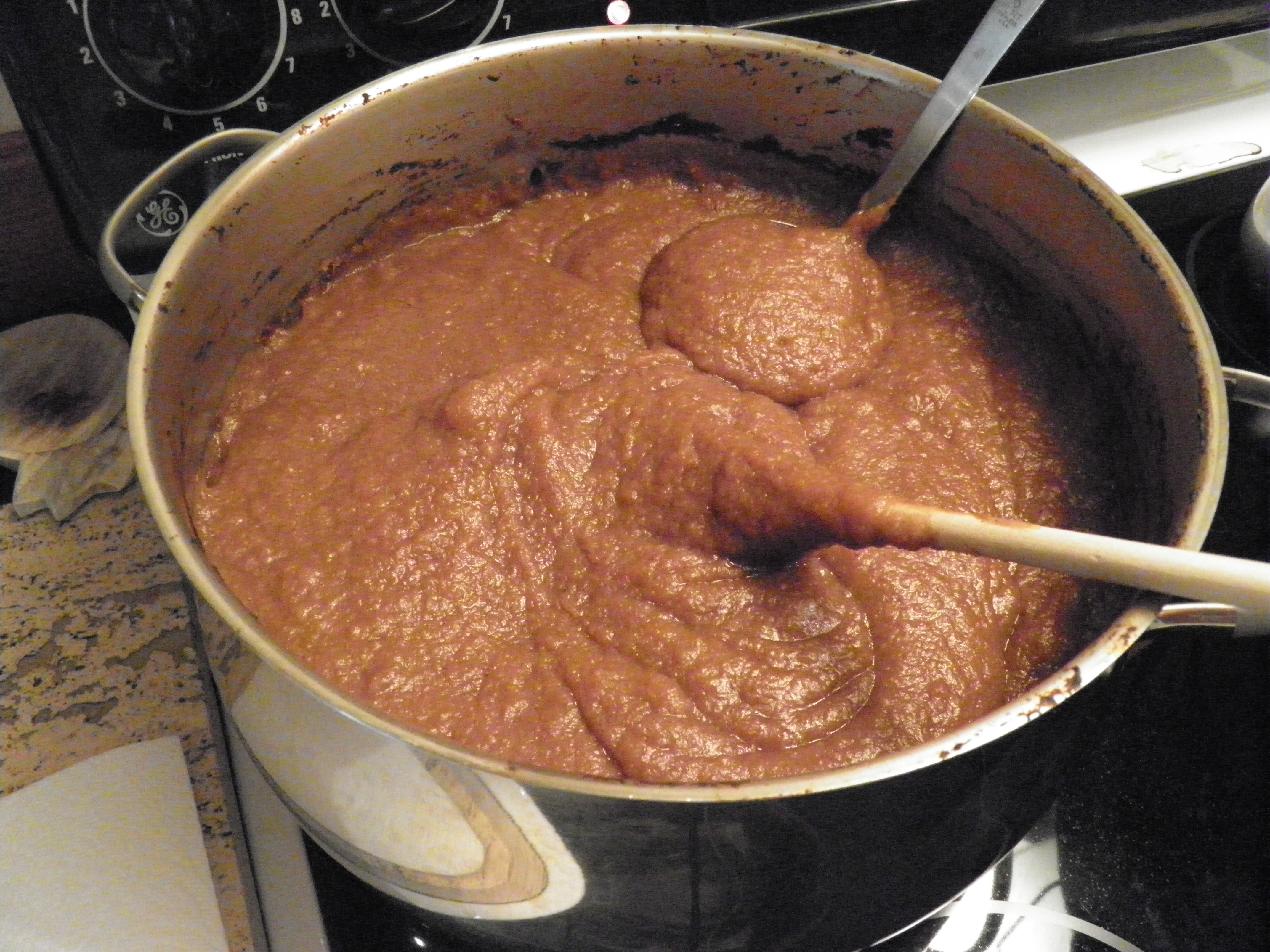
This sauce takes some time because it has to reduce. Tomatoes are mostly water, even sauce tomatoes (this year I grew Romas and San Marzanos for sauce, but I had so many heirlooms, they ended up in the sauce as well). And because I hate the way a big pot of tomato sauce spits all over the kitchen as it gets thick, I finish reducing my sauce in the oven. This oven-baking technique gives extra flavor to the tomatoes, which is a good thing if they are box-ripened. It’s the same method I use for reducing my apple butter, and it means that I have less clean-up and can walk away from the pot without worrying about scorching when it starts to get thick.

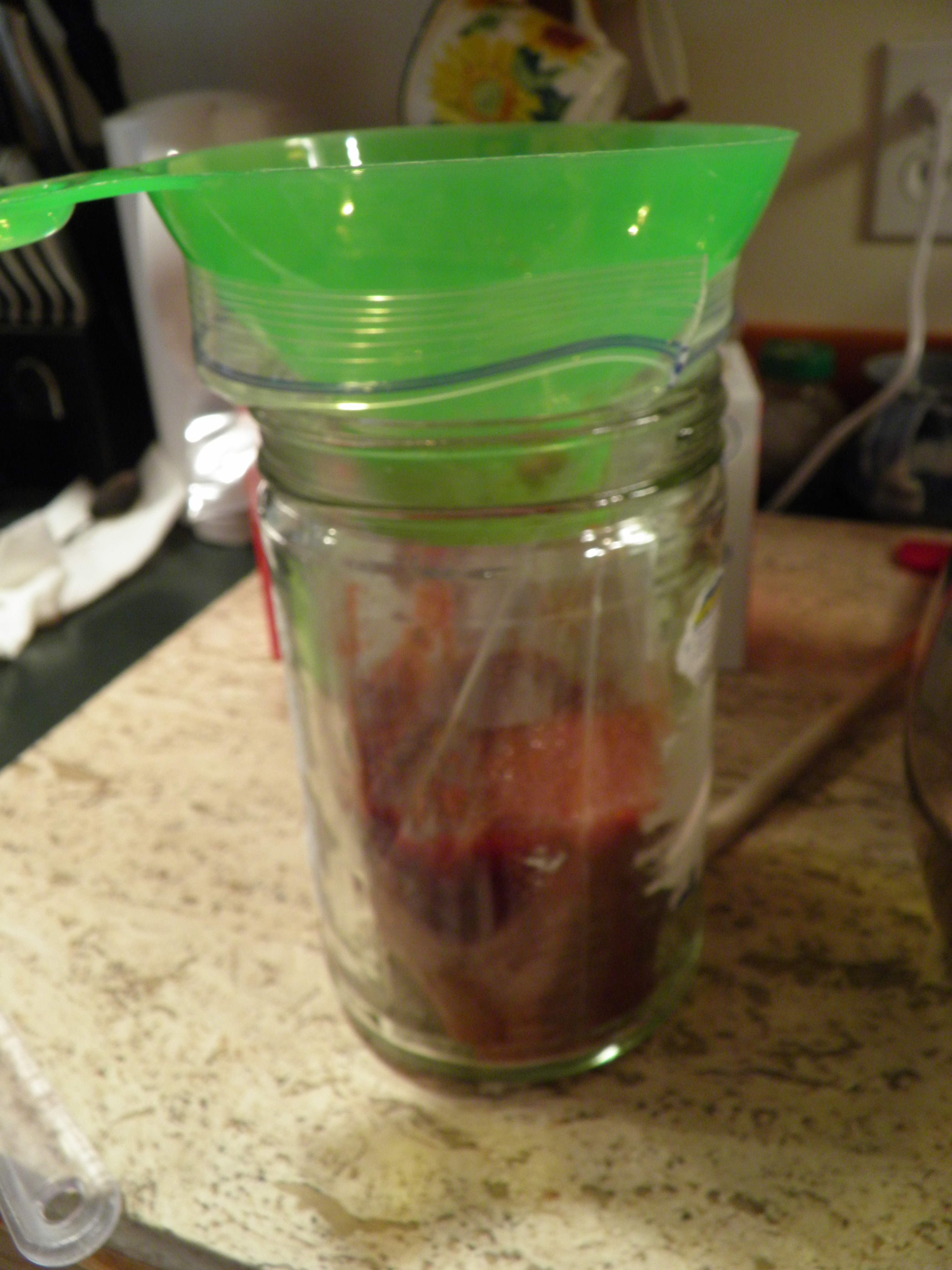
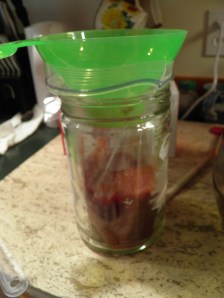
I’m tired by this time of year, and sick of canning, and I’m out of shelf space for full jars (boxes of applesauce, apple butter, green tomato relish, and green tomato marmalade—all the fall canning projects—are reposing under my bed). So I freeze my red sauce in quart freezer bags rather than canning it.  Below is a picture of my no-mess method for filling bags.  I put a quart freezer bag in a quart jar, then insert a canning funnel into the mouth of the jar, which holds the bag open.  This keeps whatever’s going inside the bag from getting all over the zipper closure.
OLYMPUS DIGITAL CAMERA

In the summer, I almost never get enough tomatoes at any one time for sauce-making. And I don’t want to be making sauce when it’s still 90 degrees outside. So I am thankful for my two big freezers. They allow me to freeze foods like blackberries and tomatoes as they ripen in the summer, and then I can deal with them in the fall and winter when it’s cold outside, and I don’t mind heating up the house with big, boiling pots or the oven, and when I don’t have other pressing tasks. In fact, the by-product of heat from preserving in the winter time is a bonus.

Freezing tomatoes whole is as easy as it gets in garden preservation. You just rinse them, let them drain, cut out any bad spots, core them if you wish, but you don’t have to, and pop them into a freezer bag. In a deep freezer, the little bit of moisture left on the tomato skins will ice-glaze them, and they will keep like that for months before you have to do something with them. They don’t stick together when they’re whole, so you can take out and thaw them one at a time to be added to dishes where you want a little tomato flavor, or you can thaw out the bags and process the tomatoes all at once. For me, this means making one big batch of sauce in the late fall or early winter. Then it’s done, and my freezer is less full and ready for the next adventure.

OLYMPUS DIGITAL CAMERA

One side benefit to freezing tomatoes before cooking with them, I’ve discovered, is that when they thaw, the skins slip right off, and you can just pinch out the core with your fingers if you didn’t core them before freezing. If you don’t mind tomato seeds in your sauce, you can put the thawed, skinned, cored tomatoes in a big pot, get them started cooking and breaking down, and puree them with a stick blender. You can also puree them in batches in a counter-top blender. But I’m old-fashioned, and I like to get all the flavor I possibly can out of my tomatoes, so I cook them with the skins on until they are soft, and then run them through a chinois, or cone colander, to create a smooth texture and separate pulp from the skins and (most of) the seeds. If you have a Squeezo Strainer or a strainer attachment for a KitchenAid Stand Mixer, you might find that easier. For me, the chinois is easier to set up, take down, and clean up.

OLYMPUS DIGITAL CAMERA

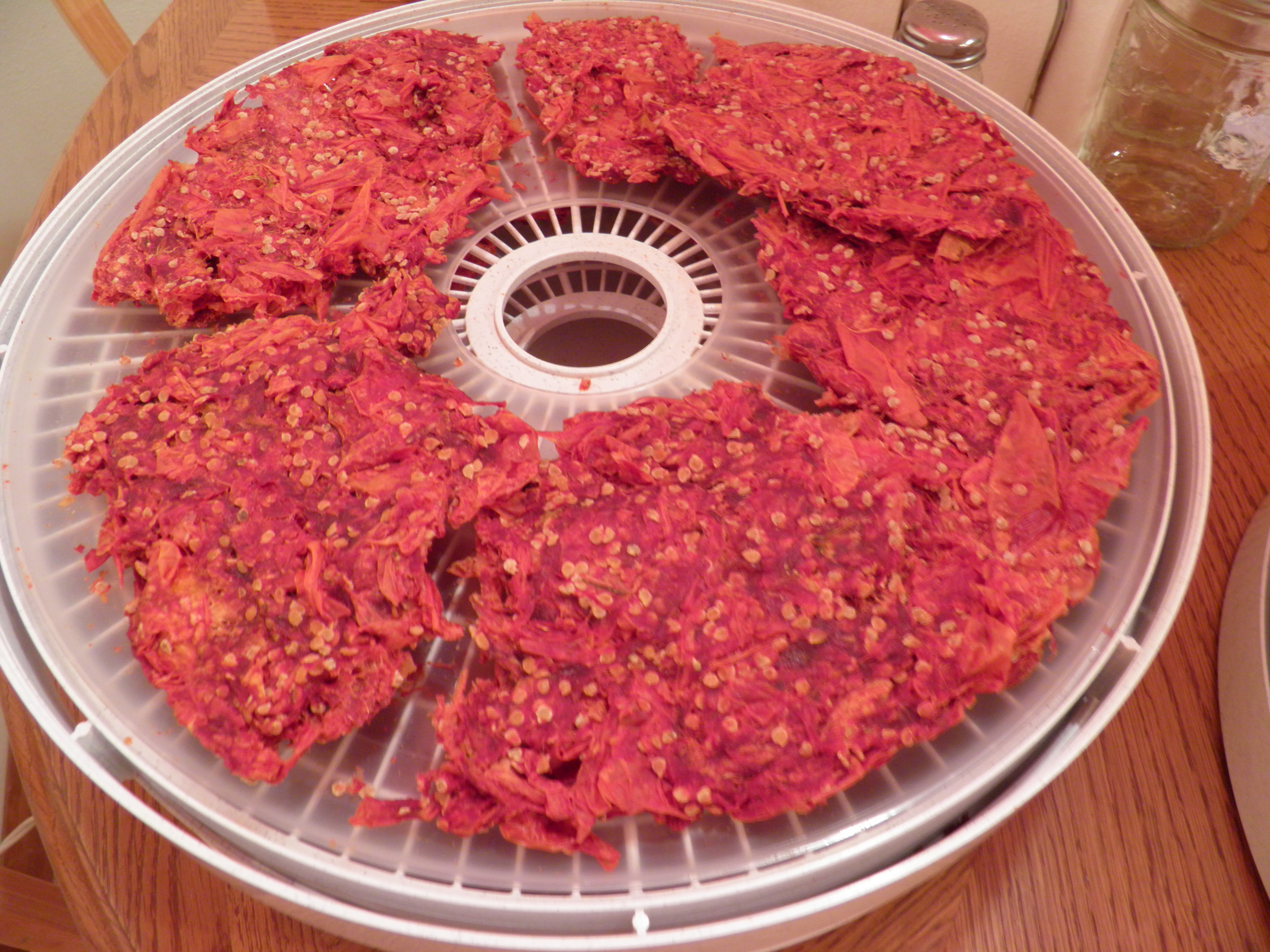
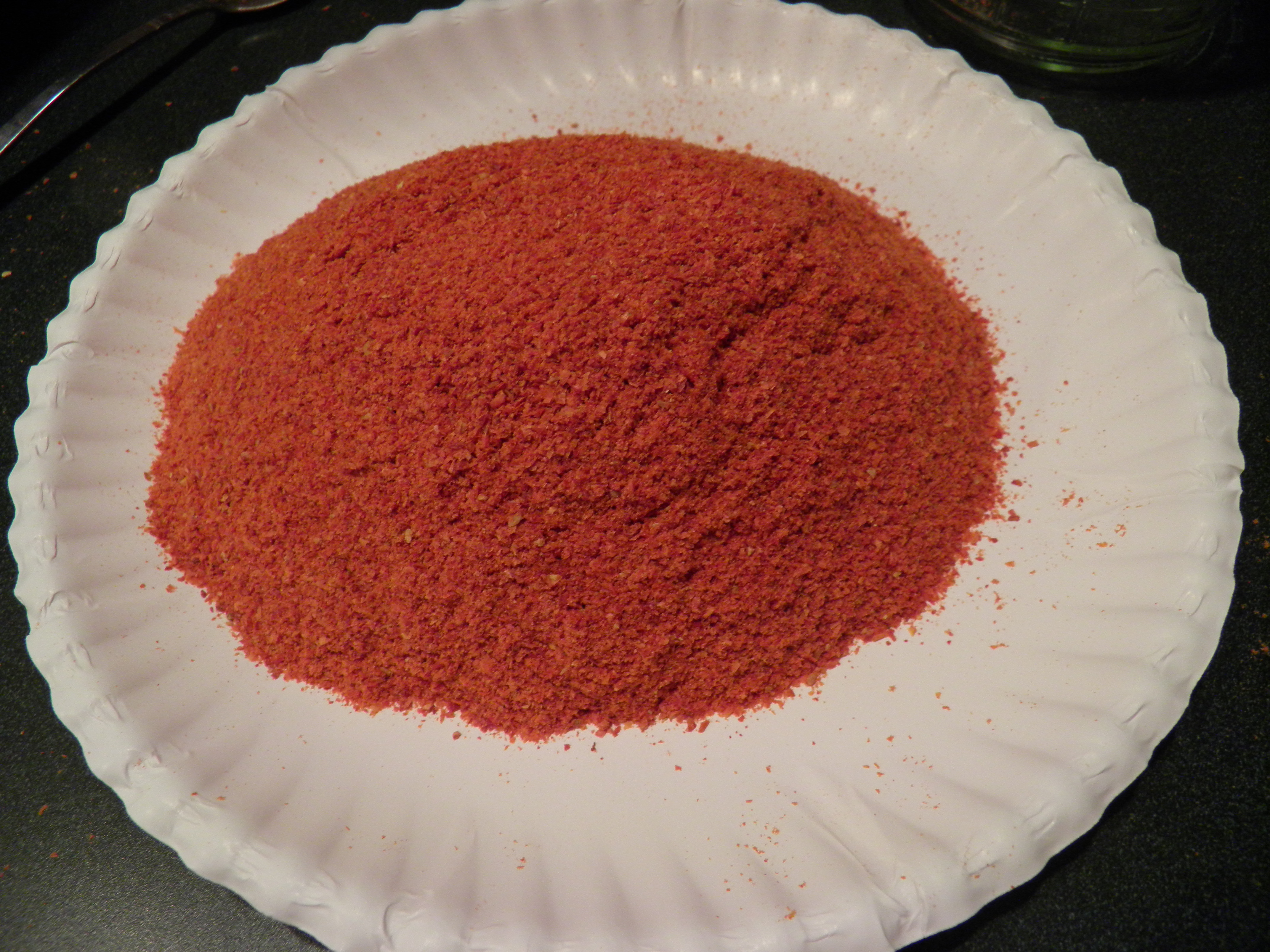
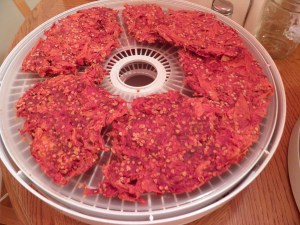
Don’t throw the skins and seeds away after straining! I save skins and seeds, and either spread them on parchment-lined cookie sheets and dry in the oven on low (170 degrees or lower) until crunchy, or spread them on the fruit leather trays in my dehydrator (set at about 135 degrees) and leave them until they’re very dry, and then grind them to powder in the blender. (More about how to use this flavor-packed powder in these posts: Dried Tomato Skin Rub and Pulled Pork, and Braised and Barbecued Pork Spareribs.) I don’t know about you, but I just don’t want to waste a single bit of those wonderful garden tomatoes.  This powder can also be added to soups and stews for an extra punch of flavor.
OLYMPUS DIGITAL CAMERA OLYMPUS DIGITAL CAMERA

After pureeing or straining, what you will have is thin, watery, tomato juice with what seems like very little pulp. At this point, if you’re a tomato juice lover, you might not want to go any further! You might want to can your tomato juice in pints or quarts or make homemade V-8 juice and can that.

OLYMPUS DIGITAL CAMERA

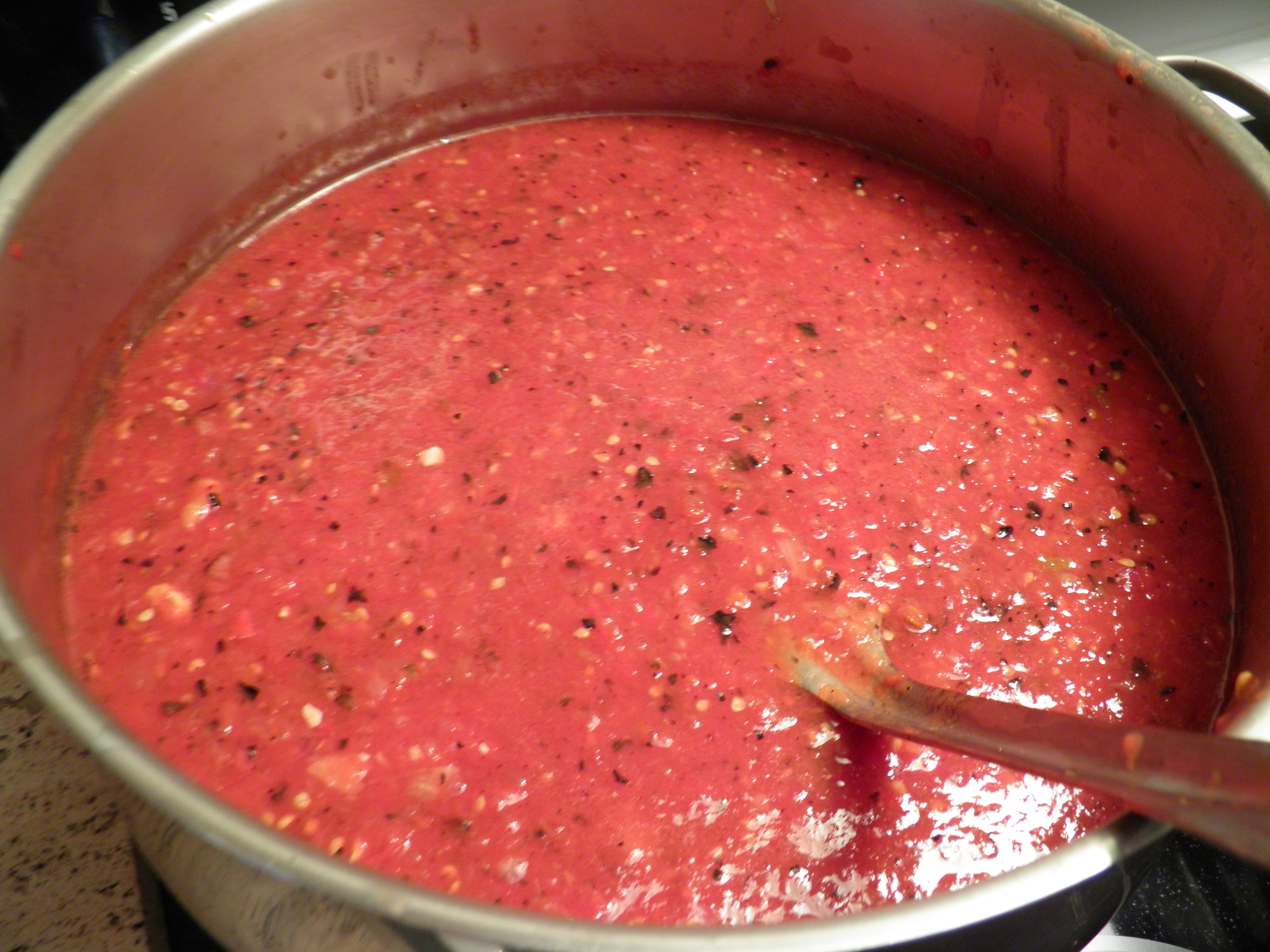
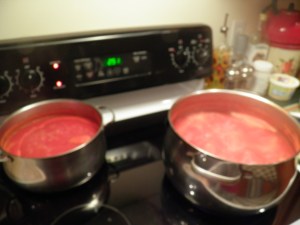
But if you’re still game for sauce, get your tomato juice into a heavy-bottomed, non-reactive pan and start boiling it to reduce it. It might seem like this stuff will never turn into sauce, but it just takes time and heat. Don’t fill your pot too full; you don’t want it to boil over and lose part of it after all the work thus far. Use more than one pot if you have to so you can boil it on high heat for a while. At first, there is so much liquid in the juice, it won’t stick and can be boiled on high, but keep an eye on it. After a while (and the time depends on how what variety of tomato and its water content as well the level of heat and the kind of pot you used—I like stainless steel), you’ll notice that your juice has reduced and is beginning to thicken into a sauce. I can give you a general guideline and tell you that you will have to reduce your juice in volume by about half to get to this point. And you’re not done yet!
OLYMPUS DIGITAL CAMERA

But persevere, because that juice is about to turn into sauce. And here’s where this technique (I won’t have the gall to call it a recipe!) can be intimidating if you’re the kind of person who has to have specific amounts to add to recipes. But if you are such a person, I say: free yourself from such restraints. Don’t be afraid to experiment. Add ingredients a little at a time, cook and taste, until you achieve something you like, that suits your tastes. You might not be a big fan of garlic, or oregano, like I am. If so, add small amounts of those things, tasting as you go, to get a sauce you like. Your taste buds are your most important tool in the kitchen. When you use them, you will not go wrong.

When the juice has reduced by about half and thickened somewhat, it’s time to add your aromatics and seasonings—the chopped onion, minced garlic, and whatever herbs you choose (oregano, basil, and parsley for me), as well as a little salt and pepper. As a general guideline, I will give you approximate measurements for my most recent batch of red sauce. If you’re good at math, you can cut them down if you wish.

OLYMPUS DIGITAL CAMERA

I started with 7 gallon bags of frozen tomatoes and 1 gallon of box-ripened tomatoes that hadn’t been frozen. That’s 8 gallons of tomatoes. (There’s no point in trying to make sauce with a gallon of tomatoes. You’ll only end up with a quart of sauce. It’s too much work for what you get out of it.)

I cooked those tomatoes down in their own juice (another benefit of using frozen tomatoes—no need to add any water to the pot to keep them from sticking). I had about 18 quarts of juice after straining, maybe a little more. I didn’t measure it, but I can guestimate from the size of my big pans. One is 12 quarts and was almost full. The other one holds 7 quarts and was almost full as well. (I needed three pots to cook down the tomatoes, but I got about two quarts of skins and seeds for the dehydrator after straining.)

To those 18 or so quarts of tomato juice, after it had reduced enough in two pots to transfer it all into the big, 12-quart stockpot so that it was nearly full (probably about 10 quarts of thickened juice/sauce), I added three onions and 1 full head of garlic (all chopped in the food processor), 1 cup of red wine (and not anything expensive either, no matter what they tell you on Food Network!), 2 teaspoons of kosher salt, 1 teaspoon of ground black pepper, 2 tablespoons of crushed dried oregano, 2 tablespoons of crushed dried basil, and 2 tablespoons of crushed dried parsley. (I had fresh parsley in the garden, but it was raining, and I didn’t feel like going out in the rain and then having to wash mud off the parsley.) After cooking a bit longer following these additions to meld the flavors (and by now the sauce is thick enough that the heat must be lowered to medium to keep it from sticking), I added two tablespoons of sugar. I almost always add a bit of sugar to my pasta sauces to mellow out the acidity of the tomatoes, whether I’m making sauce from scratch, making it with home-grown, home-canned tomatoes, or using diced tomatoes or tomato sauce out a can. The red wine also has a sweetening effect, but I like just a bit more sweetness, especially with box-ripened tomatoes.

Remember that as sauces reduce, flavors intensify. I don’t add salt or sugar to my red sauce until it has cooked down quite a bit. And then I add just enough to taste. I can always add salt or sugar as I’m cooking with the sauce, but I can’t take it out after I’ve put it in and reduced it.

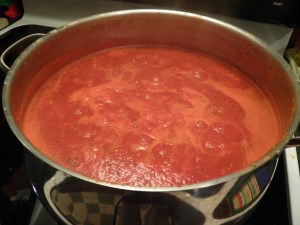
When all this is boiling again (and starting to spit and stick to the bottom of the pan), then I put it in the oven, uncovered, at 300 to 325 degrees to reduce. (It was at this point during the sauce session on Saturday that Dennis took a look at it and said, “Oh, that looks like you could put it on spaghetti!” No kidding, honey. All I could do was laugh.)
OLYMPUS DIGITAL CAMERA

It may take several hours to finish reducing, so you can go on about your other business while the sauce cooks in the oven.

(You can finish reducing the sauce on the stovetop, but I did mention the spitting earlier, did I not? The sauce will reduce faster if cooked on medium to low heat on the stovetop, but it has to be stirred very frequently to prevent sticking. There is no way to prevent spitting. It will spit right through a grease screen; I’ve tried one, and it doesn’t make a bit of difference. And then you have to clean the walls or backsplash, adjacent countertops, and stovetop of all the spits of red tomato sauce. No, thank you.)

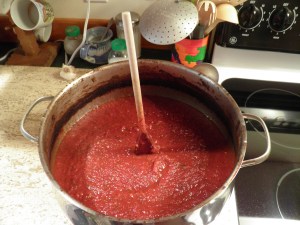
I stir the sauce about once an hour, scraping down the sides of the pan with a silicone spatula. After an hour of cook time in the oven, I taste the sauce. Does it need more herbs? I remind myself that as the sauce continues to reduce, the flavors of salt and pepper, herbs, onion, and garlic will continue to intensify, but if I think it needs more of anything, I add it now. I let it reduce some more and taste again. Does the sauce seem too acidic? If so, I add a little more sugar, and if I think the sauce seems bland, a little more salt and pepper.  (With this batch, I added 1/2 teaspoon more salt, 1/4 teaspoon pepper, and another 1/4 cup of sugar.) I continue reducing until I have a sauce that will stick to pasta. Not as thick as ketchup, but with some body. This may take several hours in the oven, and if it looks like it’s going to go late into the night, I just reduce the heat to 200 and let it sit in the oven all night. At that temperature, a big pot will be fine until morning.
OLYMPUS DIGITAL CAMERA

When the sauce is as thick as I want it (and thick enough for a wooden spoon to stand up in it is a good guideline), I do a final taste and seasoning, if needed, with salt, pepper, or sugar, cook for just a few minutes more to meld the flavors of anything I just added, and take the pot out of the oven to let the sauce cool down. I figure that I’ll end up with roughly a quarter of the volume of juice I started with, so if I started with 18 quarts of juice, I should get about 4 ½ to 5 quarts of sauce. That might not seem like much, but it’ll be the base of about 9 or 10 dishes that will give Dennis and me several meals from each dish.

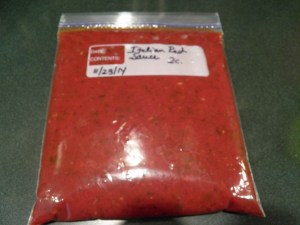
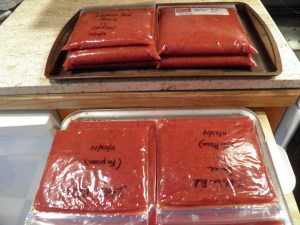
The Italian Red Sauce doesn’t go in the freezer bags until it has cooled to room temperature. At that point, I usually bag it in two cup measures, put the bags flat on cookie sheets, and put them in the freezer. After they’ve frozen hard, I gather them into one or two gallon-sized storage bags so I can find the sauce in the freezer when I want it.
OLYMPUS DIGITAL CAMERA

This Italian Red Sauce takes some doing, but it is well-worth it if you have the tomatoes. I love having my own, homemade red sauce (or marinara, if you prefer) hanging out in the freezer whenever I want to make an Italian-inspired dish. It can be tossed as is with any kind of cooked pasta for a vegetarian dish, be added to browned meat or meatballs for spaghetti, be reduced and thickened further for pizza, be used in my Gluten-free Eggplant Lasagna (with or without meat), or be added to a soup. It’s versatile and delicious, and it’s a good way to use up box-ripened tomatoes in the fall. When I have an abundance of tomatoes in the fall and have already canned up my Charred Salsa and Tomato-Apple Chutney, and don’t need any Red Hot Sauce, Italian Red Sauce is as good a way as any to use them up.

Postscript:  I got a late start on Saturday getting this sauce underway.  I wrote this post as the sauce was cooking.  By bedtime, the sauce wasn’t as reduced as I wanted it to be, so I turned the oven down to 200 degrees and went to bed.  All night, I dreamed about pizza, and I woke up thinking about pizza in the morning.  It was because of that sauce, perfuming the whole house while I slept.  The sauce had reduced enough by morning, so I set it on the counter to cool before I bagged it.  I had pizza on the brain, so I put most of the sauce in two-cup measures into the bags, but I decided to put some up for pizza too, so that went into sandwich bags in 1 cup measures. They’ll all be gathered into a recycled gallon bag after they’re frozen solid.  I got 6 bags of 2 cups each, and 3 bags of 1 cup each, marked for pizza.
OLYMPUS DIGITAL CAMERA

And I saved a cup to reduce a little further on the stove and made gluten-free pizza for dinner.

OLYMPUS DIGITAL CAMERA

Standard
Canning, condiment

Tomato-Apple Chutney

OLYMPUS DIGITAL CAMERA

I found this recipe some years ago in my old Ball Blue Book from 1981. I made it back then and haven’t made it since because it requires having apples and tomatoes at the same time. Yes, I could buy either apples or tomatoes, but I like using what’s in season in my garden. This year, I have lots of both apples and tomatoes at the same time, so I decided to make a batch of this slightly sweet but tangy condiment. I’ve played with the recipe to spice it up a bit, but I’ve been careful to maintain the same ratio of non-acid foods to acid foods and vinegar to maintain a proper balance for water-bath canning.

Tomato-Apple Chutney

2 ½ quarts peeled, cored, chopped, ripe tomatoes (about 15 large)* (see note below about peeling tomatoes)

1 quart cored, peeled, chopped apples (6-8 medium apples—use tart pie apples for more flavor)

2 cups chopped summer squash (tender-skinned yellow squash or zucchini) or cucumber, unpeeled, large seeds removed

1 ½ cups chopped onion

1 ½ cups chopped peppers (*mix of sweet red and hot peppers, see note below)

1 cup seedless raisins

1 clove garlic, crushed and minced

3 cups brown sugar

1 tablespoon ground ginger

1 teaspoon kosher or pickling salt

1 teaspoon ground cinnamon

3 cups apple cider vinegar, 5% acidity

Combine all ingredients in large kettle or pot. Bring to boil and cook uncovered, slowly, until thick, about 2 hours (longer if you have very juicy heirloom tomatoes, like I did). Stir frequently to prevent sticking. (Or use my oven cook method, which takes longer but avoids the need to stir as often—bake uncovered at 300 degrees until as thick as salsa; return to boiling on stove top before filling jars.) Pour boiling into hot, sterilized jars, leaving ¼ inch head space. Cap and process 10 minutes in boiling water bath, adjusting time if necessary according to altitude chart.

Notes: I really hate dunking tomatoes in boiling water and peeling them. It uses a lot of water, and there is an easier way which nets you more flavor and a nice by-product. I’ve talked about this method before in my post on Charred Salsa. Instead of scalding the tomatoes, cut them in half, cut out the cores, put them on a foil-covered cookie sheet, and stick them under the broiler until the skin blackens and loosens from the fruit.

OLYMPUS DIGITAL CAMERA

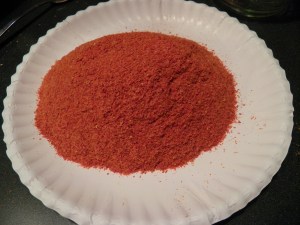
It’s easy then to remove the skins and set them aside on a parchment paper-covered cookie sheet. The skins go into the oven at 200 degrees for a couple of hours to dry, and then you can grind them to powder in a blender. The picture below was the first batch of dried tomato skin powder I ever made, a couple of years ago.

OLYMPUS DIGITAL CAMERA

See the following posts for ways to use dried tomato skin powder:  Dried Tomato Skin Rub and Pulled PorkBraised and Barbecued Pork Spareribs, Spicy Sausage and Lentil Soup, Bear and Mushroom Fricassee with Creamy Polenta.  (Don’t let the bear scare you–you can use other meats, and there is a list of possibles on the post.)  Dried tomato skin powder can also be used to punch up the flavor of sauces made with fall’s box-ripened tomatoes.  I’ll be sharing my recipe for red tomato sauce (for Italian dishes) made with box-ripened tomatoes in a future post, so save those tomato skins!

Now, back to the chutney. After the peel has been removed from the tomatoes, you can give them a quick buzz in the food processor to chop them (they pretty much puree, but that’s okay). This method of broiling and processing the tomatoes greatly speeds up the chutney-making.

Peppers: I use a mix of sweet red peppers and hot peppers. I use about 1 ¼ cups of sweet red bell peppers, and ¼ cup of hot peppers. If you want a spicier chutney, reduce the amount of sweet red peppers in proportion to the amount of hot peppers you add.  (For instance, use 1 cup chopped sweet red peppers and 1/2 cup chopped hot peppers.)  DO NOT EXCEED THE TOTAL AMOUNT OF 1 1/2 CUPS OF PEPPERS. If you do, your chutney may not be safe to can in a water-bath canner. If you want your chutney very spicy, use a hotter pepper, like a habanero, rather than a jalapeno. I used several ripe and green jalapenos and two ripe serrano peppers from my garden, chopped to equal ¼ cup. I seeded the peppers because I did not want the seeds in my chutney, but if you want a hotter product, leave in the seeds and membranes of the hot peppers. This is where much of the capsaican is stored in the pepper.  My chutney carries a nice warmth in the mouth, but it’s not going to make anybody spit it out and say, “That’s way too hot for me!”
It is very important not to exceed the amounts of any non-acid food in a recipe intended for water-bath canning. This includes the onions, squash or cucumbers, and garlic, as well as the peppers. I was very tempted to try using fresh ginger instead of dried ground ginger, but I did not want to inadvertently throw off the acid balance. Better safe than sorry. And it is delicious as is.

Tomato-apple chutney is excellent alongside roast pork, roast chicken or grilled chicken breast, or even a grilled steak. Try it as an appetizer, too, topping cream cheese on a cracker or crispy toast round.

OLYMPUS DIGITAL CAMERA

If you make some tomato-apple chutney, be sure to let me know what you pair with it.

Standard
Canning, condiment, Recipes

Charred Salsa

OLYMPUS DIGITAL CAMERA

What would you say if I told you that you could make salsa without peeling peppers? To me, peeling peppers is the worst part of salsa making, and it’s avoidable. How, you ask? Well, it’s pretty simple. You just char them under the broiler. Then they don’t have to be peeled. They can be chopped in the food processor (do it with the other vegetables to avoid the sensation of being hit in the face with pepper spray when you open the top) without peeling.
In fact, if you want to make the best salsa you’ve ever canned, char everything. Yes, that’s right. Put all the vegetables under the broiler and char them all. I know, it sounds nuts, but it works.

The salsa recipe I use is from a book called Canning for a New Generation, by Liana Krissoff. I highly recommend the book because Krissoff’s recipes teach techniques that you can then use to create your own recipes.  I learned to make yogurt, apple pectin stock, and old-fashioned, lower-sugar jams and jellies from this book. And charred salsa. And oh my, that stuff rocks! I don’t feel right about copying the recipe here (as a writer, I respect copyrights), but I think sharing the technique is okay. And I just did. Char everything under the broiler for the best salsa you’ve ever canned.

Use your favorite salsa recipe for proportions, but instead of scalding and peeling tomatoes, or roasting and peeling them and the peppers, broil them. Yes, I know I’m repeating myself, but I also know that you’re going to take some convincing. I did, at first.

Core and cut tomatoes in halves and place them cut side down on a foil-lined cookie sheet. (The foil keeps the veggies from sticking when they release their natural sugars as they cook.)  Pop them under the broiler in your oven on the top rack. Let them sizzle until each tomato has a big circle of blackened skin on top. (Yes, I know it sounds insane, but it’s good, trust me!) Slide the tomatoes and juice into a bowl to cool while you work on the rest of the veggies.

OLYMPUS DIGITAL CAMERA   OLYMPUS DIGITAL CAMERA

Cut onions into quarters, put them on the foil-lined cookie sheets and under the broiler. Let them get blackened. Do the same thing with the garlic. (Now, I know this really sounds crazy, but again, trust me.) It’s best to put one thing at a time on the cookie sheets because obviously, garlic will not blacken at the same rate as onion.

OLYMPUS DIGITAL CAMERA

Now, for the beauty part, the peppers. As much as I hate peeling tomatoes, I really hate peeling hot peppers. In fact, I never do it. I never have to for salsa because I make charred salsa. (I know, if you’ve made a batch of salsa the traditional way already this year, I’m rubbing it in. Sorry.) I cut the peppers in half (I don’t seed mine because I like the heat, but go ahead and seed them if you wish—just wear gloves or be very, very careful) and place them cut side down on the foil-lined cookie sheet. Pop them under the broiler and let them get blackened.

OLYMPUS DIGITAL CAMERA

Watch out when you stick your head down to check them. You can get hit with a wave of released capsican as they’re cooking. After they’ve cooled, they release less of the stuff, even in the food processor. I use jalapenos and Serranos because I don’t like my salsa so hot I can’t eat it. This year, I had some ripe red peppers in the garden because I’m making salsa later than I usually do, and I love the mellow heat of ripe peppers. Usually, I’m stuck with green ones because that’s all I have.

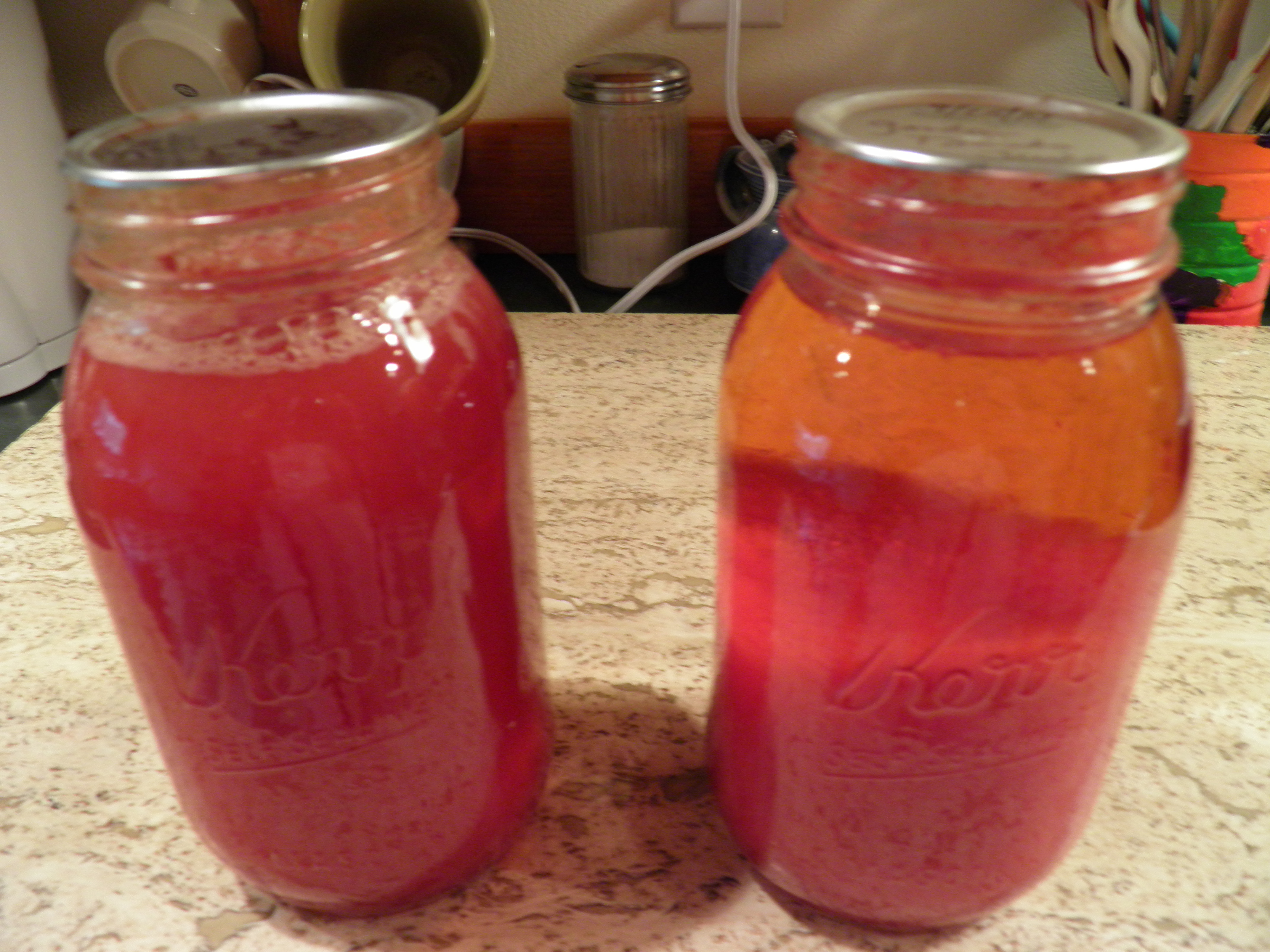
All right, all the vegetables are broiled now, and are cooling. The tomatoes should be cool enough to handle, so dive in. If you want to drain off some juice to make sure your salsa is thick enough, now’s the time to do it. You can always add some juice back in later, and whatever juice is left over can be canned in pint jars with citric acid or lemon juice and salt, if you like, for 35 min. per pint. I did mine in quarts for 40 min.  I shook the jar on the left after it was cooled, before I took the picture.  It is normal for the juice to separate as in the jar on the right.

OLYMPUS DIGITAL CAMERA

Pull the skins off each tomato half. (They come off very easily.) Tear the charred skin away and put it in the food processor with the tomatoes. I know, you’re saying: WHAT? But yes, this is the point of broiling the tomatoes, so you can get the flavor of that blackened skin into the salsa. I don’t know why it’s so good, but it is. The blackened skin is crisp, not tough, and crumbles easily into little black flakes in the food processor. It actually makes the salsa look great in the jar and in a bowl when you open it. And I guarantee you that you will get rave reviews on this stuff when you open it. I do, every time. When my kids come to my house for a meal, one of the first things they ask is if I have any salsa left. I have to hide it, or I wouldn’t.  They’d take it all home with them.  They go through what I give them for Christmas and come back looking for more!

OLYMPUS DIGITAL CAMERA

Now, an interjection. Don’t throw away the rest of the tomato skins! Put the uncharred skins on a parchment-paper lined cookie sheet and into a 170–200 degree oven. Let them sit there until the skins are dry and leathery and no moisture remains. Then whiz them up in a blender for tomato skin powder, which can be used in various ways. See my previous post for a great pork rub made using powdered tomato skins.

OLYMPUS DIGITAL CAMERA

Back to the salsa. Working in batches, chop all the veggies in the food processor. I do it this way: several peppers, a handful of onions, a couple of cloves of garlic. Chop, chop; add the tomatoes and blackened tomato skins. Whiz, whiz. Dump in large pot. Start over and keep going until everything is in the large pot.

OLYMPUS DIGITAL CAMERA

Every salsa recipe I’ve ever seen adds acid (vinegar or lemon juice), salt, and sugar at this point, and then calls for a short cooking time before the salsa goes in the jars. The recipe I use calls for apple cider vinegar, which gives a nice flavor to the salsa, but I also add lime juice because to me, you can’t have salsa without lime. It just wouldn’t be right. I also add about ¼ cup of chopped cilantro per batch just before the boiling salsa goes in the jars for the same reason. Salsa without cilantro? No way. A friend of mine adds a pinch or so of cumin. I haven’t tried that, but I bet I’d like that smoky flavor. Maybe with the next batch.

Whatever recipe you use, always pay attention to ratios. Tomatoes are acidic, yes, but peppers, garlic, and onions are not. That’s why you have to add acid to make salsa safe for water-bath canning. Don’t add extra peppers if you want hotter salsa. Use hotter peppers. Don’t add more garlic or onions than your recipe calls for. And always add the recommended dose of acid in the form your recipe calls for. I use lime juice in addition to, not as a substitute for, the vinegar in my recipe. Extra acid won’t hurt, but you can’t skimp on it and be safe.

If you use vinegar, there’s something you should know. Boiling vinegar for an extended time can evaporate the acid in it, so if you are making a large batch of salsa, like I usually do, turn off the heat on the salsa pot and put a lid on it when the first batch of jars go into the canner for processing. Don’t let the salsa sit and simmer. When the processing time on the first batch is done and you are ready to remove the jars from the canner, turn the heat back on under the salsa pot, take off the lid, and bring it back to boiling before filling a fresh batch of jars. This will ensure that you don’t boil off your acid.

Having made salsa with broiled vegetables for several years now, I’m convinced this method produces the best-tasting salsa I’ve ever had, or made. I know it sounds crazy to put blackened tomato skins into the salsa, and right up until I tasted the salsa, I thought it was nuts, but one taste did it. Give blackening your veggies a try; I bet you’ll agree with me. And the bonus? You don’t have to skin any peppers!

Standard
Canning, Desserts, Garden and Greenhouse, Gluten-free, Recipes

Apple Time

OLYMPUS DIGITAL CAMERA

The house painting project has taken so much time, there’s been no time for blogging.

OLYMPUS DIGITAL CAMERA

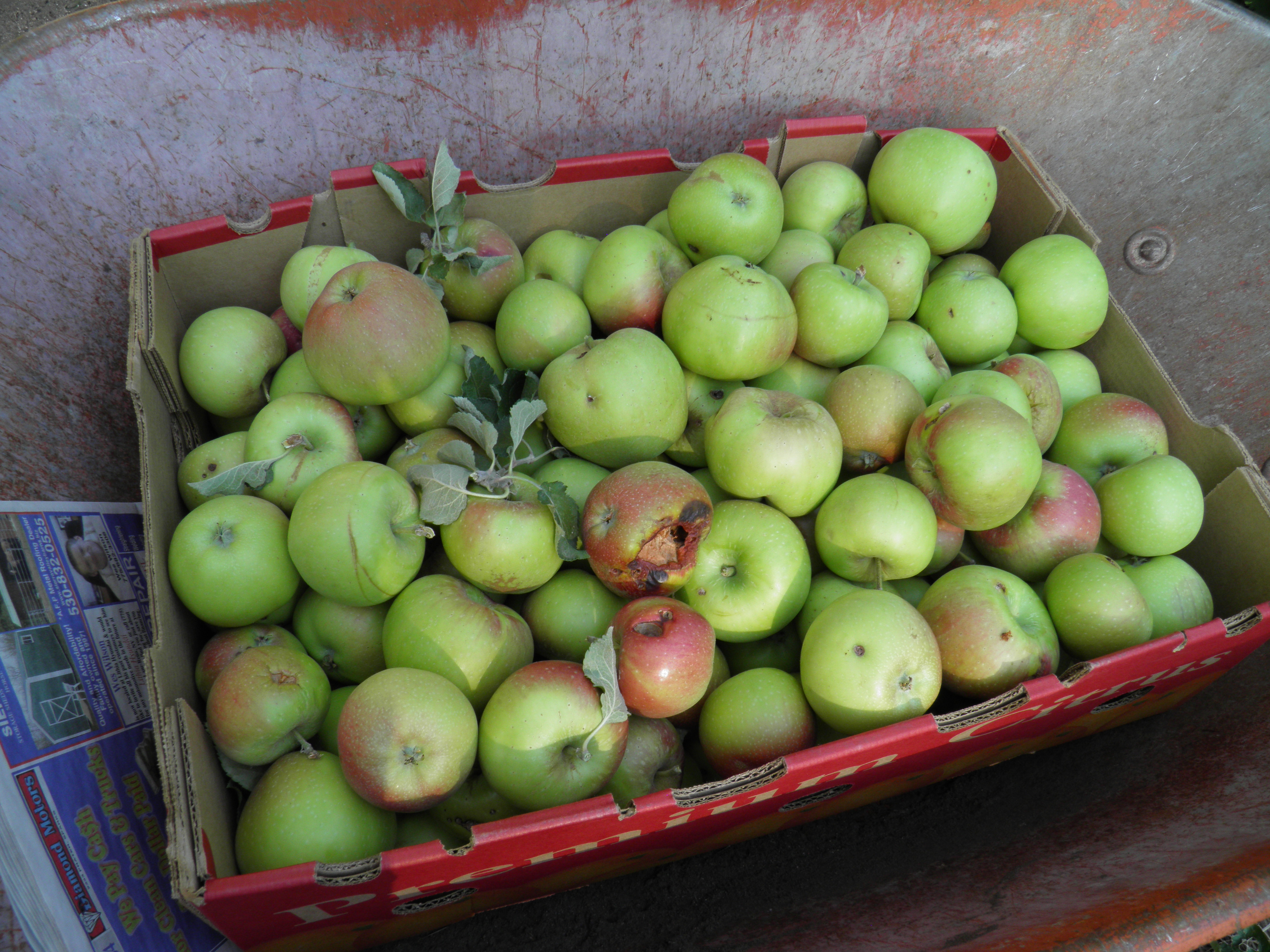
However, I did pick apples today.   My apples are falling!  I would have loved to have left them on the tree a little longer, but between wind, squirrels, raccoons, and birds, they had to be picked. I have the tree about 2/3rds of the way stripped and will finish tomorrow with my grandson’s help. I have nicknamed him Farm Boy, because he does love to garden. And I love to have his help.

If you are picking apples now, when they are still not quite ripe, here are some tricks and tips I’ve learned.

* Twist the apple clockwise (or to the right) to get it to release either from the stem or from the branch. Twisting rather than pulling does far less damage to your tree.

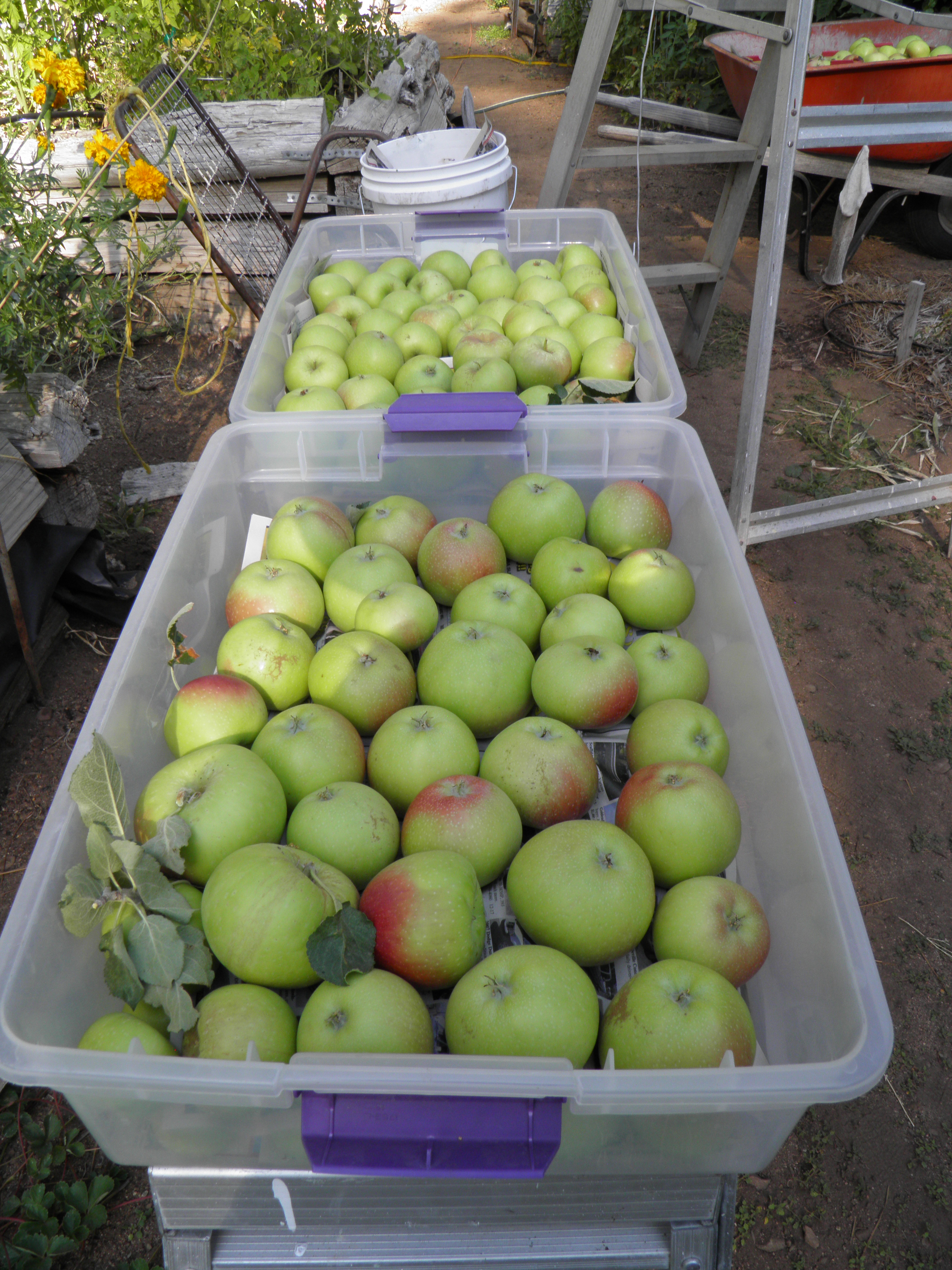
*Sort the apples as you pick them. I pick into a two gallon bucket (because that’s all I can lift when it’s full) and after I’ve filled the bucket, I sort them into separate boxes: a box for any wormy apples, any that have hit the ground, any that have been bird-pecked, and any oddly-shaped apples that won’t go through the peeler cleanly; and a box for “perfect apples,” those that are not bruised or wormy or bird-damaged. This is important because the old adage that one bad apple can spoil the whole barrel really is true. When I sort as I pick, I know which apples need to be processed first, and which ones can sit for a while and sweeten up a bit more.  The pic below is of the damaged apples.  These won’t sit long.  I’ll be turning them into apple butter next week.

OLYMPUS DIGITAL CAMERA

*Store the apples that are going to sit for a while in no more than two layers, with plenty of newspaper in between layers to absorb moisture and cushion the fruit. Don’t stack boxes of apples on top of each other unless you can do it without bruising them.

OLYMPUS DIGITAL CAMERA

*Store the apples in the coolest place you can find where mice, squirrels, etc., will not damage them. This can be difficult sometimes. Right now, the only place I have to store my apples is our pump house, and since the temps are heating up again, they will not hold long. Cooler is better, if possible.

I process my bruised, damaged apples first because they will go bad much faster than the perfect apples. I make applesauce and apple butter with those apples. For my apple butter recipe, click on the link above.

OLYMPUS DIGITAL CAMERA  OLYMPUS DIGITAL CAMERA

With the perfect apples, I usually make pie filling and dehydrated apples with cinnamon for the grandkids (and even my kids still ask for them!), but this year, it’ll just be dehydrated apples. I have plenty of pie filling left from last year, both canned and frozen. (For the recipe for canned apple pie filling, see below.)

For dehydrated apples, we use a hand-cranked peeler/slicer/corer machine (Dennis always helps me with this part). After slicing the rings in half, I drop the apples into acidulated water (lemon juice or Fruit Fresh added to water) to prevent browning, and I place them on the dehydrator trays and sprinkle them with cinnamon. You can’t keep them from turning brown, and the cinnamon helps disguise the brownness and gives them wonderful flavor. My kids have always loved these, and now my grandkids do too. Just the other day, my daughter was at my house, foraging in the pantry, and came across a bag of my dried apples. She ate half the bag and wanted to take the other half home with her!

OLYMPUS DIGITAL CAMERA

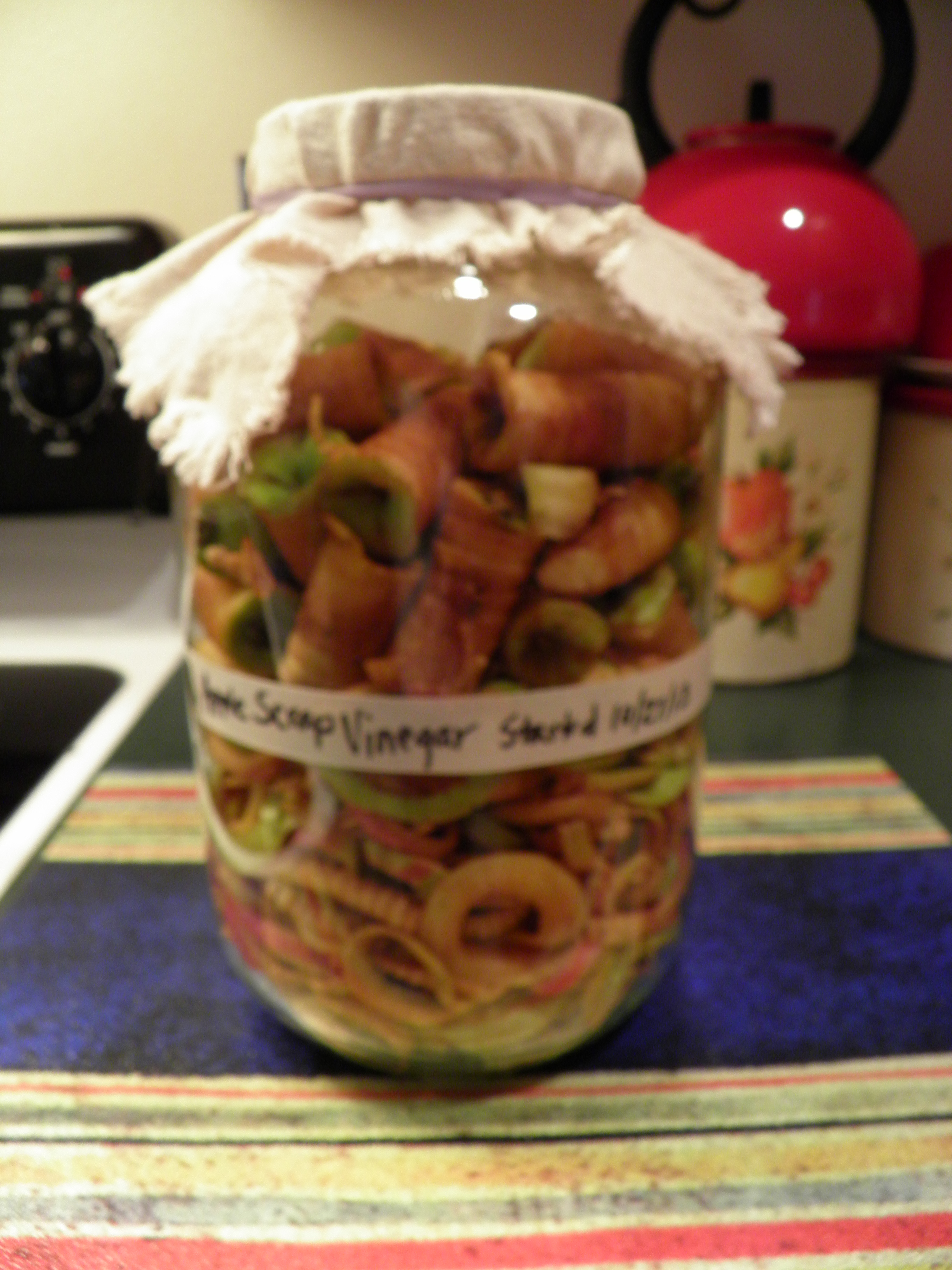
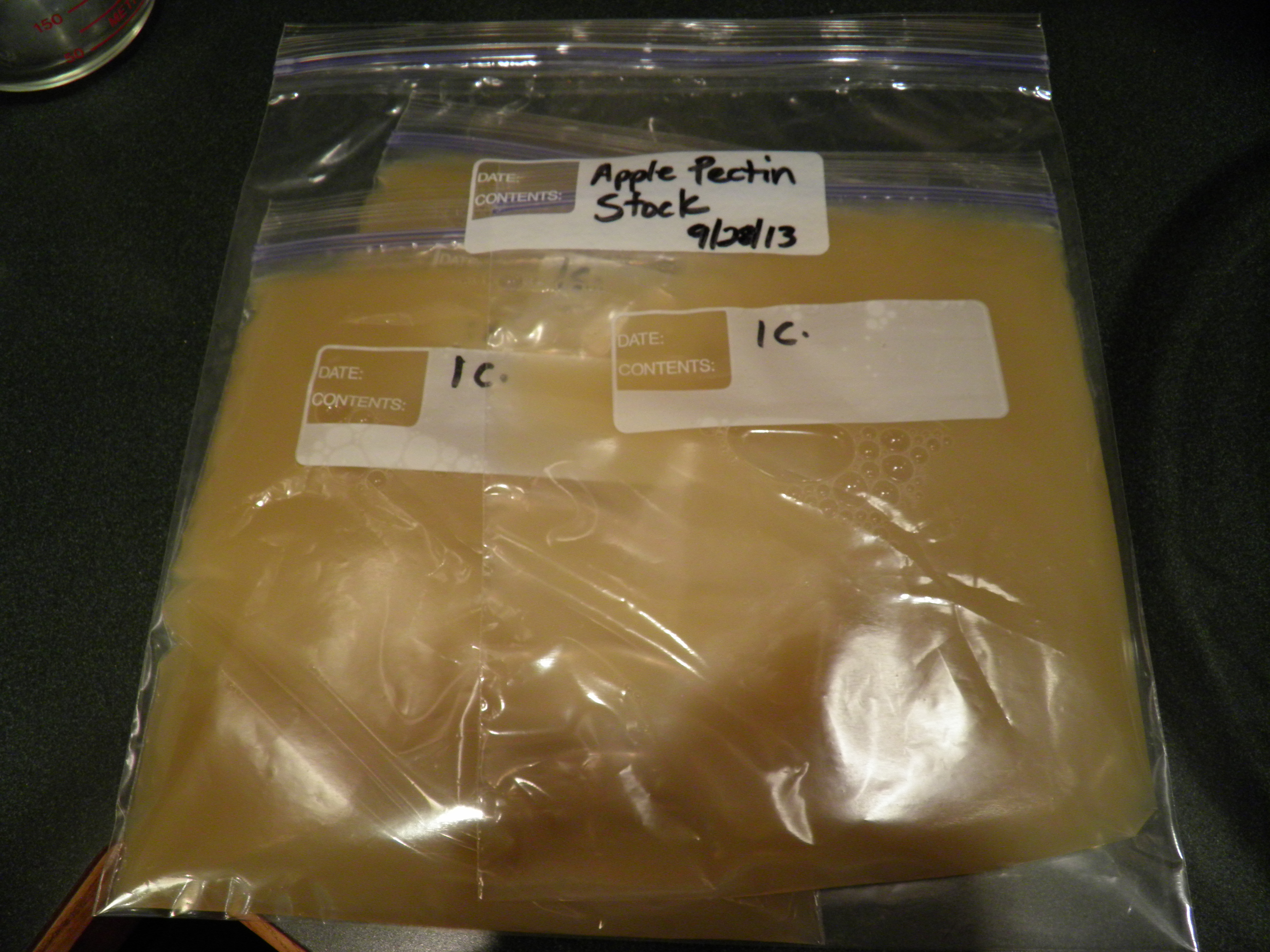
And don’t throw out the peels and cores–make apple scrap vinegar  or apple pectin stock with them.  Click on the link for the how-to.

OLYMPUS DIGITAL CAMERA   OLYMPUS DIGITAL CAMERA   OLYMPUS DIGITAL CAMERA

I usually make up gallon bags of pie filling for the freezer. I just use the apple pie recipe out of the Betty Crocker cookbook, and mix up the filling in a bowl (apples, flour or cornstarch—and you can use brown rice flour for this if you are gluten-free, sugar, lemon juice, a pinch of salt, cinnamon and whatever other spices you like).

But last year, a friend, Suzanne Lepowski, shared a canned apple pie filling recipe with me which I altered because I don’t can with cornstarch or Clear Jel (unsafe with the former and too expensive with the latter), and it worked perfectly. One quart jar isn’t enough for a 9-inch pie, but works fine with an 8-inch pie. If you want to make 9-inch pies, can both quarts and pints. One of each will fill a 9- or 10-inch pie pan. All you have to do is add a couple of tablespoons of cornstarch, or ¼ cup flour, or brown rice flour if you’re gluten-free, to the contents of the jar, and then put it in your unbaked pastry shell. The apples are tender, and the pie is delicious. Thanks, Suzanne!

OLYMPUS DIGITAL CAMERA

Canned apple pie filling (no thickener)

6 pounds apples (About 20-25 medium apples:  amounts to about 5 qts. cored, peeled, sliced.  This will make about 3 quart jars of pie filling.)

Ball Fruit Fresh (or several tablespoons of lemon juice)

2 cups sugar

1 1/2 teaspoons cinnamon

1/4 teaspoon nutmeg (and I add 1/2 teaspoon allspice because I like it in my pie filling)

2 tablespoons lemon juice

Wash, peel, core, and slice apples.  Add apples to water with Fruit Fresh according to directions on Fruit Fresh jar, or add several tablespoons of lemon juice to a large bowl of water. Combine sugar and spices in large pan. Rinse and drain apples.   Stir apples into sugar and spice mixture. Let stand until juices begin to flow, about 30 minutes. Stir in 2 tablespoons of lemon juice. Cook over medium heat until boiling.  Cook for 5 minutes.

Ladle into hot, sterilized quart or pint jars, leaving 1 inch head space, place lid and cap, and process for 20 minutes in a boiling water bath canner, adjusting for altitude according to altitude chart.

I hope you are able to leave your apples on the tree long enough to let them be kissed by frost.  It makes them sweeter.  But if, like me, you are working with apples now, I hope you enjoy these recipes.  We do.

Standard
Garden and Greenhouse, Recipes

Freezing Green Beans

I’ve been canning green beans from the garden for the past couple of weeks, but the production has slowed down now that days are getting shorter, and I haven’t been getting quite as many beans at one time. I don’t like to haul the pressure canner out for anything less than a full load, so these lesser harvests go in the freezer. I was preparing beans for the freezer on Monday, and it occurred to me that many people may not know how easy it is to freeze green beans at home. You don’t need any special equipment, like a canner, so if you’re not up to making such an investment in dollars, energy, or time, freezing is the way to put up those lovely, fresh green beans, either from your garden or the farmer’s market or produce stand. So, here’s a step-by-step guide to freezing green beans.

First, the only equipment you’ll need are things you almost certainly already have in your kitchen. You need:

A large pot, stainless steel or enamel or porcelain-coated is best (just don’t use an old, peeling, Teflon-coated pan!)

3 colanders or strainers (at least one should be metal/heat resistant)

A large bowl to hold one colander

Plastic zipper freezer bags (or a food saver system) and an indelible marker

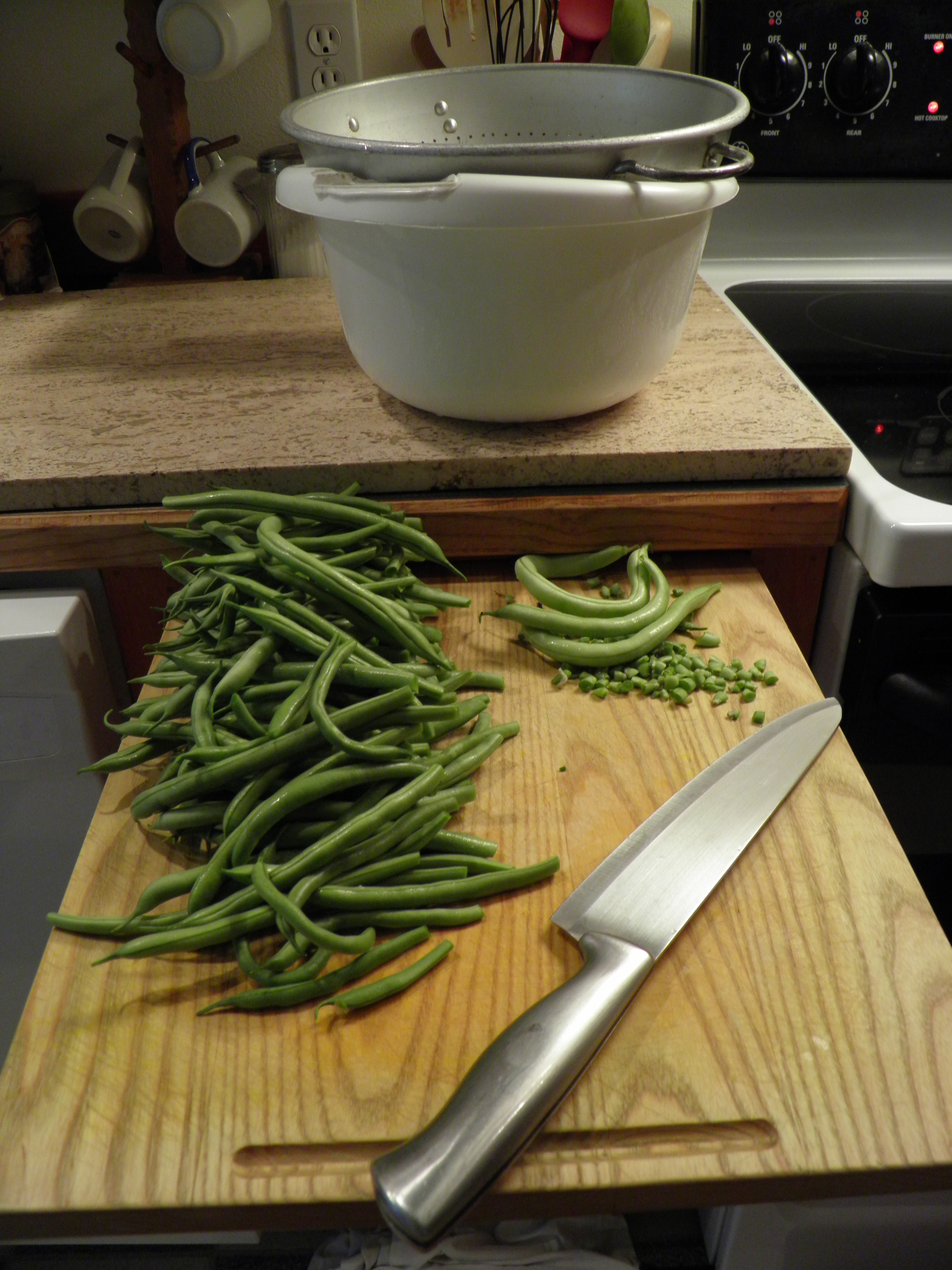
At the market, or picking from a farm or your own garden, choose fresh, crisp beans. Any tough, limp, or overgrown beans should be set aside. (If you’re making soup or stew, you can put them in it; otherwise, I put them into the compost bucket or over the fence for the deer.) In the picture below, you can see three beans on the right that are too big for either freezing or canning. If this were an heirloom variety, I’d have left them on the bush to make seed, but they aren’t, so I didn’t. On the counter is my shocking bowl and colander.

OLYMPUS DIGITAL CAMERA

If the beans are straight from the garden and are warm, it’s best to wash them thoroughly in cold water, drain them, and let them chill in the fridge overnight before processing. This helps crisp the beans. Always wash beans thoroughly because any dirt or organic garden debris can lead to spoilage, even when frozen.

Washing: I clean my sink, fill it with cold water, dump in the beans, swish them around, and then let any dirt settle to the bottom before scooping the beans into a colander. I rinse the beans again in the colander, then drain them. As I’m cutting off the stem ends, I pick off any debris, like spent blossoms, that might still be stuck to the beans.

Trimming: The stem ends of the beans must be trimmed before blanching. I used to do this with my mother by hand, sitting beside her on the porch steps, snapping the ends off the beans so she could can or freeze them. Now, I use a knife because I like smooth end cuts. I do not cut off the blossom end curls unless they are hard, and they aren’t hard unless the beans are too big. And you shouldn’t try to freeze over-large beans anyway. I leave my beans whole otherwise. To my way of thinking, cutting the beans means allowing more nutrients out into the blanching and shocking waters, but they can be cut into two- or three-inch pieces, if desired.

Blanching: The next step in preparing the beans is blanching. Blanching is a pre-cooking process that kills bacteria which can cause spoilage. Put a large pot of water that will hold a metal colander on to boil. (I use my 6 qt. soup pot.)

Next, fill the large bowl halfway with ice, and place the second colander in it. Fill with cold water, leaving a couple of inches headroom for the ice to melt. This is your shocking bowl.

Place the third colander in the sink. This is the draining colander, and this is where I use my plastic colander. The other two are metal. You can get away with using only two colanders, using the same one for blanching and shocking, but your shocking water will heat up a lot faster and your blanching water will cool down between batches, and you’ll drip more water around your kitchen. Three colanders or strainers make the process faster and easier.

When the water in the large pot is boiling, place as many washed and trimmed green beans as can be submerged under the boiling water in the colander. I cover the pot until it comes back to a boil, but I begin timing as soon as the beans hit the boiling water. The blanching period is 3 minutes. Use a timer! Under-blanched beans will not be as tender and flavorful as those blanched properly, and may freezer-burn more rapidly. Over-blanched beans will be mushy and less flavorful.

OLYMPUS DIGITAL CAMERA

When the beans have been in the boiling water for 3 minutes, carefully remove the colander from the pot, allow the hot water to drain for a few seconds, and dump the beans into the shocking colander in the ice water bath.

Shocking: The ice water bath stops the cooking process and ensures that the beans will stay bright green when frozen. The beans can stay in the shocking bowl for about the same length of time as they were in the blanching pot, but no longer. You don’t want them to get water-logged, and you have to get them out of the shocking bowl before the next batch is ready.

I usually dump another load of beans in the blanching colander immediately, then watch the timer. When there’s about 30 seconds left on the timer, I lift the shocking colander full of blanched beans out of the water, let it drain a few seconds, use the big pot lid like a shield to keep from dripping water over the kitchen floor, and dump the beans into the draining colander in the sink. They should be ice-cold, and they can sit there and drain while you finish up several more batches before bagging.

OLYMPUS DIGITAL CAMERA

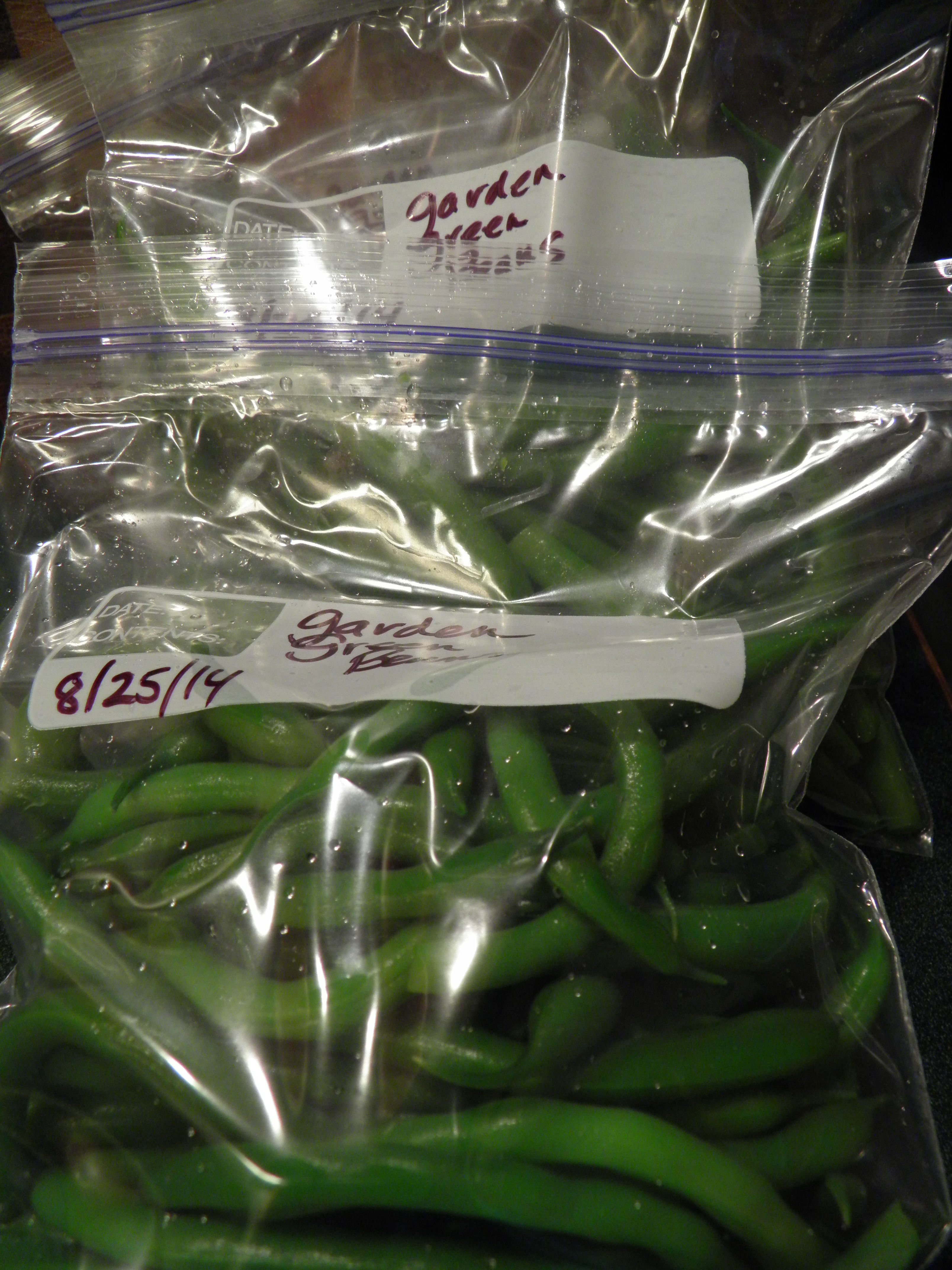
Bagging: All that’s left to do after the beans have been blanched and shocked and drained is bag and tag. I have a food saver system, but honestly, I find it more trouble than it’s worth for small batches of vegetables. I use zipper freezer bags, and I wash and reuse these for storage bags when I’ve only put vegetables in them. I always write product type and the date on the bag, having learned that when I don’t, I’m liable to find something in the freezer that is either unrecognizable or of unknown age. I usually make up some bags with enough beans for one serving each for Dennis and me, and some bags with more beans for family dinners or guests. That’s another nice thing about freezing. After you have the beans blanched and shocked and drained, you can bag them up in whatever quantities suit your needs.  Be sure to press all the air you can out of a zipper bag before you zip it up.

OLYMPUS DIGITAL CAMERA

If you are working with a large amount of beans, you might need to add more boiling water to your blanching pot. I keep my electric tea kettle full and simmering for this purpose. You might also need to pour some water out of the shocking bowl and add more ice. Check the temperature of the water in the bowl after about 3 batches. Add more ice if it is not really cold. The water needs to be very cold to shock the blanched beans.

That’s all there is to freezing green beans. They are delicious and a fast and easy vegetable to prepare when dinner preparations are rushed. You can boil an inch or so of salted water in a pot, pop these beans in frozen, put on the lid, and when the water comes back to the boil, they’re done. All they need is a bit of butter. Or, you can thaw and drain them and saute them with olive oil and garlic. They’ll stay bright and beautiful because of the blanching process. Give that old favorite, Green Beans Amandine a try, which can be made with either fresh or frozen beans. Your frozen green beans can be added to soups or stews, as well.

I think the best thing about freezing beans, as opposed to canning them, is that you can work in small batches. So go out and get yourself a few pounds of green beans and try putting them up yourself. It’s easier than you might think, and your reward will be a beautiful, green vegetable, low-calorie and full of fiber, on your dinner plate this winter.

Standard
Canning, Side dishes, Uncategorized

Dilly Beans and Pickled Beets

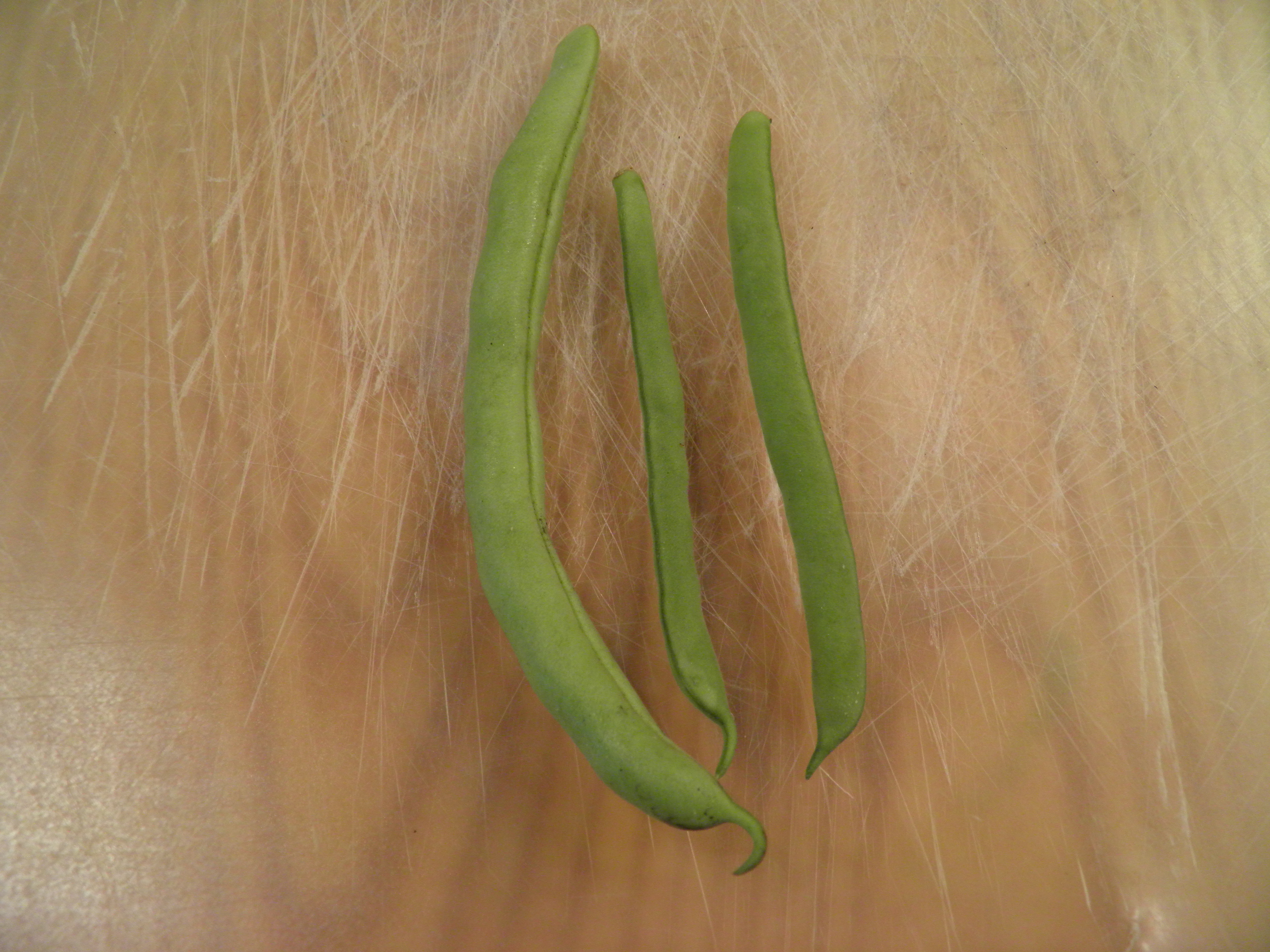
Update 8/5/15:  I had a question from Lisa recently about why her dilly beans might have turned out mushy.  It occurred to me that a word or three about the size of the beans might be appropriate to the post, and I have a picture to illustrate.  In the picture, the bean to the left is too big.  It will be tough if “dillied.”  A bean this size can be pressure-canned or cooked for a while with ham or bacon and onion or garlic, and it will taste great.  But I would not freeze it or “dilly” it.  The bean in the middle is too small.  You can dilly a bean this size if you wish, and I sometimes fill in the little spaces in the jar with beans this size, but they can over-process quickly.  I would not pressure-can a bean this size, because it will be mushy, but this size is perfect for freezing (you only blanch beans for 3 minutes when freezing).  The bean on the right is just right! (Sound familiar?)  This bean is about the thickness of a pencil (good old #2 like we used in school), and will not get mushy in the jar with a 10-15 minute processing time.  It’s also the perfect size for the tall, 12 oz. jelly jars I like to use for dilly beans.  I hope this is helpful.

OLYMPUS DIGITAL CAMERA

OLYMPUS DIGITAL CAMERA

My green beans are coming on, and my first preservation priority with green beans is a pickle. My two favorite pickles are beets (which I canned a couple of weeks ago) and dilly beans, which I canned just a few days ago. My recipes for both are a bit different from most of the ones you see in canning books and online.

Most of the dilly bean recipes call for cayenne pepper or crushed red pepper. But a few years ago, a good friend of mine, Chris, let me taste her dilly beans with jalapeno peppers, and I was hooked. In a further modification of my own, I began to use serrano peppers instead of jalapenos. For one thing, they’re just a bit spicier, and for another, they take up a lot less room in the jar than jalapenos, therefore leaving more space for the beans.

I’ve also modified my pickled beet recipe, sort of merging two recipes to create a flavor I like better than either of the originals. So here you go—my two favorite pickles.

OLYMPUS DIGITAL CAMERA

Spicy Dilly Beans

2 lbs. washed, fresh green beans, trimmed on blossom end to fit jar size

4 Serrano peppers, washed, stems trimmed

4 cloves garlic

4 heads fresh green dill or 4 teaspoons dried dill seeds

2 ½ cups water

2 ½ cups vinegar (5% acidity)

¼ cup pickling/canning salt

Sterilize clean pint or 12 oz. jars in boiling water bath canner for 10 min. Pour boiling water over jar flats, keep hot. Trim stems on peppers back to bright green. With tip of sharp knife, cut two small slits in each pepper, making sure to get all the way into the inner cavity with the knife. Fill hot jars with green beans, making sure that beans fit all the way down inside jar and come up no higher than ¼ inch below lip of jar. Leave room for one garlic clove and one serrano pepper, and the dill, in each jar. If using dried dill seeds, use 1 teaspoon per jar. Bring water, vinegar, and salt to boil, pour boiling brine over beans to within ¼ inch of tops of jars. Wipe rims with clean, damp cloth or paper towel, position jar flats, close with rings, and process in boiling water bath for 10 minutes (add processing time according to altitude chart, if needed). Remove from canner and let cool at least 12 hours before testing seals. Any jars which don’t seal may be stored in the refrigerator for a month, then eaten. This recipe makes about four pint jars or five 12 oz. jars.

Notes: Never let brine continue to boil while filling jars. This may affect acidity levels in the brine and could cause a spoilage problem. Fill jars, and when you’re almost done, turn the heat on your brine mix up high to bring it to the boil.

For canning, make sure the vinegar you are using is 5% acidity. I ran across some white vinegar not long ago that was 4% acidity, and it cannot be used for canning. You may use white or apple cider vinegar for this recipe, but be aware that most white vinegar is made from corn, and nearly all corn these days is both genetically-modified and sprayed with pesticides. I use apple cider vinegar because while apples are sprayed, at least I’m not using a GMO. Besides, I like the flavor.

If you have to trim your beans quite a bit to make them fit the jars, there are a couple of things you can do with the trimmings. Of course, you can cook those trimmings up for dinner (I like them with a little bacon and onion). Or, you can put the short pieces (minus the very blossom end tip), into a separate jar and treat them just like the long dilly beans. Then, those short pieces can be added to salads or chopped for tuna salad. There’s no need to throw them away!

I like to use the tall, 12 oz. jelly jars for dilly beans because I don’t have to trim quite as much off the beans to make them fit.

And a final note on peppers: Serranos are readily available, usually right alongside jalapenos, in your market. I can nearly always find them at Grocery Outlet even in the winter time, grown in California.  They are one of my favorite peppers to grow in our short growing season here, good in salsa and about anything else you’d want to use a hot pepper in.

OLYMPUS DIGITAL CAMERA

Pickled Beets

3 quarts peeled, cooked, small beets (see below for how to cook and peel beets for this recipe)

1 ¾ cups sugar

2 sticks cinnamon

1 tablespoon whole allspice berries

½ tablespoon whole black peppercorns

1 ½ teaspoons pickling/canning salt

3 ½ cups vinegar (5% acidity)

1 ½ cups water

How to cook and peel beets: Beets must be scrubbed free of any dirt or small stones that like to cling to the roots. (I’ve found that pulling my beets in the evening and letting them soak in cold water all night makes it easier to clean them). Leave the tap roots on, and trim leaves and stems, leaving two inches. (This prevents the beets from bleeding as much color into the water when they are cooking.) Place beets in large pot and cover with boiling water. Bring to boil and cover, reducing heat to medium. Cook beets until tender, and the only way to know they’re tender is to stab them with a fork, but try not to stab them until you’re pretty sure they’re tender, as this releases their color and juice into the water. Small beets take about 20 minutes to get tender, larger beets can take up to 45 minutes. Remove beets from cooking water to colander; let beets drain and cool to touch before trying to peel them. To peel beets: with a sharp paring knife, slice off the top, taking off stems, and then scrape knife down toward the root. If the beet is fully cooked, the skin will come right off. The skin of the beet is dull when cooked; the flesh of the beet will be shiny. It helps to have a damp paper towel handy to wipe off beets after peeling. Cut off tap roots. If using small beets, cut into quarters. If using large beets, cut into 1 ½ inch chunks or quarter and slice.

Pickling Directions:

In large saucepan, combine sugar, water, vinegar, cinnamon sticks, allspice berries, peppercorns, and salt, bring to simmer, cover and simmer 15 minutes. Remove cinnamon. Bring liquid to boiling before pouring over beets in jars.

Pack cooked, peeled, cut beets into clean, hot pint or half-pint jars, leaving ¼ inch head space at top of jar. Cover beets with boiling brine (include allspice berries and peppercorns), leaving ¼ inch head space. Cap with hot flats and rings, and process in boiling water bath for 30 minutes (adjust processing time as needed for high altitudes). Cool for at least 12 hours before testing seals. Any jar which doesn’t seal may be stored in the refrigerator for a month, then eaten.

Notes: I use beets of all sizes, however they come out of my garden, but I like the smaller beets, up to about 2 inches in diameter, best for pickling. They only need to be cut into quarters. I often use larger beets for this if that’s what I have, but they have to be cut up into smaller pieces before putting them in the jar. I like them in chunks, but they can be sliced as well. Quarter and then slice large beets into ¼ inch slices. Just a warning, I find the slices tend to crumble a bit when being removed from the jar.

This recipe uses a bit less sugar than the original Ball Blue Book recipe does, and I’ve added the peppercorns, which are a feature of the recipe for pickled beets in Canning for A New Generation, a canning book I just love. The black peppercorns give a nice depth of flavor and just a bit more spice to the traditionally sweet-spiced beets. I love that little bit of heat with the sweet.

As with the dilly bean recipe above, you may use either white vinegar or apple cider vinegar. I prefer apple cider vinegar for the reasons mentioned earlier.

These two pickles are always on our Thanksgiving table. To me, a big holiday dinner isn’t complete without a pickle plate, and a pickle plate isn’t complete without dilly beans and pickled beets.


Standard
Beverages, Canning, Desserts, Recipes, Uncategorized

Blackberry Time

OLYMPUS DIGITAL CAMERA

It is blackberry time, and we are busy trying to get caught up with our picking after being away for five days.  And it rained all day yesterday, so if we don’t pick quickly, the berries will rot from too much moisture.  So, instead of an original post this week, I’m going to repost a recipe I shared last year, in case anyone else is dealing with an abundance of blackberries.  Just remember, the berries can be frozen (don’t even wash them unless they are dusty) in gallon freezer bags and juiced later.  They will render more juice after the freezing and thawing process.  This recipe came from my sister’s father-in-law, who went by “Tip,” thus the name of the recipe.  This stuff was a big hit at my 40th high school reunion last weekend!

OLYMPUS DIGITAL CAMERA

Tip’s Blackberry Cordial

9 cups blackberry juice

2 cups sugar

3 cups vodka or brandy


Bring blackberry juice and sugar to low boil and simmer for 8 minutes. Cool for 10 minutes and add vodka or brandy. Pour into clean bottles (brandy or vodka bottles work well for this) and cap tightly. Stores indefinitely.

Standard