Canning, Fermenting, Recipes

Waste Not, Want Not

I grew up with that adage.  We had very little, so it was important not to waste what we did have, although I can’t say that as a child, I never wanted anything.  However, with those lessons in my pocket, I’ve learned to make things with what I once would have thrown away.  This post is about a couple of those things:  fruit vinegar and pectin stock.  And I’m not talking about steeping fruit or herbs in store-bought vinegar.  I’m talking about making vinegar from scratch.

For years, I threw away the apple peelings and cores from my applesauce and apple pie making.   I didn’t throw them in the garbage; they always went in the compost pile.  But still, I wasn’t utilizing them as I’ve since learned to do.  I’ve learned to make vinegar, really good vinegar, with my apple scraps.  I’ve also learned that other fruit scraps make delicious, exotic-tasting vinegars as well.

Apple is my basic vinegar-making fruit.  I use a lot of apple cider vinegar.  I like the taste of it for salads and in cooking, fruity and slightly sweet.  The idea that I could make vinegar from my apple scraps lit me up like a Christmas tree.  I made my first try in 2009, with peelings and cores from the first good crop of apples from our little tree in the garden.  That first batch of vinegar was rich and dark and delicious, and I was hooked.  I’ve experimented since then with other fruits as well:  peach, plum, grape, and blackberry.   Here’s the easy process for making vinegar from fruit scraps.  There are more difficult ways to do this, and you can add ingredients like sugar, but why bother when this method works reliably?  First, the basic instructions for apple, and then some tips for making other fruit vinegars, and finally, apple pectin stock for jelly-making.

Apple Scrap Vinegar

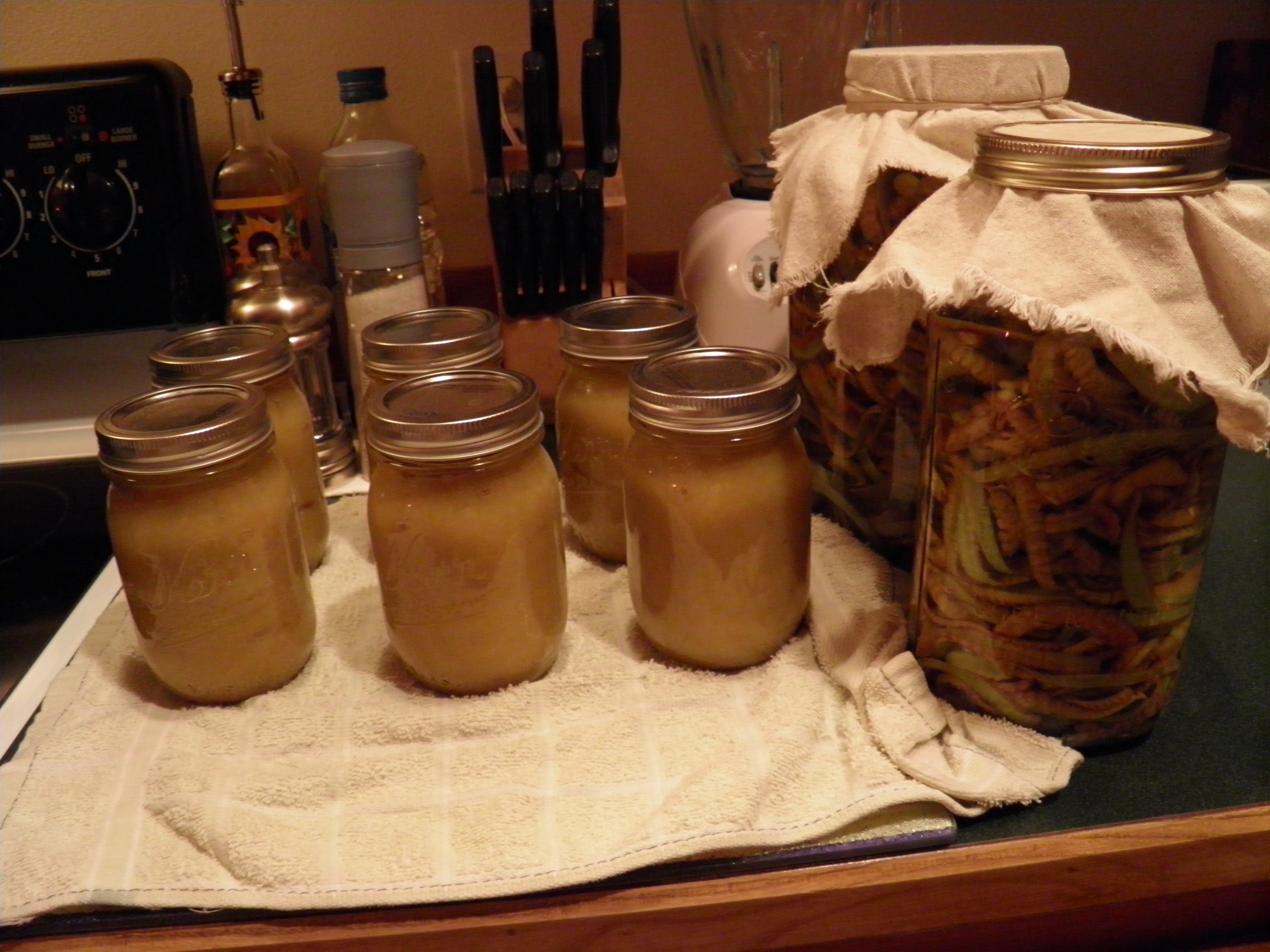
Allow your apple peelings, cores, and scraps to brown for several hours.  (This is convenient, because if you’re like me, you’re making applesauce or apple butter or apple pie filling, which is why you have the peels in the first place!)  Wash out a large jar and fill it with browned apple scraps. Don’t cram or crowd the jar but fill within a couple of inches of the neck; cover scraps with distilled water if your water is chlorinated.  Cover the jar with several thicknesses of cheesecloth, nylon tulle, or any other clean, breathable fabric you have on hand.  Secure the cloth around the neck of the jar with a rubber band, or if the fabric is not too thick, the ring portion of a 2-part canning lid.  This keeps fruit flies out of your vinegar-to-be.  Place the jar on a plate to catch any overflow during fermentation.
OLYMPUS DIGITAL CAMERA

You can leave the jar on your counter, on a shelf in the cupboard, anywhere out of direct sunlight but where you will remember to stir it every day.

And that’s it.  Stir it every day.  Let it sit.  In a few days or a week, you’ll notice some bubbling.  If you filled the jar a little too full, it might even bubble over onto the plate. If so, clean up the plate and outside of the jar, stir down the contents, and replace the cloth on top of the jar with a clean one.  (The only fruit that caused overflow for me was grapes, and I filled the jar too full to handle the amount of fermentation.)

In a week or so after fermentation begins, a grayish scum will begin to form on the top of the liquid in your jars.  This is the “mother” or “mother-of-vinegar” and it looks nasty but is just part of the process.  It’s hard to believe that this scum is what makes that beautiful clear amber liquid, but it does.  If any scraps float to the top of the jar and become moldy, fish them out.  But don’t let a couple of moldy scraps freak you out, because as the vinegar acidifies, it kills off any mold.  After a few weeks, you’ll begin to notice a vinegary smell coming from the jar.  You can stop stirring at this point and let the acidification process work.  When it smells good and strong, usually at least a month or maybe two, it’s time to taste.

Stir the jar once more and then strain the vinegar from the apple peels by pouring it all through a fine-mesh wire sieve into a clean glass bowl.  Let the peels drip for a couple of hours to get all the liquid off of them.  You can mash a little—it’s fine.  Don’t worry about any small particles still left in the vinegar.  You’re going to strain again, later.  When the vinegar has settled, pour a small amount into a spoon and taste it. It should taste strongly acidic and just slightly sweet.  If it isn’t strong enough, pour the vinegar back into the jar that held the peels and cover it once again with the cloth.  (You don’t need to put the peels back in the jar, just the vinegar.)  Let it sit for another week or longer, until the taste satisfies you.  The vinegar will continue to acidify as long as it has air because it is a living organism.  The “mother” will probably re-form.  This is a good sign that your vinegar is alive and working and will be very healthful when you begin to use it.

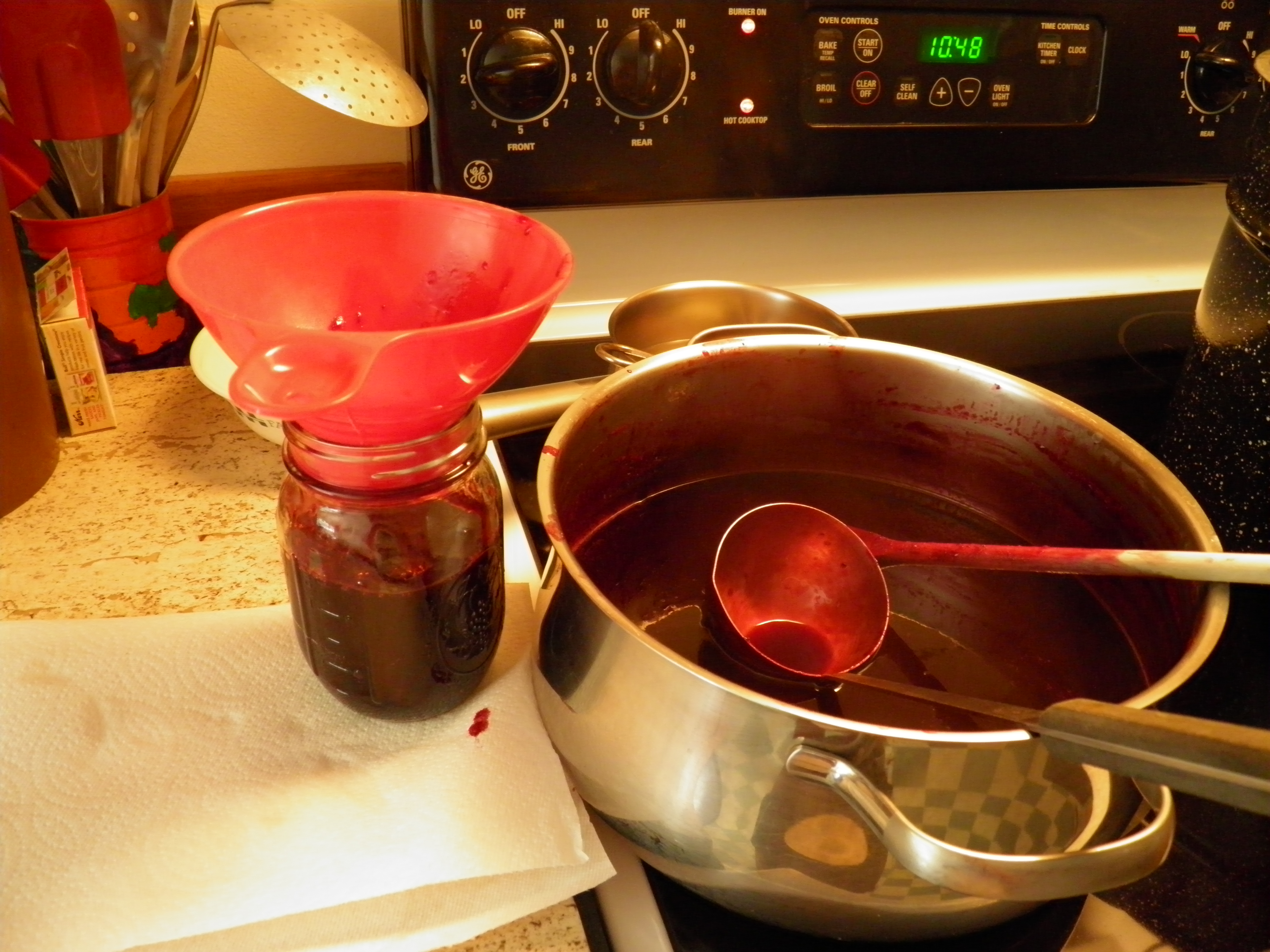
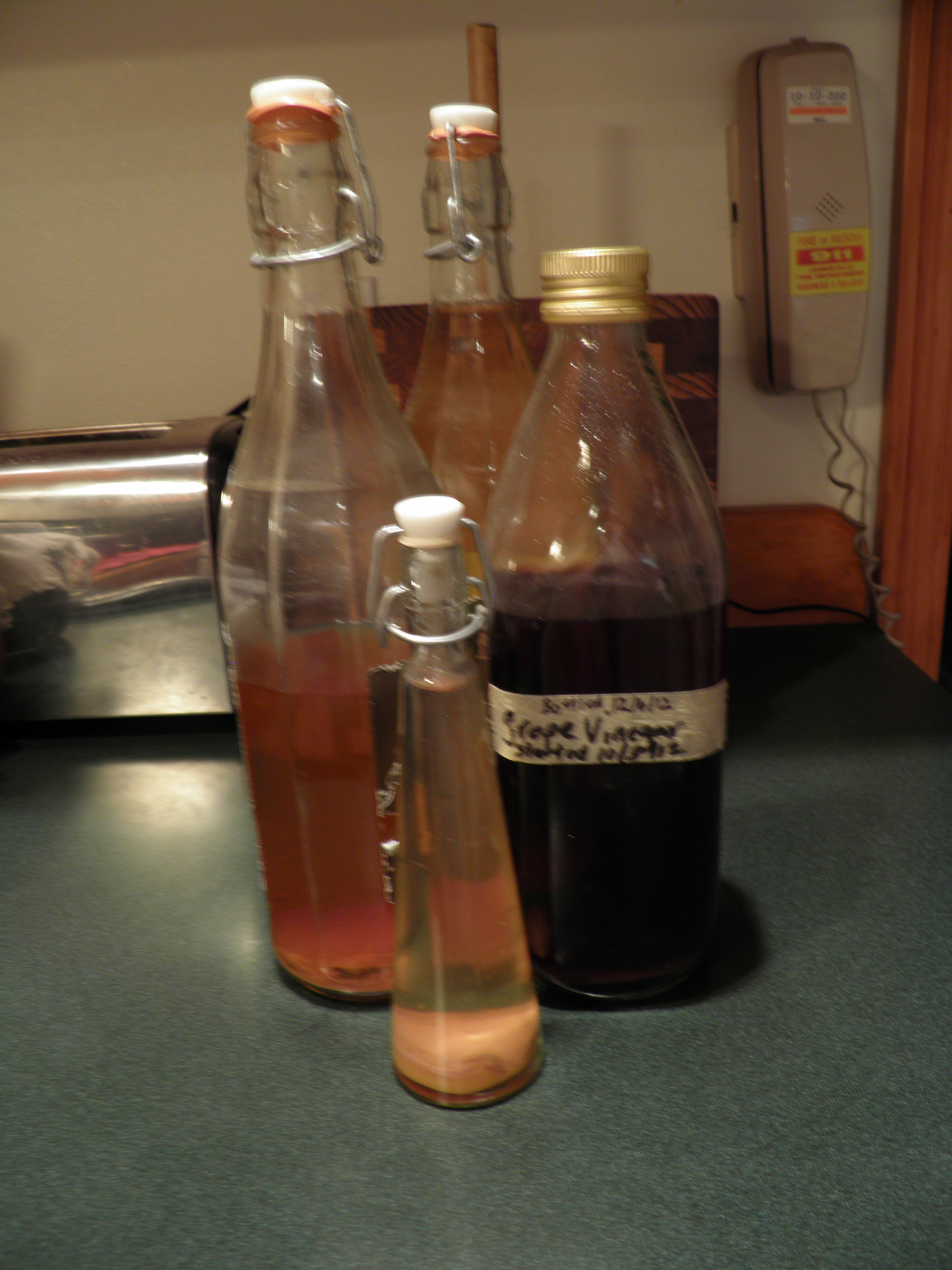
When the vinegar is strong enough to suit your taste, prepare your bottles.  These must be glass, and should have plastic or rubber stoppers, not metal.  (I use old olive oil bottles, lemonade bottles, any glass bottle with a plastic stopper.  Olive oil bottles with metal caps lined with plastic work fine.  Do not use cork.)  The bottles and stoppers should be washed in hot, soapy water and then immersed in boiling water for 10 minutes.   This sterilizes the bottles and will allow your raw vinegar to keep indefinitely.  (I just used up the last of my 2009 batch, and it was as good as the day I bottled it.)
OLYMPUS DIGITAL CAMERA

Strain the vinegar through several layers of cheesecloth or nylon tulle.  Pour into cooled, dry bottles and stopper tightly.  If you bottled your vinegar in clear bottles, it’s best to store them away from light.  Do not worry if the mother forms in the bottom of the bottles.  In fact, if you wish to, you can save the mother and add it to your next batch of vinegar the following year, speeding up the fermentation process.  Some people swear by the health-giving properties of mother-of-vinegar.  One sufferer from rheumatoid arthritis told me that the mother was helpful for reducing inflammation when applied to the joint.

You can follow this basic process with any fruit scraps to create exotic vinegars.  I have successfully made both peach and grape vinegars from peach peelings and grape skins leftover from jam-making.  With peelings from peaches that have been scalded to remove the skin more easily, it’s important to also add a few scraps, the bruises work fine, to the jar.  Scalding kills some of the enzymes or bacteria that start fermentation.  It might also be helpful to add a little sugar to the jar.  This year, I added a tablespoon of organic palm sugar to a quart jar of peach peelings to jump start fermentation, and it seems to have worked well.  Grapes will ferment readily on their own.  Make sure to give them a little extra room in the jar.  Currently, I also have plum pit vinegar and blackberry vinegar started.  For the plums, I used the pits of Santa Rosa red plums that were left from jam-making.  They are not freestones, so there was quite a bit of flesh left on the pits.  I put all the pits in a large jar and covered them liberally with distilled water.  This jar has developed a mother on top and is smelling like vinegar.  I started this jar on August 8th.  For the blackberry vinegar I started last week, I crushed two cups of my blackberries in a quart jar with a wooden spoon and covered them with about two and half cups of distilled water.  I also added the dregs, about two teaspoons, of two bottles of red wine, just because it seemed like a good idea.

OLYMPUS DIGITAL CAMERA

Always use distilled water for vinegar-making.  One year, I forgot to buy distilled water prior to apple processing day, and I didn’t have time to run to town to get any.  I used tap water.  I learned why I shouldn’t use tap water.  We have good well water, but it is hard, with a high mineral content.  The vinegar worked just fine, but the minerals caused it to be cloudy.  It took two years in the bottle to clarify, but it tastes good.

OLYMPUS DIGITAL CAMERA

What to do with the leftover peelings after the vinegar has drained away?  Now they go to the compost pile.  If I still raised chickens and pigs, they’d get a treat, but instead, I’m feeding the worms that feed my garden.  There’s small-scale environmental justice for you.

Apple Pectin Stock

I also use my apple cores and apple peelings for apple pectin stock.  Apples contain large amounts of natural pectin, which is why they used to be added to other fruits to help get a thicker preserve.  Crabapples in particular are rich in pectin, and there were many fruit and crabapple blends to be found on pioneer pantry shelves.  Besides crabapples, green apples contain the most pectin; so a good pie apple, like Pippin, Granny Smith, or my favorite, Gravenstein, will also make the best pectin stock.  Convenient, yes?  Apple pectin stock can be added to fruits that don’t have enough pectin on their own to set up in a jam or jelly, or fruits which must be peeled before preserving, such as peaches or mangoes, thus affecting the set.  Apple pectin stock is easy to make.  Here’s how I do it.

As the cores (and peels, when the vinegar-making jars are full) come off the peeler (we use the kind that peels and cores and slices at the same time), I drop them into a pot with acidulated water.  This is just water with several tablespoons of lemon juice added.  You can use bottled lemon juice for this, no need to squeeze fresh.  The lemon juice helps to keep the cores from browning.  Some browning is inevitable, but you don’t want your pectin stock brown if you can help it because it will darken the color of any light-colored fruit you add it to for jelling purposes.  Put just enough water in the pan to cover the cores, and as you have to add water, add a tablespoon more lemon juice for every couple of cups of water.

OLYMPUS DIGITAL CAMERA

When the pot is full, and you’ve cored all your apples, bring the pot to the boil and cook for about 20-30 min., or until the cores are tender.  Then strain the liquid through a fine-mesh wire strainer lined with a couple of layers of cheesecloth, nylon tulle, a tea-towel, a jellybag, or an old cotton pillowcase that you’ve dedicated for this purpose.   The liquid will be beige or a pale brown, and slightly viscous.  It will look and feel slick.  That’s what you want; it’s how you know you’ve extracted the pectin from the cores and peels.

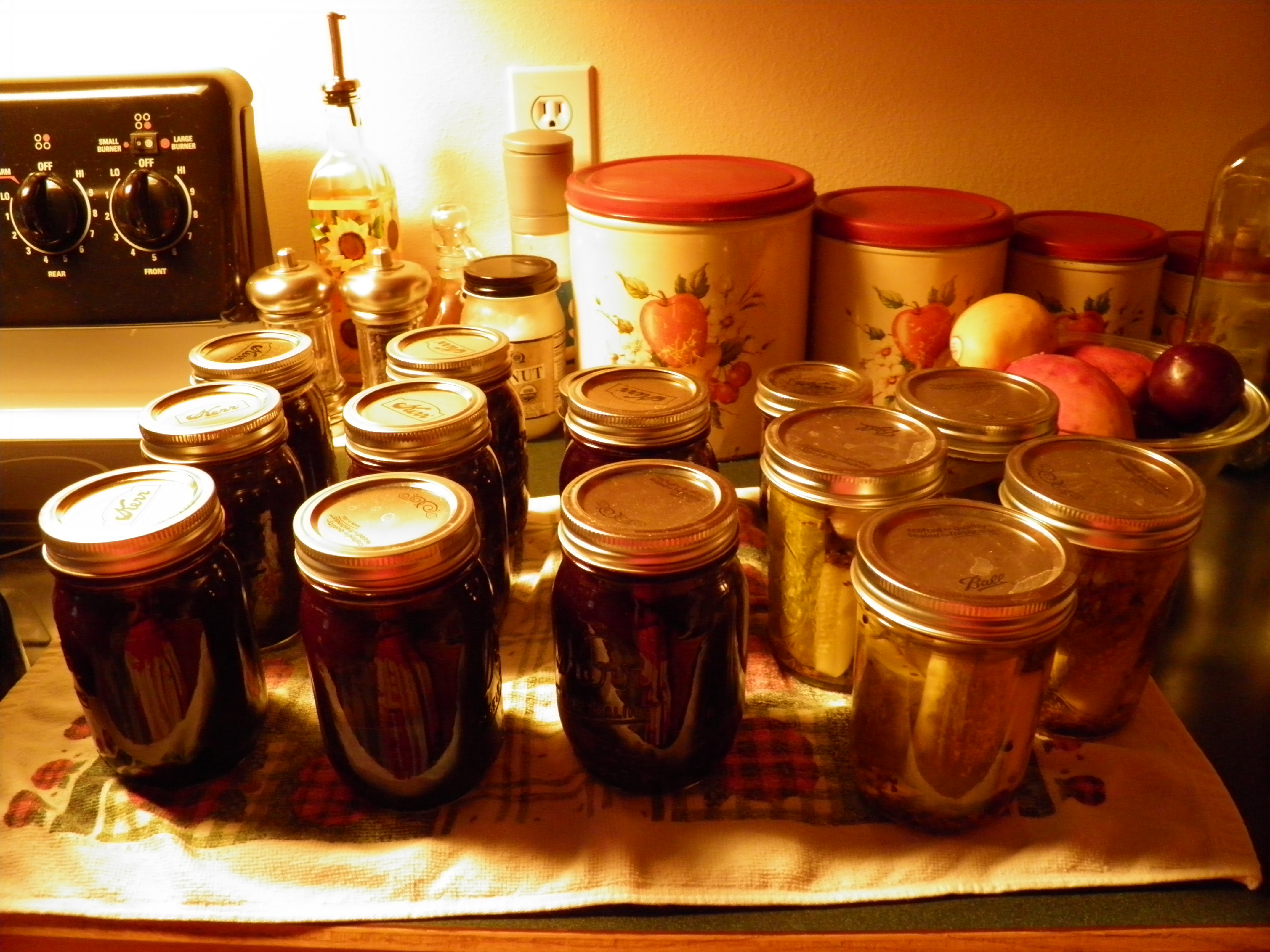
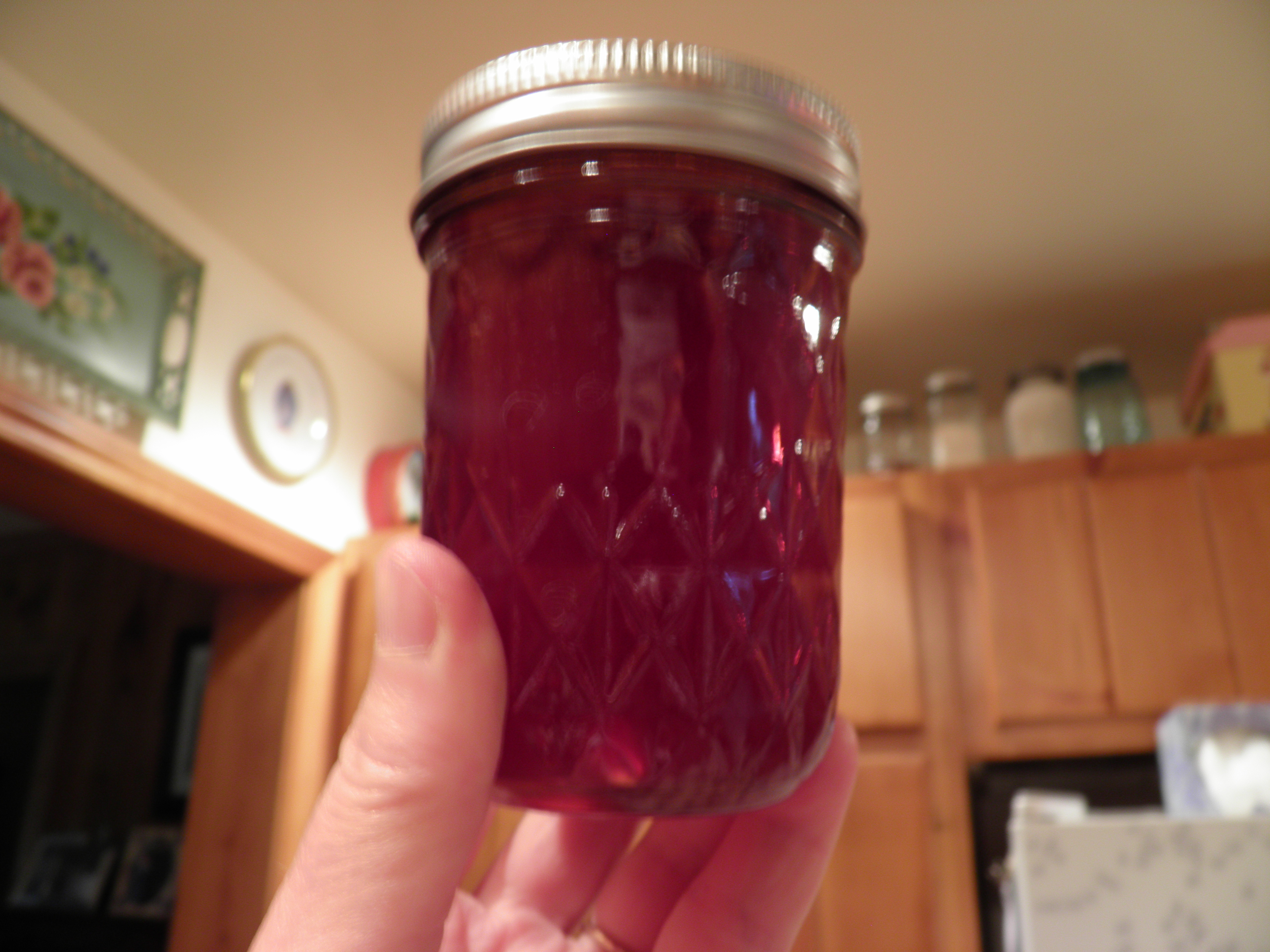
When the liquid has all drained through, stir it and then it can be packaged for the freezer in 1 or 2 cup measures.  I use quart ziplock storage bags for this.  I lay them out on a cookie sheet in the freezer until they have frozen hard and flat, then gather them into gallon storage bags before I stash them on the fruit shelf.  This way, I have pectin stock all ready for next spring and summer’s jelly-making.  I add it to diced peaches for peach jam, and it sets up beautifully.  I’ve added it to wine for making wine jelly.  It can be used as a substitute for commercial pectins whenever the peel of a fruit has to be removed before jam or jelly-making.  Today, I used it for making jalapeno jelly, as pictured below.  I was surprised by how clear the jelly came out.  The color of the jelly comes from the nine  Santa Rosa plums I added instead of food coloring.  The plum skins also helped add pectin to the ingredients of the jelly, which have no pectin on their own.
OLYMPUS DIGITAL CAMERA

I love being able to use something I once threw away, like fruit scraps.  To me, finding a use for every bit I possibly can is wise stewardship of the resources I’ve been blessed with.  When I use my scraps, I’m respecting the earth that grew this food.  I’m giving thanks to the God who made me capable of picking, preparing, and preserving this food.   And I know that what I’ve made is healthful because I know exactly what went into my vinegars and jams.  No GMOs in this stuff!
Standard
Uncategorized

Control Issues

Every gardener has a garden style.  Some people like neat and orderly; others want it wild and natural.  I tend to fall into the latter category.  I like a well-filled garden.  I don’t want to see empty spaces of soil between rows.  I don’t much like rows, although row-planting works best for some plants, like beans and peas.  I like to plant ground crops in patches, a patch of potatoes bordered by a patch of pumpkins, for instance.  I don’t care if the pumpkins overrun the potatoes.  I’ll harvest them about the same time, so I don’t have to get into either patch to pick anything while the plants are actively growing.  I usually mulch these crops too, so I don’t have to do much, if any, weeding.

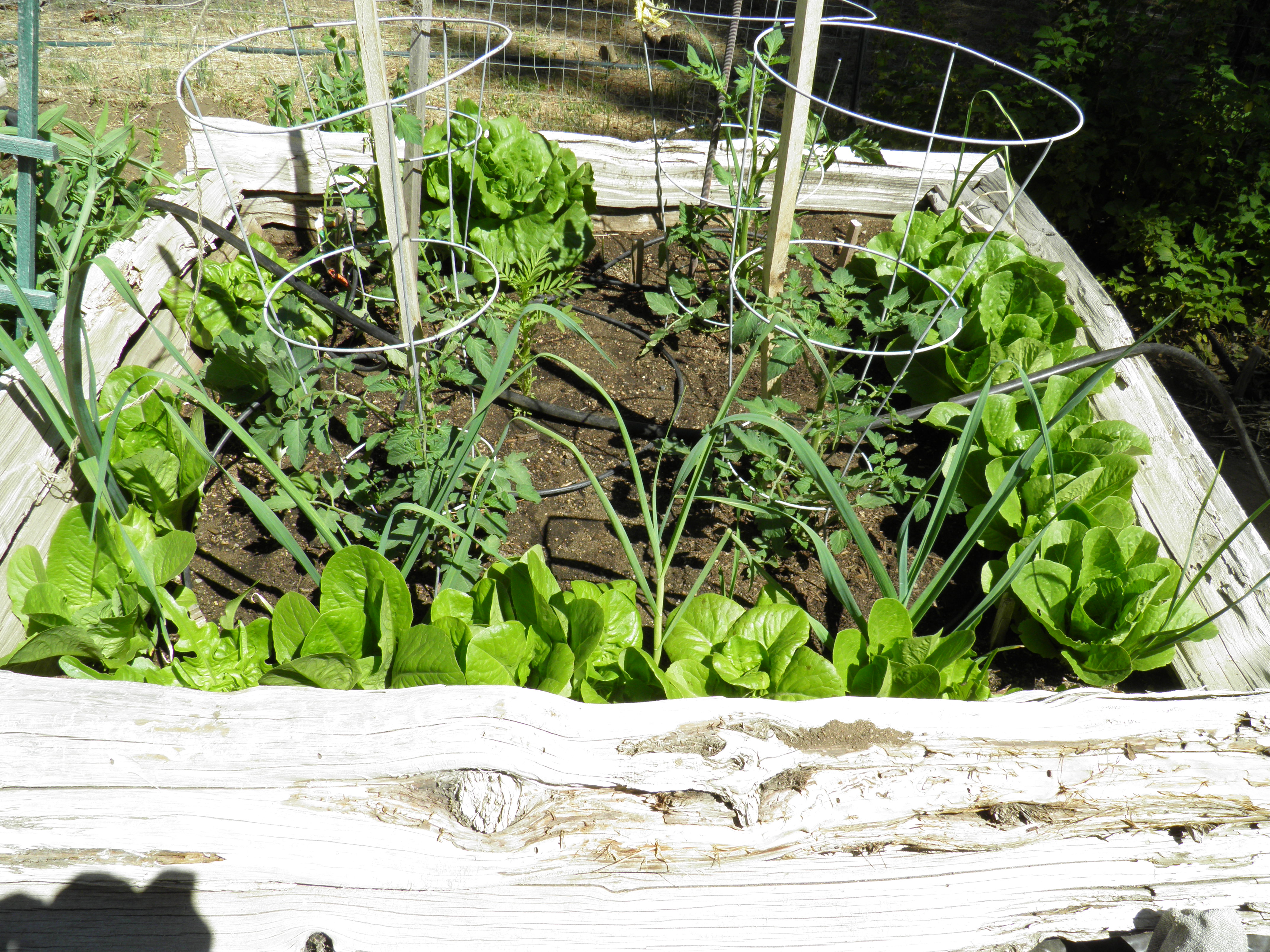
This year, I have volunteer broccoli growing between my young blueberry bushes.  The blueberries aren’t very big, and only two of them bore fruit this year.  I saw that wasted space and had to put something in it.  I didn’t want the broccoli to stay where it was (yes, that’s a control issue, but I learned my lesson about letting broccoli grow in the same space as tomatoes), so I transplanted it out of the tomato box bed.  I grow my tomatoes and peppers in raised box beds, and I tuck things like basil, garlic, shallots, spinach, and lettuce (and once, some broccoli) in the spaces between the larger plants or around the edges of the raised beds.  This is what it looked like in the spring.

OLYMPUS DIGITAL CAMERA

I think it looks pretty, all the different textures and colors of plants growing together, and I get the benefits of companion planting.  I think you could say I’m not a big control freak when it comes to the garden.  I don’t worry about a weed, or two, or even a dozen, although I’ll pull them if I can get to them.  I don’t care about straight lines or tidy corners.  I don’t really like monoculture.  And as my back has grown ever more crooked and painful in recent years, I’ve had to accept that I can’t keep my garden looking like my parents’ garden used to look, even if I wanted to.  My garden is a reflection of me:  curved, flawed, but productive.

In fact, I think you could say that my garden is teaching me how to let go a little more each day.  My garden reminds me that I am not in control of everything, nor do I need to be.  The garden is capable of ruling itself.  I plant seeds, I water, I feed my soil and the worms, I cultivate when I have to and mulch everywhere I can, but the garden essentially takes care of itself.

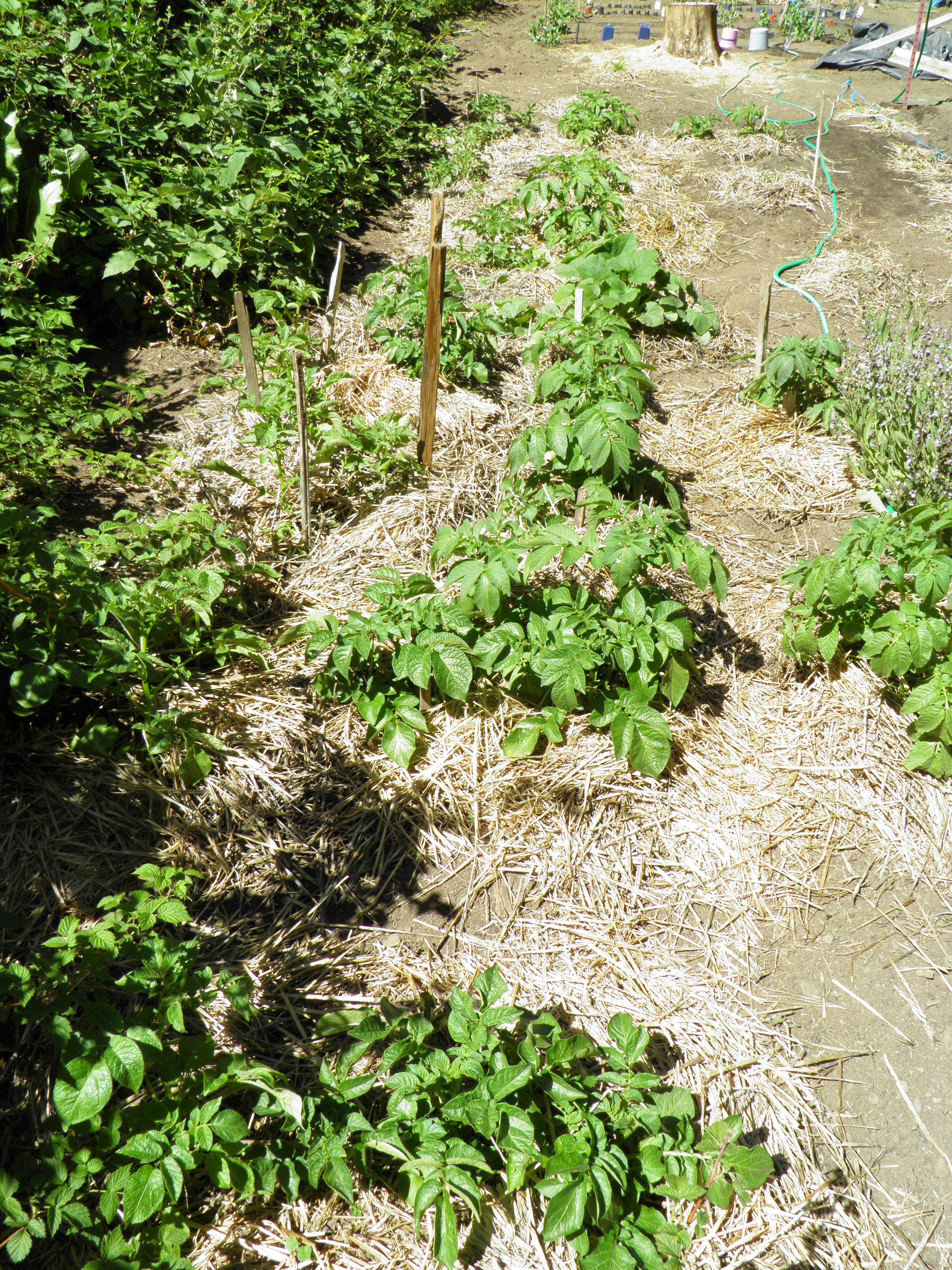
And there are always surprises, like the hybrid squash that popped up in the middle of the volunteer potatoes.  Looks like we missed some of both when we harvested last year.  I hadn’t planned to grow anything this year in that strip along the blackberries and raspberries because I’m trying to keep a dry border between the berries and the rest of the garden to prevent root spread.   The squash will be edible; whether or not it’s good will be another thing.  But my mama taught me not to turn my nose up at a gift.  I’ll figure out something to do with it, because that’s what I do.

OLYMPUS DIGITAL CAMERA    OLYMPUS DIGITAL CAMERA

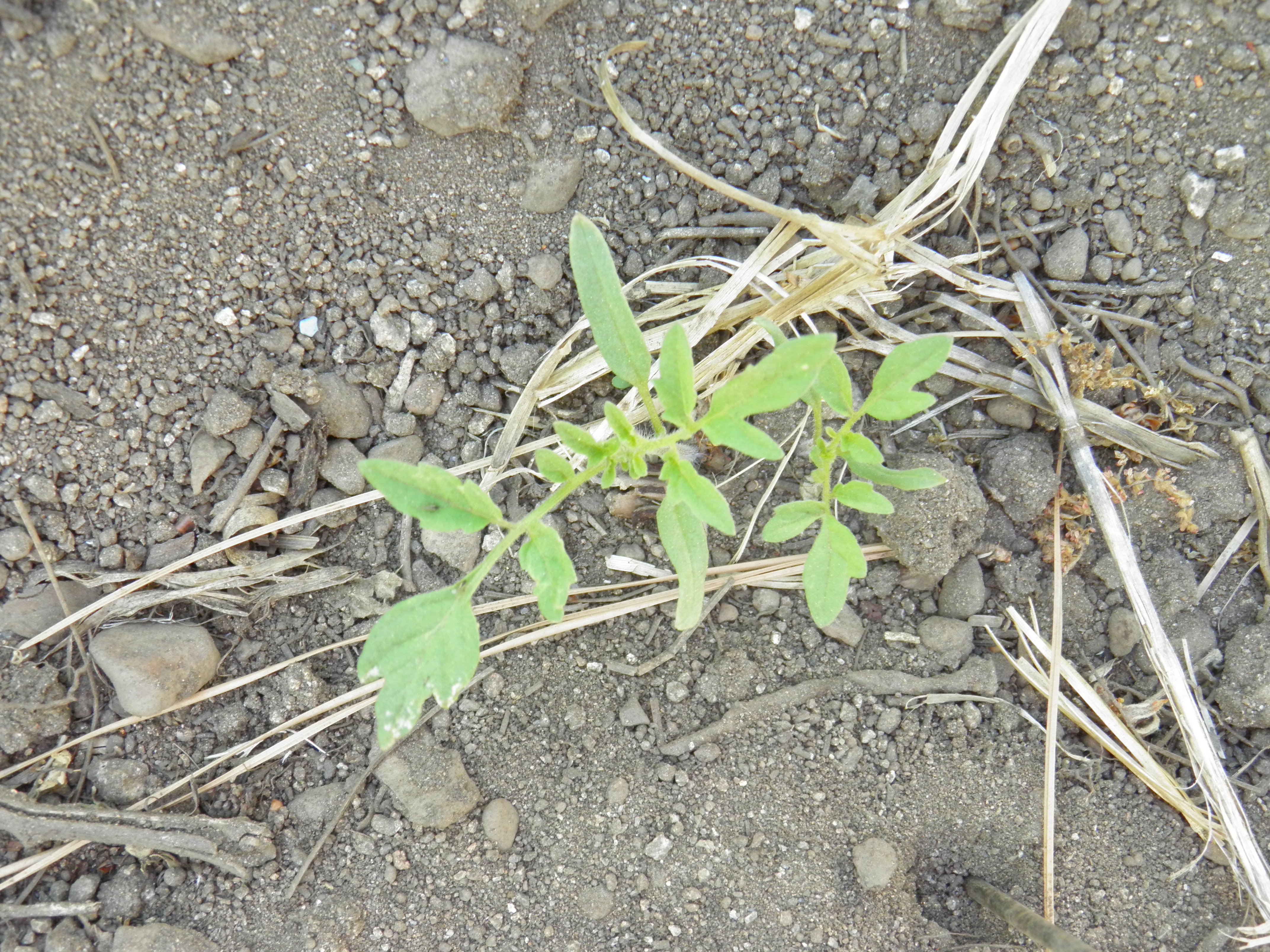
I dug some of those potatoes for 4th of July potato salad, and I’ll probably harvest about 40 lbs. of potatoes from the volunteers alone.  (My secret?  Make sure your husband misses a whole row of potatoes when he’s digging them up in the fall.  Works every time.)  A pair of tomato seedlings appeared in the center of the garden, in that patch I’m trying to dry out to get rid of the raspberries that were choking out everything else.  (Okay, so I do have a few control issues left!)  I transplanted them, but I haven’t been able to get to them to pick (they’re cherries) because the squash has so outgrown its area.  That’s okay, too.  The birds will get the tomatoes, or they’ll drop the fruit, and I’ll have more volunteers next year.  I’m good with it, either way.

OLYMPUS DIGITAL CAMERA

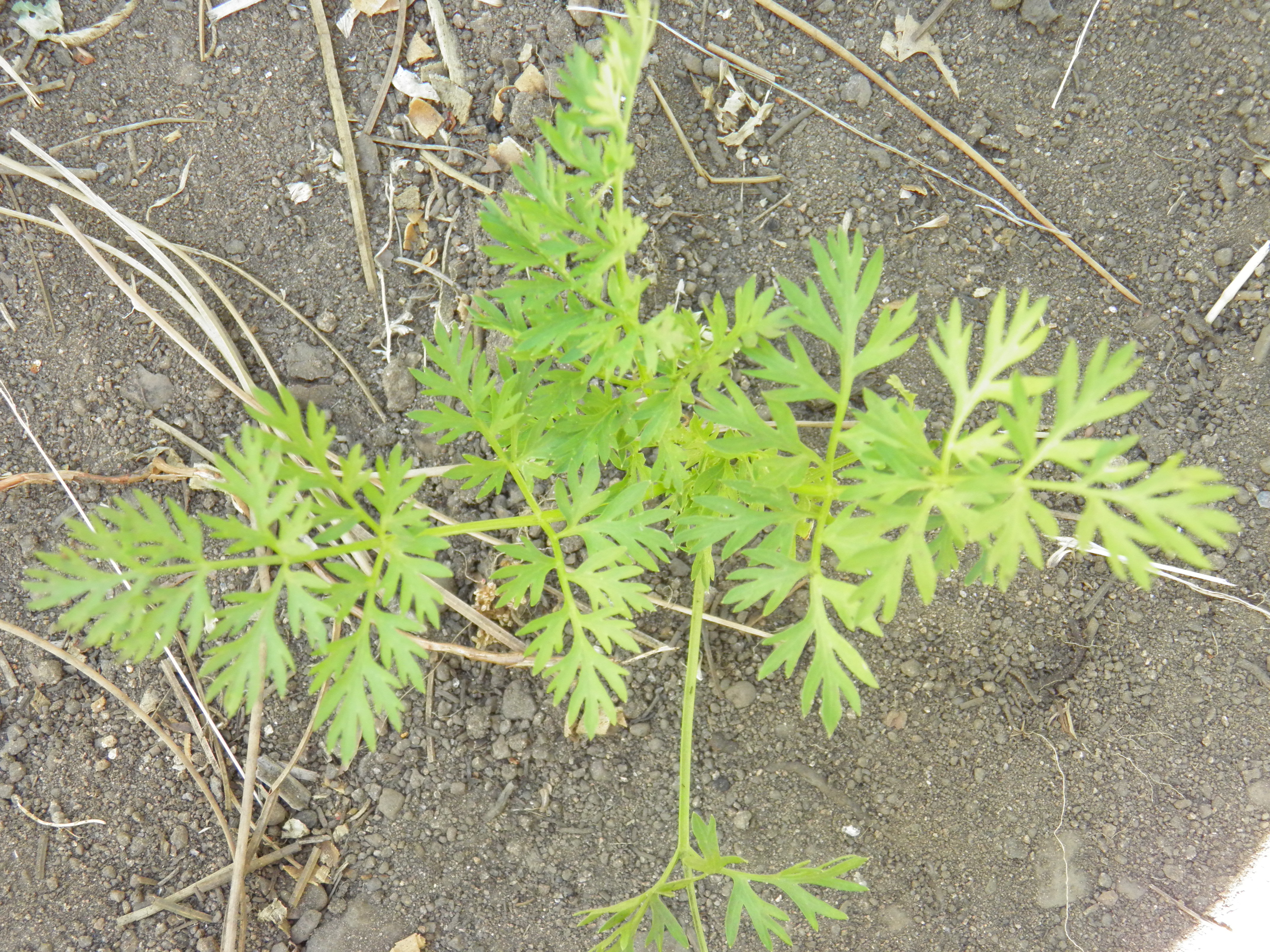
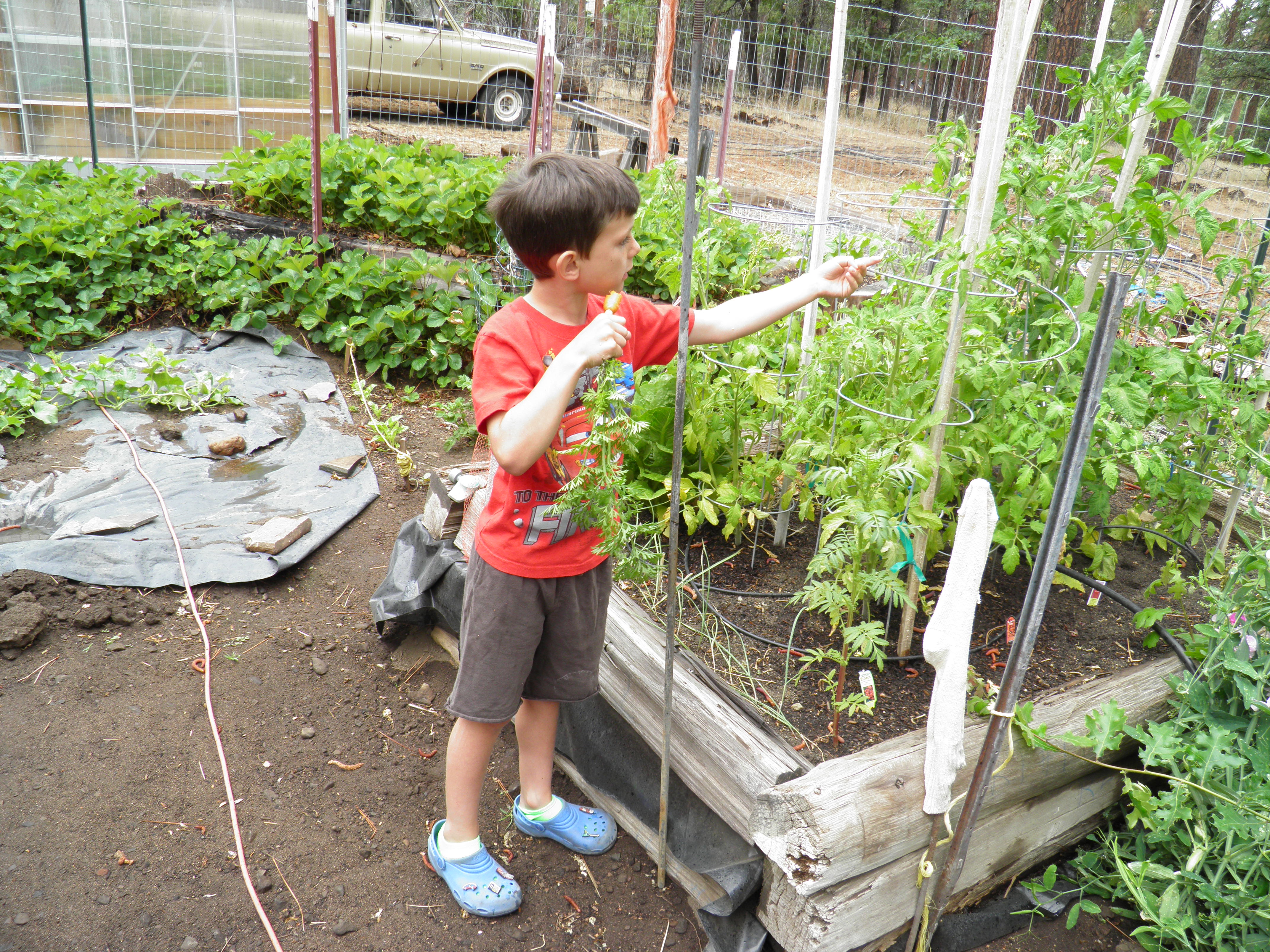
Over behind the mini-tomato box, there are some volunteer carrots.  I had carrots growing nearby two years ago.  We missed one when we dug the last of them from under the snow that year.  Last year, that root bloomed and set seeds, and this spring, they sprouted here and there. I left them, and not long ago, my carrot-loving grandson, Bryce, got to pull them up for a treat.

OLYMPUS DIGITAL CAMERA     OLYMPUS DIGITAL CAMERA

And the snow peas that sprouted from the few that got away last year—well, we got several pickings from those plants, along with a few broccoli florets from those volunteers I transplanted between the blueberries.

OLYMPUS DIGITAL CAMERA   OLYMPUS DIGITAL CAMERA

These are the 4th of July new potatoes, red, russet, and Yukon Gold, alongside the snow peas and broccoli from volunteer plants.

These are the gifts my garden gives me, plants I did not earn with labor, intent, or standard practice.   Do these unexpected rewards alter my planting plan for the year?  Certainly.  But I’m willing to concede the ground to the garden, to accept the gifts, to enjoy the surprises the garden offers.  It’s good to let go of the need to control everything, because the truth is, a gardener is always at the mercy of forces, like weather, that he or she cannot control.  And isn’t this also true of life in general?  The garden teaches me that humility is a far greater virtue than efficiency.  Let the volunteers grow where they may.

Standard
Uncategorized

Scavenger

A friend of mine has a more polite name for what I do.  She calls it “gleaning.”  But the simple truth is, I am a scavenger.  I scavenge all kinds of things.  It’s a habit of mind, of process.  I grew up this way.  Often, it’s food I’m scavenging, but not always.

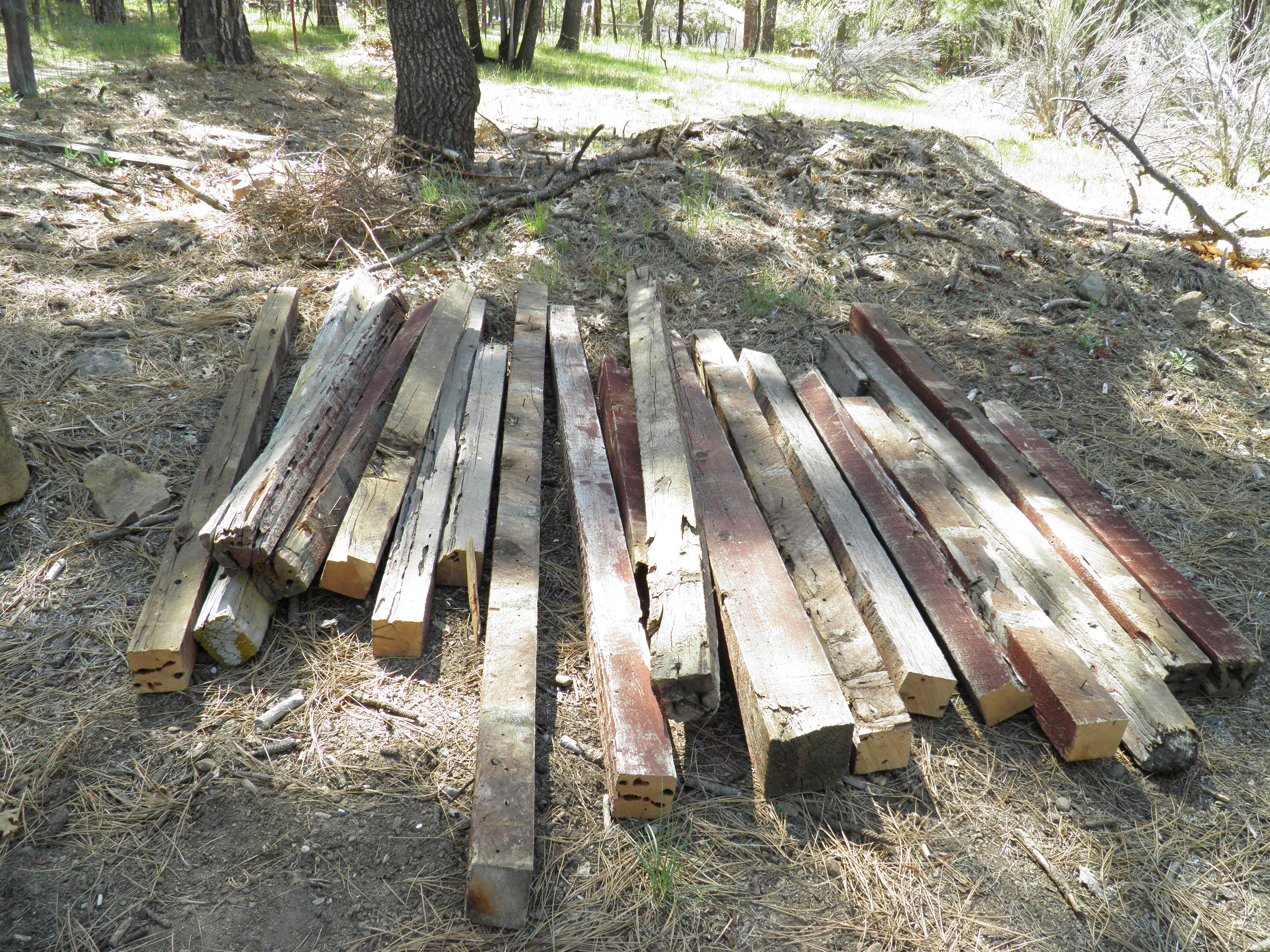
Last spring, Dennis and I were returning from town and had to stop at the light.  He pointed to the truck ahead of us and said, “Looks like somebody tore down an old fence and is taking the wood to the dump.”  I took a good look and got all excited.

“I can use that stuff,” I said.  I want to build a retaining wall in the front yard, and when I saw those old cedar posts, I thought they would be perfect.  “I wonder if he’d take it to our house instead of the dump.”

Dennis thought I was crazy.  But I said it wouldn’t hurt to ask the man.  If he gave it to us, he wouldn’t have to pay the dump fees.  So we passed him on the hill, then turned into the dump and waited for him.  He was an older man, and he looked wary when I motioned him over to the side of the road at the dump entrance, but he rolled his window down.  I made my pitch, and he said he was going to use his free dump day to get rid of the wood.  “Oh,” I said, utterly crestfallen.

“But if you’ll use it, I’d rather give it to you,” he added.  So he followed us home, and he and Dennis unloaded the wood out by the greenhouse.  We introduced ourselves, and I offered him gas money for going the extra ten miles out of his way, but he wouldn’t take it.  He wanted to look at the greenhouse, so I offered him some of my beautiful romaine that was growing inside.  And that’s the story of how I got a load of cedar posts for a bag of lettuce.

OLYMPUS DIGITAL CAMERA

When I was a child, my mother and father struggled to make ends meet.  It was a challenge to put food on the table for five people (and often we had uninvited guests, who were always made welcome), especially when there was no work for a logger in the rainy season.  My father always put in a big garden, and my mother learned to can and freeze the produce because it was a way to make sure there’d be some food in the lean winters.  Mama also scavenged fruit from abandoned orchards or backyard trees.  She made applesauce, apple butter, and pear butter from fruit that nobody else wanted, and gallons of blackberry jelly.  Once, someone gave her a pig’s head, and she made hogshead cheese from it.  The thing scared me half to death when I came home and found it sitting on top of the washing machine in the laundry room.  I remember being horrified by the very idea of making anything out of a head.  Now, it makes me proud that she was so resourceful.  As the youngest of ten children, she didn’t grow up learning how to cook or preserve or even to garden.  She learned it all after she was married at the “old” age of 31.  She learned the arts of scavenging, gardening, and preserving because she had to, because that was how she could provide for her family.

I don’t have to scavenge to put food on the table for my family, but I’m always on the lookout for things that nobody else wants, things I can put to use.  I hate waste.  I hate to see fruit falling off the trees and rotting on the ground because nobody wants to pick it and deal with it.  It frustrates me to hear on the news that millions of people are hungry when I see food all around me that no one is gathering.  Why aren’t hungry people out there picking this stuff, like my mama did?  Where’s the gumption? I can hear Mama saying.  I wonder too.

A few weeks ago, Dennis and I, and our son and his two children, went to the Northern California coast, where I grew up, to fish.  While we were there, we picked blackberries, which were just ripening.  The grandchildren were delighted to pick all the berries they could reach.  Kaedynce (8) put hers in a bag for blackberry pancakes the next day, but Bryce (6), predictably, ate every single one he picked.  Growing in the middle of one blackberry patch was an apple tree festooned with big, beautiful, green apples with blushing red cheeks.  They looked like Gravensteins to me, my favorite pie apple.  I have a Grav at home, but these apples were far ahead of those on my little tree.  So in addition to the berries, we took home a couple dozen apples.  If I lived there, I’d go back in September and pick as many apples as I could reach.  Such flavor!
OLYMPUS DIGITAL CAMERAOLYMPUS DIGITAL CAMERA

Two weeks ago, I made the 14 mile trip to town to pick fruit.  There’s an apricot tree in a sidewalk square near the old Superior Court building, now occupied by another agency.  I stopped by on Saturday and knocked on the door, just to make sure nobody would mind if picked, but I wasn’t really concerned that anyone would.  It’s been a good fruit summer in the valley, and all the apricot trees have borne heavily.  Apricots are lying on sidewalks all over town, and people are complaining about the mess.  I got my ladder out of my car, set it up on the sidewalk, and picked a bag of apricots, but I couldn’t reach the really good ones.  So the next week, Dennis and I went back to town, to the old court building and the old jail, where there is also an apricot tree.  He set the ladder up, and we picked about 20 pounds of apricots, which I turned into 17 pints of jam.

OLYMPUS DIGITAL CAMERA OLYMPUS DIGITAL CAMERA OLYMPUS DIGITAL CAMERA

I also spotted an apricot tree and apple tree, both loaded with fruit, on a strip of mowed grass that fronts the river.  There are no houses or fencing along that piece, but it was obvious that someone was taking care of the land.  I stopped at the neighboring house, introduced myself, and asked the resident, an older gentleman, if he knew who owned that strip of land.  He gave me the owner’s name but said he didn’t know if the owner would mind if I picked fruit from his apricot tree.  “But I have some plums,” the man said, “if you’d like to pick them.  I hate to see them go to waste.”

He led me to the tree in his side yard.  We chatted while I picked, and I learned that his name was Bob, and he had been the vice-principal at the high school, but had retired before my children attended there.  He and his wife had planted the plum tree many years ago, a 30 ft. tall Santa Rosa plum that hung heavy with fruit.  It was a hot day, and my shirt was damp with sweat when I finished.

I picked a bag of plums, thanked Bob, and said I would bring him back a jar of jam.  He quite clearly wasn’t sure I really would, so it was fun to surprise him the following week with jam from his plums as well as blackberry jelly from my garden.  He allowed me to pick more plums, and two days later, I was back with a jar of Chinese plum sauce as thanks for his generosity.

OLYMPUS DIGITAL CAMERA OLYMPUS DIGITAL CAMERA

I’m always scavenging something, or gleaning, if you prefer.  My gains are more than material.  I make connections with like-minded people who aren’t happy with the culture of the disposable that permeates our technology-driven society.  Often these are people a generation older than myself, folks who remember hard times and what had to be done to get through them.  They hold a wisdom we’d do well to ponder and emulate.

This winter, when we’re eating plum and apricot jam on homemade bread and looking out at the new retaining wall, I’ll tell my grandkids these stories and hope that they absorb the lesson.  Scavengers, hold your heads high.  Some sweetness is only born of sweat.

Standard
Canning, Recipes

Life Is Like a Bowl of . . . Blackberries

Picking wild blackberries requires some special preparations.  You have to be dressed properly, and you need the right equipment.  There are some rules to follow.  You have to accept the risks involved, but there are rewards, like blackberry cordial, blackberry syrup, and blackberry jelly.

Dressing down is must when picking blackberries:  your oldest jeans, a sturdy long-sleeved shirt that you won’t cry over if it gets snagged, a hat, thick socks, and boots or tough athletic shoes.  Why all these precautions?  Because there just might be no thornier plant than a wild blackberry.

OLYMPUS DIGITAL CAMERA

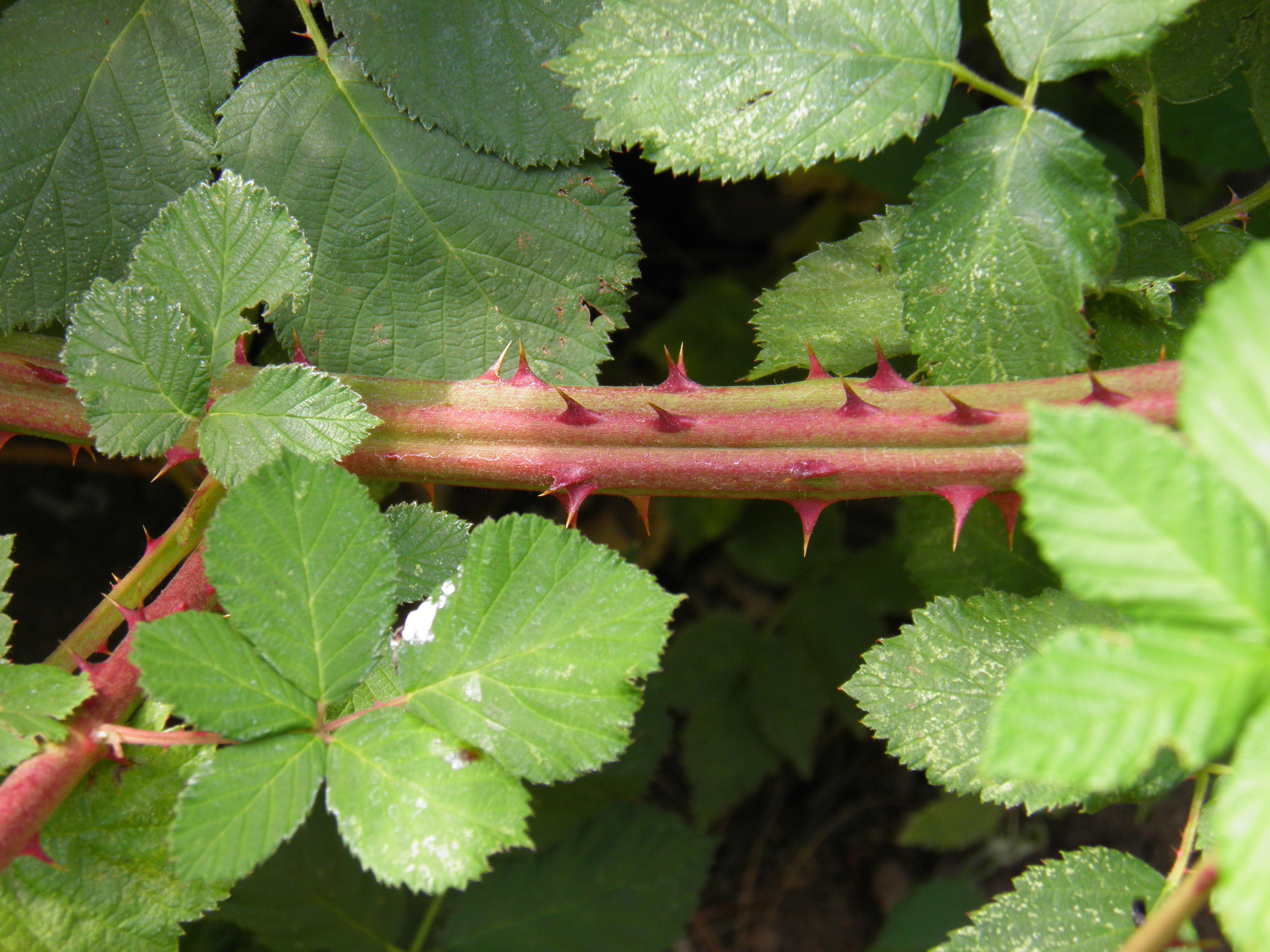
Where I grew up, on the northern California coast, two kinds of wild blackberries grow.  The true, wild blackberry is a small-leaved, thin, trailing vine that produces a small, sweet, yet tangy berry.  They are getting hard to find because the other “wild” blackberry, the ones I grew up picking and calling Himalaya blackberries, are taking over and choking out the original wild blackberry.  And it’s far too late to eradicate the Himalaya berries, so we might as well enjoy what they produce.  What they produce is twelve- foot-long runner canes armored with half-inch long, wickedly curved thorns, and large, delicious, sweet blackberries.  If it were possible to wear gloves while picking these blackberries, I’d recommend it, because just about every surface of the plant is lined with thorns, large and small, not just the canes.  The bearing spurs are covered with thorns, the veins down the middle of the leaves are lined with thorns, and each little berry stem is coated with them.  There is no way to avoid being scratched when you are picking these berries.  That’s one of the risks you accept when you decide to harvest blackberries.

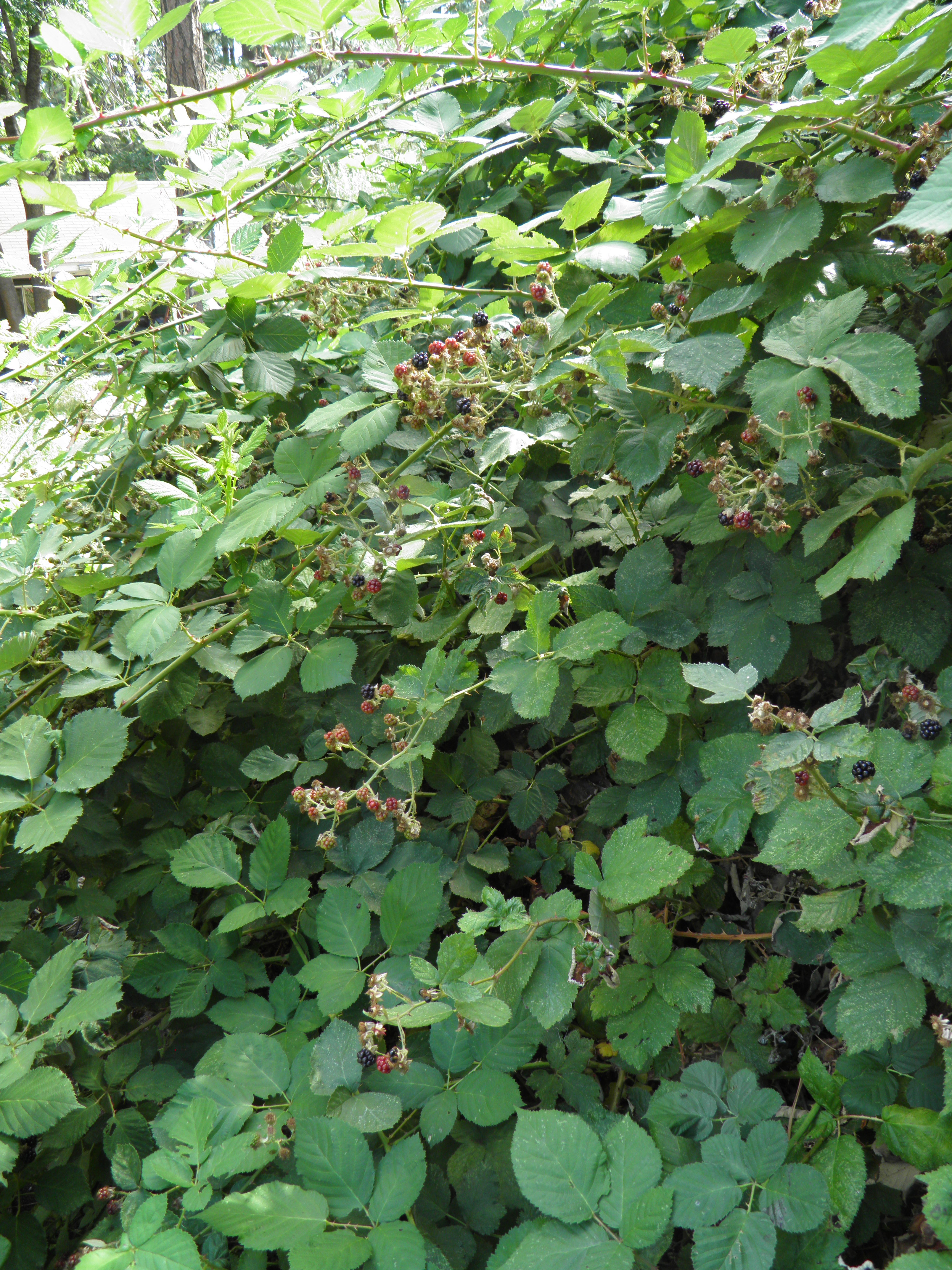
As far as I can tell, these are the berries which grow in my garden, and therein lies a tale.  When we moved into our house 27 years ago, I found blackberry plants in the flower garden.  What gives? I thought.  I moved them into the garden proper along the fence and fought the roots in the flower garden (I still am digging them up!) while I tried to nurture the ones I’d transplanted.  They never really got enough water until I expanded the garden and began to water areas I’d never paid a whole lot of attention to before.  Suddenly, after 15 years of producing only a few small, sour berries I left for the birds, those blackberry vines took off.  Now they cover a twenty foot section of garden fence, and I pick between 6-10 gallons of berries from them every year, with a lot more going to the birds.

For a month, while the berries are ripening and I am picking, my hands look like I practice self-torture.  There’s no way to avoid it.  If I don’t get out early enough in the morning, before it gets so hot that I can’t tolerate a long-sleeved shirt, my arms look the same way.  And my legs.  So there’s one of the rules for successful blackberrying.  Pick while it’s cool, so you can dress properly.

The sturdy shoes are important because you may have to climb a ladder or step inside the patch to pick the best berries.  The best berries, the largest, sweetest, and ripest, are always just that step, that stretch, away.  It’s a challenge to try to get inside the patch without doing too much damage to it.  In the wild on the coast, nobody cares; there are so many berries, a little temporary damage doesn’t matter.  And if you want to see damage, just look at a blackberry patch after a bear has been through it!  But it’s a different call when you’re picking your own patch.  You don’t want to do anything to lessen the harvest next year.  So you need the right tools.

I already mentioned a ladder.  It’s an essential.  When I was a kid, we’d drag old boards to the patch and set them up like bridges, so we could “walk the plank” to the highest and best berries.  If I tried that now, I’d end up face-planted in the patch for sure, and believe me, a blackberry patch is no place to fall into.  Besides the ladder, a hook is useful, like this one.

OLYMPUS DIGITAL CAMERA

My handyman husband fashioned this hook for me last year.  It’s useful for bringing the fruiting spurs toward you to pick, so you don’t have to lean too far out over all those thorns.  (I also used it for picking apples from the top of my little tree last year.)  If you don’t have any wire handy, a straightened coat hanger will work.  And you need a bucket or a wide-bottomed bowl to put your berries in.  It’s important that your container have a stable bottom, because the worst thing in the world is to put all that effort into picking those delicious berries, just to have them spill in the dirt, or worse, in the middle of the patch where you can’t get to them to pick them up again.  Whatever you use to hold your berries while picking, if you can have both hands free, it’s a bonus.

When you are surrounded by plants which can protect themselves, and it’s amazing how blackberries do that, sending out huge, thick runner canes which grow over the blossoms after they’ve been pollinated, effectively creating a thorny fence fit to keep a princess from all comers, balance is key.  Obviously, physical balance is important.  Do not fall into the blackberry canes!

OLYMPUS DIGITAL CAMERA

But there’s another kind of balance, and it has to do with risk and reward.

As I said before, the biggest, juiciest, ripest, best berries are always going to be just out of reach.  You can try to go after them; you can even get a few of them, but at some point, you have to realize that some of them will remain out of reach.  Accept this.  If you don’t, bad things befall.  (There’s that word again.)  There’s a line between giving it your best effort and becoming obsessive.  I have stopped asking Dennis to help me pick blackberries because he simply cannot avoid the obsession.  He can’t let those very top, very best berries go.  He’ll chop his way through the patch if he has to, sacrificing berries now green which will be nearly as good as those few he can’t reach, just to get to the biggest ones.  He’ll waste a gallon of future berries to get a pint of the best.  I can’t justify it.  Sometimes, you have to let those berries go.  Leave them to the birds.  They’ll enjoy what you can’t reach, and the berries won’t be wasted.

Finally, if that perfect blackberry drops into your cupped palm, the one so sweet and juicy just the slightest pressure would have it bursting in your hand, there’s only one thing to do.  Pop it into your mouth.

It strikes me that picking blackberries is a lot like life.  You have to dress appropriately for the job, make sure you have the right tools, reach for your goals, but keep your balance and perspective.  Play by the rules, and you’ll be okay.  Go too far, and you’ll incur damage of one kind or another.  And you have to stop and enjoy the gift of the moment as well as the rewards of your labors.  You can see what kinds of things I think about when I’m out picking blackberries.

Here are two wonderful old recipes I’m delighted to share, and a hint about where to find another.  The first is a recipe my sister’s father-in-law gave me twenty years ago.  He had been making blackberry cordial from this recipe for at least thirty years before he gave it to me.  I have no idea where he got the recipe, but this stuff is delicious!

Tip’s Blackberry Cordial

9 cups blackberry juice

2 cups sugar

3 cups vodka or brandy

Bring blackberry juice and sugar to low boil and simmer for 8 minutes.  Cool for 10 minutes and add vodka or brandy.  Pour into clean bottles (brandy or vodka bottles work well for this) and cap tightly.  Stores indefinitely.

OLYMPUS DIGITAL CAMERA

The next recipe is one I’ve used for over 30 years.  It was given to me by a friend from the church we attended in Klamath, CA, for several years.

Ruth’s Blackberry Syrup

1 cup juice or crushed fruit

1 cup light corn syrup

1 cup sugar

Bring all ingredients to a hard boil; boil for 30 seconds.  Pour into hot, sterilized jars.  Process 5 min. in boiling water bath to seal.

This year, I plan to try replacing the corn syrup in this recipe with agave nectar.  To do that, I’ll reduce the sugar to ¾ cup, so the basic ratio would be 1 c. blackberry juice, ¾ c. sugar, 1 c. agave nectar.  This recipe works well with all kinds of fruit juices.  I have made it with raspberry and strawberry as well.  For strawberry, simply puree the fruit very finely but do not strain it.

For the best blackberry jelly without pectin and half the sugar, try Liana Krissoff’s “Old Fashioned Blackberry Jelly” in her book, Canning for a New Generation.  This jelly tastes amazingly fresh and fruity because the recipe calls for just enough sugar to sweeten, not overwhelm, the blackberry flavor.

I hope you’re lucky enough to find a patch of wild blackberries to pick.  For me, there is no sweeter fruit than a sun-warmed blackberry just plucked off that thorny stem.

OLYMPUS DIGITAL CAMERA

Standard
Canning, Recipes, Uncategorized

Pickles with Joel

It used to be pickles for Joel, because he likes these pickles so much.  My kids grew up eating home-canned pickles, jellies and jams, sauerkraut, green beans, all kinds of fruits, salmon, smoked fish, and venison.  But there were years in their adolescence when I was going to school, commuting 300-450 miles a week, and I didn’t do much canning.  My garden shrank to a couple of herb beds and 6 tomato plants each summer.  After Joel was married, he asked me to show him how to make the kosher dills he grew up loving.  “I’ll buy the pickling cucumbers, Mom, and I’ll help you,” he said.  And that’s how I got started making pickles again, with Joel’s help.

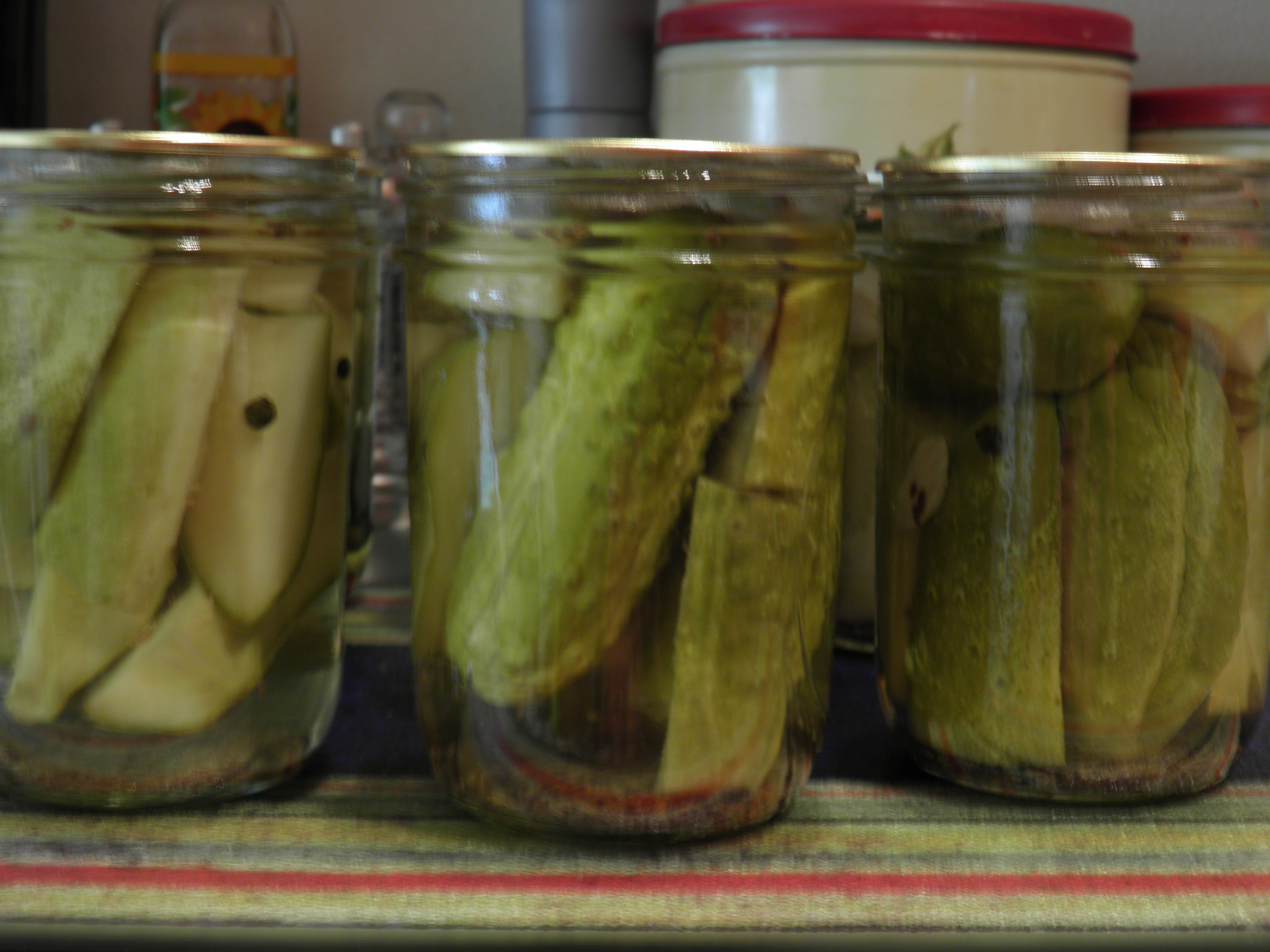
In time, I expanded my garden space and began to grow pickling cucumbers again.  Not a lot, because they take a lot of room, so I don’t make a lot of pickles.  Maybe only a dozen jars or so over the season, just enough to always have a supply on hand for family feasts or to put in tuna salad.  When my husband built my little greenhouse two years ago, I was able to start a big batch of pickling cucumbers for Joel, who by this time had his own garden.  Last year, for Christmas, I gave Joel his own water bath canner so he wouldn’t have to borrow mine (well, mostly so that I wouldn’t have to go over to his house to get mine back after he’d borrowed it).  He has made pickles and dilly beans, two of his favorite things, by himself, but this past week, I suggested a joint pickling session.  We’d returned from a short family vacation to the coast and found we both had cucumbers ready to pickle.  That’s how Joel came to be in my kitchen again, loading jars, and saying things like, “Oh, you pour boiling water on your lids?  I didn’t remember that.  I think I sterilized my jars, but I don’t think I gave it ten minutes.  I was in a hurry.”  So I guess it was time for another pickling lesson after all.

OLYMPUS DIGITAL CAMERA

Pickling cucumbers are easy to grow.  They need 4-6 feet of space in which to sprawl, though, so if your garden space is limited, it might be best to buy your cucumbers. You can buy pickling cucumbers at large grocery stores or farmer’s markets, so if you have a yen for a crunchy, homemade kosher dill, get a few cukes and give Joel’s favorite pickle recipe a try.  It makes the easiest and tastiest pickle I’ve ever come across.

Kosher Dills

Scrub cucumbers and soak for 1-2 hrs. in ice water bath before processing.  My mother always said this helps makes the pickle crisper, but I only do it when the pickles are warm from the garden.  If I’ve picked them and stored them in the fridge for a day or so, I sometimes skip the ice water bath.

Always choose the smallest cukes you can find.  They will make the crispest pickles.  But if, like me, you grow your own and a few get outsized on you, just cut them into spears.  They won’t be as crisp as the smaller ones, but you can just save the spears for chopping up in tuna and potato salad and the like.  I have also put a few spears into the food processor for a whirl when I wanted dill relish, for hamburgers, for instance.

Start water heating in water bath canner.  Wash jars and sterilize by boiling them for 10 min.  Keep hot in water bath canner while you finish getting cucumbers ready.

Dry cukes after ice bath and cut off blossom ends.  Pack hot, sterilized jars (either quarts or pints) with cukes.

Mix brine and bring to boil:  3 cups water, 1 cup vinegar, ¼ cup salt.

Pour boiling water over flats and keep warm on low heat.

To each quart jar, add 1 clove of peeled garlic, 1 head fresh dill or 1 tablespoon dried dill seeds, and ½ teaspoon powdered alum (for pints, use ¼ teaspoon alum and ½ tablespoon dried dill seeds in each jar).  (See note on alum below.) If you like spicy dills, you can add a serrano or jalapeno pepper to each jar as well.  I have also added whole peppercorns, a teaspoon per jar, more if you like more spice.

As soon as brine comes to the boil, ladle it over filled jars.  (Do not let brine continue to boil. It will boil the vinegar away, which will result in a weak brine, which can result in spoilage.)  Top jars with heated flats and clean rings.  Place loaded jars in canner and cover.  Boil for 10 minutes, starting timer after water returns to full boil.  (See note on processing time below.)

OLYMPUS DIGITAL CAMERA

Remove jars to clean towel. Place jars at least two inches apart to cool and do not touch them or the lids until they are completely cooled, at least 12 hrs.  If lids haven’t sealed (and you can tell if they have sealed if the dimple in the middle is indented, and if you can’t lift the flat by prying gently with a fingernail), you can refrigerate the jars.  Let unsealed jars sit in fridge for at least 1 month before opening.  Let sealed jars pickle for at least 3 months before opening.  If you live in a very humid climate, it’s best to store your jars with the rings removed.  Otherwise, they can rust onto the jar and be difficult to get off. Never stack your jars one on top of the other.  The seals can be damaged by the weight of the top jar.

OLYMPUS DIGITAL CAMERA

Notes:

Alum is a crisping agent.  It’s getting hard to find these days.  I used to get it at Safeway, but the last time I looked, it wasn’t there.  Not enough people are making homemade pickles these days!  I finally found it at WinCo in Reno last year.  In the meantime, I picked up some Pickle Crisp at our local WalMart store.  This is a brand of calcium chloride, another crisping agent which you use just like alum, adding it to each jar individually.  (Don’t use both alum and calcium chloride, use one or the other, and follow the directions on the jar for Pickle Crisp!)  I made four jars this last pickling session with Pickle Crisp to test it.  It should be a good test, because the cukes were pretty big, so if Pickle Crisp can help them, it will be a bonus.  It’ll be three months, at least, before I open a jar to taste them.  Other people add a grape leaf to each jar.  Grape leaves contain tannis which act as a crisping agent.  I don’t have access to grape leaves, so I haven’t tried this.  But here’s the deal:  If you get small pickling cucumbers, you will not need a crisping agent.  You can forego the alum or calcium chloride or grape leaves  altogether with this fresh pack, short process, “pickle in the jar” recipe.

Processing time:  Processing time refers to the time the food item spends immersed in a boiling water bath (or fully charged pressure canner).  That’s why you have to count the time from the moment the water returns to a boil after the jars go into the canner.  The original Kosher Dills recipe, which I got from my mother, who got it from a friend when I was a teenager, and which has been used in my family for 40 years, called for no processing.  That’s right.  You just covered the cukes in the boiling brine, slapped those hot flats on, screwed down the rings really tight, and put the jars away once they’d cooled.  The jars weren’t supposed to seal because the brine is supposedly acidic enough and salty enough to kill off any bad bacteria, and botulism needs an air-tight environment to germinate.  I ate pickles and sauerkraut made this way for at least ten years.  Then I had children, one of them with a sour tooth, and suddenly, this method didn’t seem so safe.

I have experimented with processing times, and I’ve read a lot of pickle recipes.  The least amount of processing time I’ve ever seen for a fresh-pack pickle is 10 minutes.  Last year, I made this recipe using processing times of 5 minutes, 10 minutes, and 15 minutes.  15 minutes results in a mushy pickle.  The 5 minute pickles were crisp and delicious, but I worried about letting my grandkids eat them, even though I felt no ill effects when I tested them.  The 10 minute pickles were also very good, with the spears a little mushier than those in the 5 minute jars, but the small pickles were just as good.  So I am processing all my pickles at 10 minutes this year, and my mind is easy about letting my little ones eat them.  The mind is a funny thing.

One last note about processing times:  If you live at altitude, you are supposed to add minutes to your processing times, depending on far above sea level you are.  Here’s a link that explains how much time you add based on what you are canning and your altitude:  http://www.dummies.com/how-to/content/adjustments-for-highaltitude-canning.html.  I don’t do this with the Kosher Dills or my jellies and jams, so I suppose my 10 minute processed pickles are actually more like 6 minute pickles, but again, the mind is a funny thing, and I’m okay with it.  Go figure.

Standard
Uncategorized

My Favorite Tools

Every gardener has his or her favorite tools.  The hand trowel that fits just so in the palm of your hand, that old raking fork you modified to get into the tight places between plants.  I have mine, too.  As a disabled gardener, I’m learning to make things a little easier for myself.  Maybe a look at my favorite tools might help you garden a little easier too.  Here’s a photo of my favorite tools.

OLYMPUS DIGITAL CAMERA

First, the chair.  This old thing was sitting in the garden space when we bought the property nearly thirty years ago.  It’s made of a heavy duty wire which was once coated with a white plastic-like substance.  The plastic is nearly all gone now.  It gets a little more rusty-looking every year, but it’s still holding together.  I like it because it’s light, and I can move it easily to different areas of the garden while I’m pruning, weeding, or hula-hoeing.  I used it this morning to pick the peas.  Sitting sure beats stooping when you have a bad back.  The wide, wire mesh chair doesn’t hold water, so there’s always a dry seat in the garden, and I can move it into the shade for a rest when I get too hot out there.  I could clean it up, take a wire brush to it and give it a new coat of paint.  But then I’d have to worry about it getting rusty again, exposed to the weather.  I leave it alone.  It sits out all year round.  It’s one thing I don’t have to put away for winter.

The long-handled tool in the photo is called a sliding hoe, or as I learned to call it, a hula hoe.   I was first introduced to this tool nearly forty years ago, when I worked on the grounds at the Trees of Mystery in Northern California.  I’ve used one ever since.  Now that my back doesn’t like bending at all, I sit on that rusty old chair and hula hoe wherever I don’t have mulch.  It’s much easier on my back, and it takes much less effort to push the hula hoe, even in dry, hard soil or wet, heavy soil, than it takes to hack and pull with a regular hoe.

Here’s how the hula hoe works.  The blade slides along just an inch or two under the surface of the soil, depending on how much force you use, and it cuts the roots of weeds without turning over much of the soil.  This way, the weeds are eliminated without exposing more weed seeds to light, the way a tiller does.  It doesn’t work for big weeds that will sprout back out from large roots left in the ground, like dandelions.  But if you get after that patch of newly-spouted dandelions with a hula-hoe, you won’t have to worry about them getting so big they have to be dug out with a spade.

That brings me to the third of my favorite tools, my little spade.  I bought this one years ago at a yard sale for $4.   I have to be careful about digging.  I leave any major shovel work to my husband, God bless him, but for light jobs, this little spade is perfect for me.  I can spade up a dandelion or a clump of new potatoes, or dig a hole for planting without getting so much dirt on the blade that it becomes difficult to lift.  With this little spade, I can actually dig while seated on my rusty old chair.

The fourth tool is my garden stool.  I bought the stool a few years ago from a seed catalog.  I love it.  It gets me low to the ground to minimize bending, and it has a padded seat cover with those handy carrying pouches for my hand tools and gloves.  There’s a height adjustment, so it can be set for personal preference.  I use it for weeding and thinning and for picking the bush beans and pickling cucumbers.  It rocks back and forth, and it swivels on its base, so I can cover a lot of area without having to move it much.  I have found it a bit difficult to get up when I’ve been sitting on it for a while, but now, two years after the last hip surgery, my legs are finally getting strong enough to hoist me up from what is basically a squat.

We all know the saying about choosing the right tool for the job.  You also have to choose the right tool for your body.  My favorite tools make gardening much easier on my back and other compromised body parts.  One or more of them might make things easier for you, too.

Standard
Uncategorized

Because I Can

Sometimes I’m asked why I spend so much time gardening, and making preserves, and canning and freezing my garden produce.  Why bother with a garden at all?  I have chronic pain issues from several health conditions.  Wouldn’t it make more sense just to buy from the store?

Maybe it would.  The more I do, the more I hurt.  There’s a fine line between keeping my body as active as possible and putting my body through more stress than it can handle.  I cross that line on a regular basis.  And then I pay for every infraction.  So why do I do it?

OLYMPUS DIGITAL CAMERA

One of the reasons I make preserves is that it seems to bring me closer to my mother, who passed away some 15 years ago.  She learned to can out of necessity.  My father was a logger who only worked seasonally.  Mama canned and froze the garden produce, and she also took advantage of the bounty around her.  She found abandoned apple orchards and picked apples for applesauce and apple butter.  She made blackberry jelly every summer, after we picked gallons of berries.  I remember the competitions between my siblings and me–who could pick the most berries by the end of the allotted time.  I remember the laughter when my father out-picked all of us.  I remember his stories about picking cotton as a kid.

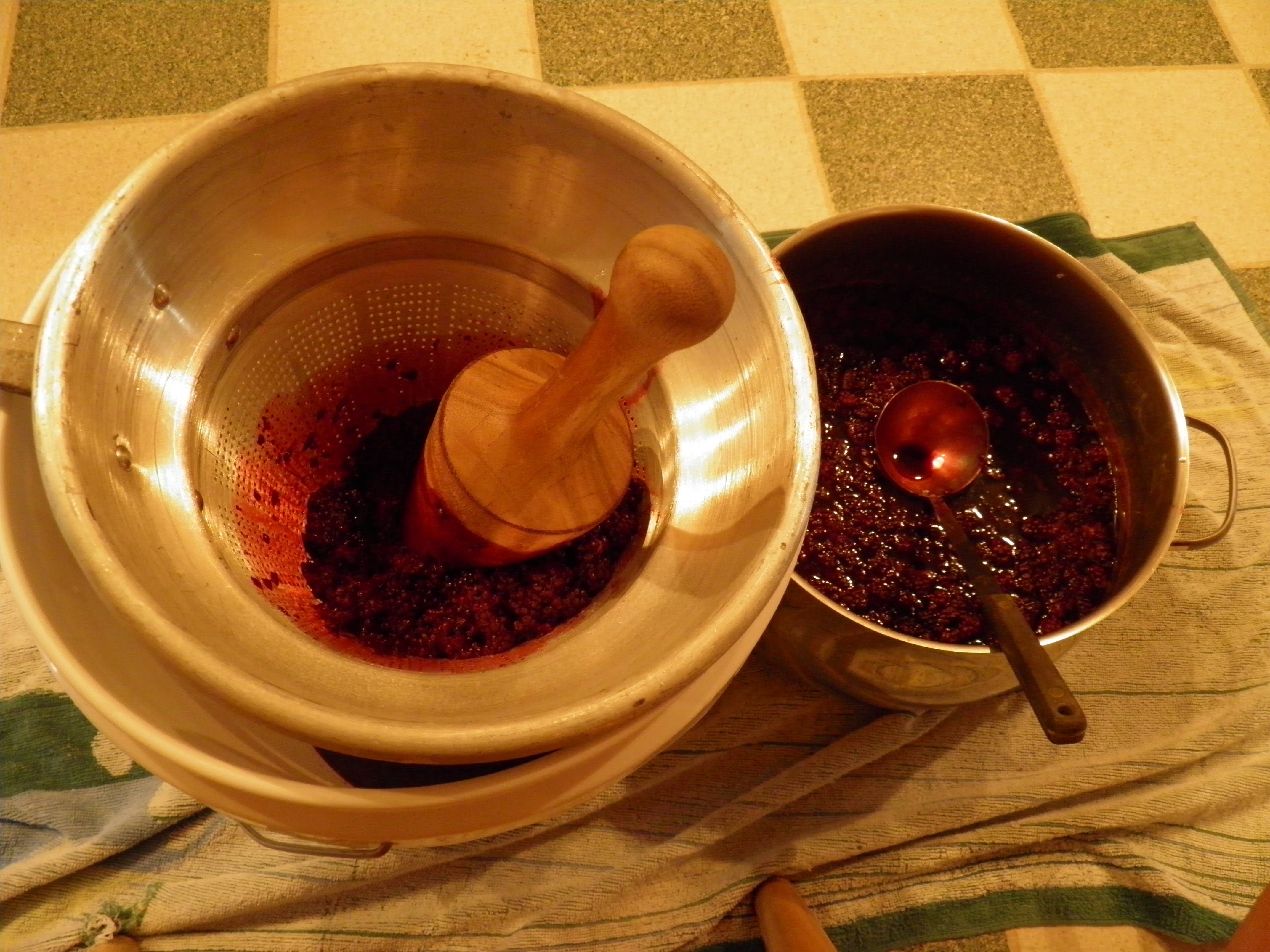
When I use Mama’s “cone colander” to juice my berries, I remember all the times she set it up on the yellow and chrome kitchen table.  She let my sister and me take our turns when we were little, and when we got older, it was our job.  I remember the scent of warm blackberry juice filling the house on the days when she made jelly and put it up in old peanut butter jars.  I remember the taste of blackberry jelly on my peanut butter sandwich.  I remember my mama, her spunkiness, her gentleness, her strength, her wisdom, her love.   She taught me to can, gave me both my water bath canner and my pressure canner when I married, but she taught me so much more.  It’s good to be reminded of those lessons.

OLYMPUS DIGITAL CAMERA

Both of my grandmothers used water bath canners, and I’m sure their mothers made preserves in open kettles.  When I make jam or piccalilli or pickles, I know that I’m doing something my pioneer foremothers did.  I like knowing I have their “know-how.”  I feel proud when I see those multi-colored jars on my shelves.  I feel self-sufficient, knowing I can go out to the pantry whenever I want to and choose between six different jams or jellies, or a jar of beet pickles, or a jar of dilly beans, or a jar of venison stock.  And it all came from the garden, the forest, or the field, and through my hands.  That makes me feel accomplished in a very practical way.

OLYMPUS DIGITAL CAMERA

I like having home-canned goodies to give away.  When I give a jar of jam or relish, I’m giving a part of my heart and soul to people I care about.  Part of my annual Christmas gifts to my children are boxes of the good things they grew up eating.  Last year, everybody went nuts over the salsa.  My sister has her favorites, piccalilli and tomato and raisin chutney.  I also give jarred gifts to friends for birthdays, and as thank-you or hostess gifts.  Recently, as a bridal shower gift to the dear friend who gave me my favorite canning book, Canning For a New Generation, by Liana Krissoff, I offered a box of assorted preserves, one of which was Cabernet Sauvignon jelly, a recipe from the book.

After a long day of canning, does my back hurt?  Yes.  And my hands, and my feet, and my neck, and sometimes my shoulders too.  But my heart feels good.  My soul has been fed.  All kinds of sweet memories reawaken.  That’s why I bother.  It turns out, all things weighed and measured, it’s really no bother at all.

Standard
Uncategorized

Creature Feature

I had planned a different post for today, but there’s been too much fun happening around the garden this week.  So today, it’s a creature feature.  By the way, if you click on the photos, they enlarge.  You’ll probably want to do that with the three at the end.

First, all week I’ve been trying to get pictures of a male Rufous hummingbird who has been hanging around the feeder and ferociously driving off every other bird except one.  But he’s been too quick for me.  By the time I’d get the camera on and in position, he was either chasing another bird or camouflaged behind some leaves up in the oak tree, lying in ambush.  He’s the most beautiful little creature.  In the bright sun, his back is a glowing copper color, and his throat a dark scarlet highlighted by his white breast.  He’s gorgeous, and he knows it.  The only other hummer he’ll allow to feed is a drab little thing I’m thinking must be a Rufous female.  He let her take long turns at the feeder.  I watched him defend the feeder from all other comers for three days.  The other pair, perhaps Allen’s (they are so hard to identify when they are swooping around), could only sneak in for short sips when Rufous was off on some other brief business.  But everything changed on Wednesday.

On Wednesday, Rufous male didn’t show up.  I sat on the deck all day, armed with the camera, and he never came.  However, a bird who looked like his dull, little friend came to guard the feeder.  She was almost as aggressive as the male, and she sat in the tree all day, twittering to herself, scratching, and chasing off other birds.  She sat so long in the same place, I was able to get a couple of short videos of her and a few pictures.  (I can’t upload the videos here, but you can see them on Facebook later.)  Judging by her aggressive behavior, I think she is a Rufous female, but I am not sure.  If anyone can make a positive I.D., I would love to know.

OLYMPUS DIGITAL CAMERA

Other hummers flew in briefly on Thursday and Friday to feed.  The little female chased off as many as she could, including a hummingbird twice her size, perhaps a Broad-tailed.  I didn’t get a picture of the big hummer, but I did get a picture of her on the feeder and in the tree afterward.

OLYMPUS DIGITAL CAMERA

This state of affairs lasted until Friday evening, when a Rufous male showed up.  The same one?  I have no idea.  I have read that these birds are highly migratory, making a big circle from Mexico to British Columbia every year.  They may only spend a few days in one area before moving on.  While they are around, they consider the feeder theirs.  The Rufous male was in and out all day on Saturday, but I think he may have been guarding another feeder in the neighborhood.  He didn’t really spend much time at ours.  And the little female?  She seemed to take the Rufous male’s arrival as a signal to depart.

Years ago, when my kids were little, I put out a feeder every summer (we don’t get hummers here until June at the earliest), and we always had some traffic.  But after the kids got bigger, and everyone got busier, I stopped putting out feeders.  I knew my neighbor put out several feeders every year, and I had lots of dianthus and petunias, which the hummingbirds loved, so we still saw them for some years.  And then, for a period of about seven years, they visited very intermittently.  I believe they were feeding on manzanita blossoms higher in the mountains, and our yard was only a brief rest stop for them.  Starting about ten years ago, our area was devastated by wild fires every summer or every other summer.  I think a lot of the hummingbird feeding ground was destroyed, particularly in 2008, and that is why we saw so few of them for so long.  (About this time, we also started seeing more bears lower down on the mountain.  Much of their habitat was destroyed too.)  For three or four years, I didn’t see any hummingbirds in the summer.  Vegetation is now growing back in those burned areas, and we’re seeing an increase in hummingbirds.  It’s good to have them back again.  They always make me smile.

But hummingbirds aren’t the only interesting creatures visiting the garden this week.  I was out tickling tomato blossoms one day, and I heard a strange sound.  It was a very quiet flapping/humming noise.  I turned around and looked at the asparagus bed behind me.  I have some clary sage growing there as well, and at first, I thought a hummingbird had discovered the blossoms.  But it wasn’t a hummingbird.  It was a hummingbird moth.

I have seen these hummingbird moths before.  I got a short video of it (it’s on Facebook). I watched the moth for some time before it flew away, and I haven’t seen it since.  It was a brief visit, but I’m sure glad it stopped by.  There’s a good still photo of one at http://www.birds-n-garden.com/hummingbird_moths.html.

That same day, I saw another insect I have never seen before. I have no idea what this thing is.  If you do, please tell me!  It flew up from the potato patch when the sprinkler came on and landed on a green tomato.  The hummingbird moth had just flown off, so I had the camera in my hand.  It looks vicious.  Is that a butterfly in its jaws?

OLYMPUS DIGITAL CAMERA   OLYMPUS DIGITAL CAMERA

The other visitor to the yard was a young doe.  She bedded down in the shade right beside the gate.  After she’d been resting for a bit, and I’d been snapping pictures of her, I learned why she chose that spot.  It was because she could stand up on her back legs and grab a mouthful of leaves from the maple tree.  Then she could lie right down in the shade and chew them.  I didn’t get a picture of her up on her back legs.  I’m afraid I yelled, “Hey, don’t eat my tree!” and she took off.  A photographer, a real photographer, would have let her eat the tree for the sake of the picture.  But, gardener that I am, I spoiled the shot.  That says volumes about my priorities.

OLYMPUS DIGITAL CAMERA

Finally, some photos I have to share because the subjects are just so darn cute.

OLYMPUS DIGITAL CAMERA   OLYMPUS DIGITAL CAMERA   OLYMPUS DIGITAL CAMERA

The twins weren’t actually on our property, although I’m sure we’ll be seeing them up here soon.  They were on the side of the road down the street.  They weren’t at all worried about us or our truck.  They obligingly stood very quietly and let me take their pictures.  No matter how many times I see baby deer, they still make me say “Aww!”  And be glad for my six-foot wire fence.

Standard
Uncategorized

Growing Your Own . . . Strawberries, That Is.

OLYMPUS DIGITAL CAMERA

Strawberry shortcake, strawberry milkshakes, strawberry jam, strawberry pie:  need I say more?

There are two crops I think everybody should try to grow, if they possibly can.  One is tomatoes, and the other is strawberries.  The flavor of homegrown in these two instances is so far superior to anything you can buy in a store, it’s well worth your time to give them some space.  If you live in an apartment, tomatoes in pots on a balcony are easier than strawberries, but strawberry jugs and pyramids make growing in small spaces possible as well.  If you have backyard space, however, consider devoting some of it to strawberries.   I’ve tried several different methods of growing strawberries, and I’m still experimenting with ways to make cultivation and harvesting easier, but over the years, I’ve learned a few things you can do to make planting, harvesting, and renovating your strawberry patch easier.

Late summer or fall, after the worst heat has subsided and at least a month before any freezing temperatures, is a good time to plant.  Your plants will have time to root deeply and establish themselves before winter.  You can also plant in early spring.  But first, you have some prep work to do.

Amend your soil

Work some old leaves, rotted straw, and compost into the soil now, before you plant.  Once your patch is established, it’s harder to fertilize and mulch it naturally.  It’s easy enough to sprinkle commercial fertilizers on your berry plants in spring, but after you’ve gone to all the trouble of planting for flavor, you wouldn’t want to do that.  So enrich your soil now with all the good stuff that will feed your plants and help keep moisture in your soil, and the following year, you can fertilize with good, organic fertilizers like Dr. Earth and fine-screened compost, which can be broadcast and watered in.

Construct raised beds or rows

Next, rake and shovel your soil into raised beds (which can be framed in with old lumber, discarded fence posts, old doors, or even bales of straw or spoiled hay) or raised rows.  Make the beds or rows as high as you can, but make sure if you’re using raised beds, that they are narrow enough so you can reach across to the middle from all sides.

If you want to haul in topsoil to help construct your raised beds or rows, mix your compost, etc. into the soil in a wheelbarrow, and then construct your raised rows or fill your raised beds out of the enriched soil.  If your beds are more than two feet deep, don’t waste money filling them all the way with topsoil.  Strawberry roots are fairly shallow.  Use a cheaper, lower grade fill dirt on the bottom of your beds, and fill the top two feet with your amended soil.  You’ll add organic matter to your beds every year, and gradually, that fill dirt will be transformed to better soil by earthworms.  Just try to make sure the fill dirt doesn’t contain any large rocks, in case you ever take your beds apart for some reason.

The most frustrating thing, to me, about growing strawberries is how quickly they become overgrown, making it difficult to get in to pick the berries without stepping on some.  To counteract that tendency, make the space between your raised rows wide enough to run a tiller between them. This isn’t as much of a concern if you are using high, framed, raised beds.  If you don’t have a tiller, you don’t need to put as much space between your rows, but you will eventually have to dig up plants to get in to pick your berries, unless you don’t care about trampling on rooted runners which will be bearing fruit!  When your rows are as high as you want them or your raised beds are filled (I suggest at least two feet high, and three is even better), you’re ready to plant.

Buying plants

Don’t buy bagged roots from nursery catalogs or in the garden departments of the big mega-stores. You know the ones I mean.  Strawberries are really rather fragile once their roots are exposed.  Those bagged roots dry out, and then they won’t give you a live plant, no matter how much love you give them.  I’ve given away and sold strawberry plants for some years, and people tell me that their success rate with the bagged roots is very low, whereas working with freshly-dug plants makes a world of difference.  If you can’t get freshly-dug plants from a friend or neighbor or local grower, buy a flat or two from a local nursery.  They’ll have already been transplanted once, so they’re going to endure a double shock, but that’s still better than bagged roots.

Always buy plants that are recommended for your area.  One reason to get them from a friend or neighbor or local grower rather than ordering from a catalog is that you’ll know they are right for your area.  I also recommend a mix of June-bearing and ever-bearing plants.  With June-bearers, you’ll get a heavy harvest in June, which is great for putting up jam, freezing, etc.  With ever-bearing varieties, you’ll get berries all summer long, right up to a hard freeze in late fall.  Berries from June bearers tend to be larger and more like the berries you see in grocery stores, although again, the flavor of home-grown cannot even be compared to the hard, red, flavorless wedges of store-bought that need a ton of sugar to taste like anything.  Ever-bearing varieties tend to produce smaller berries, but the flavor and scent of them is well-worth devoting the space.  They don’t produce as large a harvest, but you’ll get berries for fresh eating longer than with June-bearers.  However, it’s best to keep them in separate rows or beds for future plant maintenance.

Finally, don’t buy too many plants.  It’s tempting to want to fill that raised bed or row to its maximum capacity all at once.  Resist that temptation.  Your plants are going to reproduce the first year, and you will at least double your numbers of plants by fall.  How’s that for return on investment?

Ready to plant

When it’s time to plant, dig shallow depressions about a foot apart in the tops of your raised rows or beds and settle your plants in place with roots spread.  Cover just the roots, not the crown of the plant, where the leaves emerge.  If you cover the crown, your plants could rot.  Keep them moist, and don’t worry too much if they wilt a little.  They should recover if you don’t let them dry out.  The earlier you plant in spring or the later in summer when the heat has subsided, the less transplant shock your plants will have to endure.  But don’t expect berries the first year, except maybe a few from your ever-bearing varieties.  Some people pick any blossoms off the first year to let the transplants focus their energy on rooting, but I don’t do this.  I believe in letting plants do what nature designed them to do, and strawberries want to bloom and run.  The first thing your plants will want to do is run.

Keeping your beds manageable

Strawberries reproduce two ways:  by seed and by runner.  The plant will send out a long stem along which one or two or even three new plants might form.  These plants will root and sometimes send out runners themselves the first year.  You’ll have to do some space management to keep your berry patch easy to pick.  Don’t let the runners root in the path between rows.  If you do, in a year, you’ll have a strawberry jungle on your hands that’s a nightmare to harvest.  (Yes, I speak from experience!)  Move the runners to position the new plants in between the ones you transplanted.  You can let the runners root down the sides of the rows as well, but then the next year, you’ll have to watch out for path creep.

This is where the advantage of raised rows or raised beds becomes clear.  Years ago, I planted a strawberry patch with my granddaughter, who was just a little over a year old at the time.  I didn’t have the energy or resources then to create raised rows, so I just planted the berries in rows two feet apart in a patch about 8X8 square.  I put flatrock stepping stones down the paths between the rows.  And at the end of that first year, I couldn’t even see the stepping stones because the plants had run so much.  For seven years I struggled to maintain and pick that patch, and as my back problems grew worse and worse, it got harder and harder to deal with.  I didn’t want to give it up because I had such wonderful memories of Kaedynce digging holes and playing in the dirt with me.  But two years ago, when the pain of picking outweighed the pleasure, I gave in.

I asked my husband to build some more raised beds from the redwood and juniper fence posts that we’d pulled from old cross-fencing on the property.  The ends had rotten through, but most of the posts were still sound.  We’d been building raised beds in the garden, a few every year for several years, to make it easier for me to do the growing I love, but we were almost out of materials and didn’t want to buy brand new posts.  So he built two low beds that I could pick by sitting on the lowest rails, and I filled them with about 60 strawberry plants from my original patch which had grown together so badly I couldn’t tell the June-bearers from the ever-bearers.  Of course, they promptly began to run down the sides of the raised beds and root in the ground.  But now I can have Dennis till the area around the beds when necessary.  I have also been giving away and selling off the extras locally to people who want to start their own strawberry patches.

OLYMPUS DIGITAL CAMERA

Spring tune-up

There are a couple more things to do to help make your strawberries more productive.  Early in spring, before new growth gets underway, rake the old leaves off your strawberry plants.  They’ll be crispy and dry if you’ve had a few sunny days without snow or rain, and you can compost these leaves as long as your plants aren’t diseased.  (I have to say, I can rarely get out to the garden early enough in spring to get the raking done.  Seems like there’s always snow on the ground, or I’ve got something more pressing to do.  You can skip the leaf removal step if necessary and still get a good crop of berries, but I include this because it is good practice.)

After raking off the old leaves (or even if you don’t rake off the old leaves!), broadcast a good, organic garden fertilizer, like Dr. Earth, and fine compost, every year.  If your plants are as thick as mine, you won’t be able to work the fertilizer into the soil, but a good soaking will help the fertilizer penetrate the soil and get to the roots.  If you put the old leaves back over your bed, along with shredded oak leaves or loose straw, for example, this mulch will help retain moisture in your soil through the late spring and summer months.  Don’t mulch if you have slug problems.  Mulch only gives the slugs a moist, cool place to hide in the daytime.  (Then they come out at night and eat your berries.)  After fertilizing, sit back and watch your plants grow new leaves, begin to bloom, and in early June, most likely, you’ll start getting ripe fruit.  And about that time, your plants will develop runners.  Again.

Ongoing maintenance

The thing to remember about runners is that they are the future of your strawberry bed.  I’ve found that this summer’s runners won’t bear much fruit next year.  It will be the following spring before they hit full production.  Don’t let your strawberry patch outrun itself.  Your beds should always be a mix of mature, bearing plants and young plants that will bear the following year.

In two or three years, you’ll need to go through the raised beds early in spring and pull out the oldest plants with the largest crowns.  After some years, the plants just aren’t that productive.  And this culling makes room for younger plants which will be more productive.  Some experts  advise renovating your strawberry beds right after the June harvest (for June bearers), but at that point, I’m picking raspberries.  My strawberry beds sit until I have time to get to them.  They don’t seem to mind.

I don’t renovate every year; I simply haven’t the time or energy.  I renovate when the beds are obviously too crowded or the yield seems lower than it should be, and I usually do it in fall, or early spring for the ever-bearers, instead of right after the June harvest.

I hope you enjoy your strawberry patch as much as I do mine.  Strawberries are the first fruit of the season for most of us who grow our own, and after a winter of oranges, apples, and bananas, I’m always ready for them.  We eat our fill, and I freeze what we can’t eat to make strawberry jam and strawberry pies, which just might be the subject of a future blog.

OLYMPUS DIGITAL CAMERA

Standard
Uncategorized

Sharing the Harvest

Gardens attract insects, and fruit and insects attract birds.  If you have a garden, you’re going to have birds.  While I love watching birds, I wasn’t thrilled about how many of my raspberries, strawberries, and other fruits the birds were getting.

For years, I netted my strawberries and raspberries to keep the birds out of them. Netting was more trouble than it was worth.  Netting makes for difficulty in picking, and removing netting at the end of the season damages the plants because the leaves have grown through the grid during the summer.  If you live in snow country, like I do, you can’t leave netting up all year round because the weight of the snow will cause the netting to collapse onto your plants. After a few years, I got rid of the netting.

I also tried various measures to scare the birds away:  a very realistic-looking Cooper’s hawk that an artist friend carved and painted for me, rubber snakes, old CDs strung on fishing line and hung from the apple tree and the raspberry canes, those spiraling pin wheel toys I used to play with as a kid (a Dollar store find), and fluttering bits of hot-pink plastic caution tape.  None of it worked, and the caution tape just made a mess I had to clean up when I discovered the Steller’s jays were pulling it to bits for their nests.

The problem was exacerbated when my husband took up photography in a big way.  Dennis loves to photograph birds, so for a couple of years, we hung seed feeders in the spring and kept suet out all year round.  He got some good photographs, but far too many birds were attracted to the garden.  In particular, we had so many Stellar’s jays, robins, and black-headed grosbeaks, I was getting fewer and fewer strawberries and raspberries.  I once spooked up nine robins when I came out to pick strawberries. There were at least two robins’ nests in the vicinity of my garden, maybe more, and each nest had two or three baby birds.  I’d see berries which were almost ripe and decide to leave them for just one more day, but when I came out to pick, they’d be gone, or pecked to pieces.  And when the strawberries and raspberries were done, the birds starting going after the blackberries and my Sun-gold and grape tomatoes.  I couldn’t blame them.  They all had babies to feed.

IMG_6469 grossbeak and tanager on suet

I didn’t want to resent the birds for eating what I’d worked so hard to grow. I decided to double my strawberry and raspberry plantings to provide enough berries for both the birds and the family.  And I had to tell my husband that the feeders had to go.

Early last fall, when I knew all the baby birds in the near vicinity should be self-sufficient, I took down all the feeders, including the suet cages.  (I didn’t think it was fair to deprive them of nourishment when we’d invited them in and got them dependent on the food we provided.)  When all the song birds had migrated out of the area in late fall, I put the suet cages back up for the birds who stay here during the winter—the chickadees, brown creepers, and woodpeckers.  But I decided that the seed feeders would stay in the shed, and the suet would come down as soon as it warmed up enough for insects to become active.

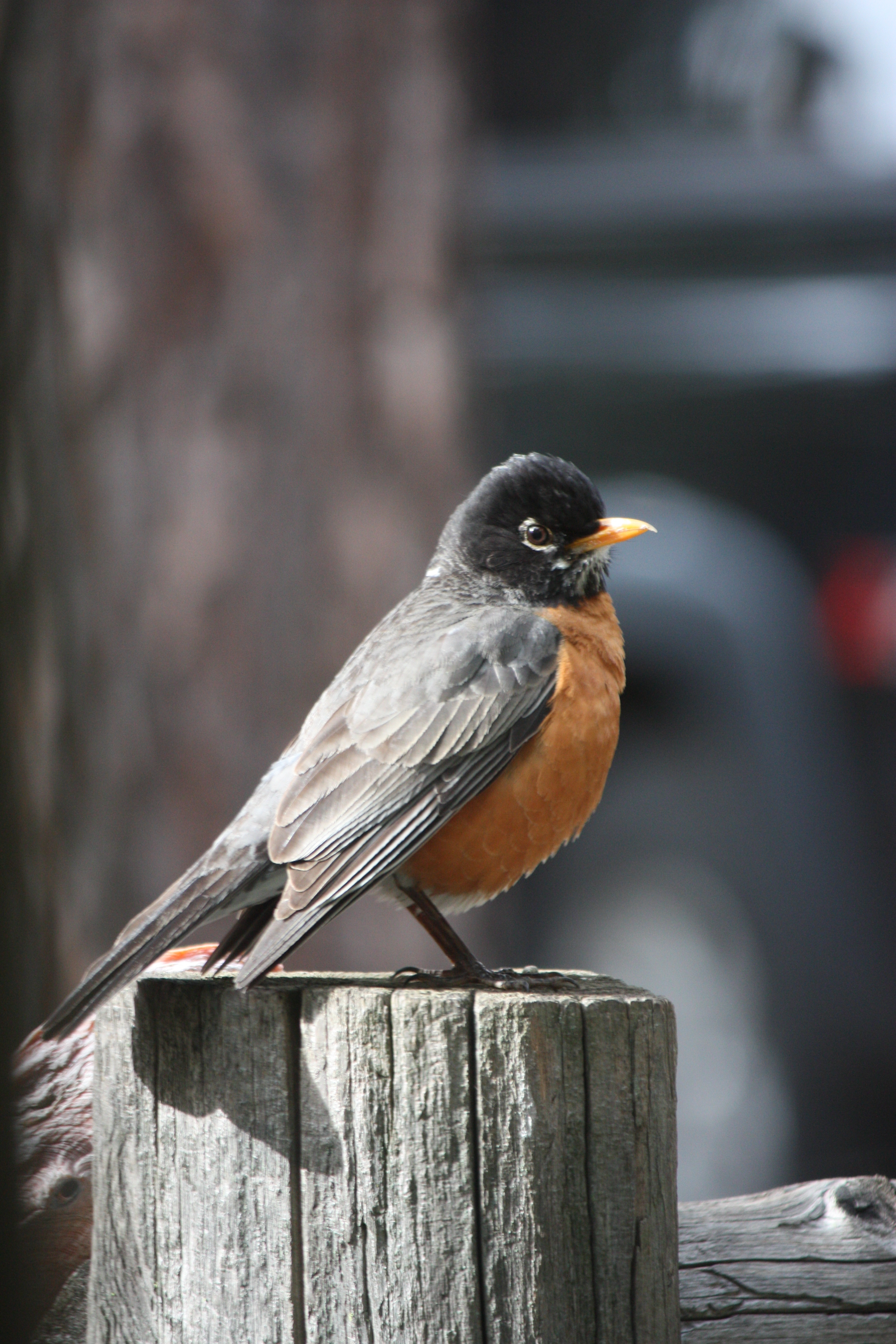
IMG_1943 adult robin                        IMG_6630 baby robin

We had fewer birds nesting on the property this year, and so far, fewer birds in the garden.  Yes, the robins are still harvesting strawberries and raspberries.  But there were only four or five of them this year instead of nine, or more.  We still have black-headed grosbeaks and a pair of Western tanagers nesting somewhere near the garden.  There are Stellar’s jays, of course, and our old friends, the bluebirds who live in the nest box we put up for them.  We still see plenty of birds which delight our hearts and our grandchildren.  The garden now offers enough food for the birds and for us too.

IMG_4391 male bluebird feeding nestling

So there it is, a truth that as gardeners, we need to accept:  gardens attract birds.  Both gardener and birds will be better off if they learn to live with each other.  Birds are beneficial to gardens.  They catch insect pests you’ll never see, and in exchange, they’ll eat a little fruit.  The seeds from that fruit they’ll scatter wherever they fly next, so they’re actually spreading fruit wherever they go.  Over the years, birds have brought many gifts to my garden, among them two wild currant bushes which I transplanted out of the herb bed to an area that was more suitable for them, a Virginia creeper which I dug up and transplanted into my son’s newly fenced yard to brighten his wire fence, and three lavenders to replace the bushes I planted from seed over two decades ago.

This year, I harvested about 7 gallons of strawberries from my beds, and I figure the birds got about a gallon, maybe more because I was away from home for a week at the height of the strawberry season.  But that’s a ratio I can live with, and so can the birds.

Next time:  Tips for creating a strawberry patch that won’t outgrow itself in a year.

Photos by Dennis French

Standard